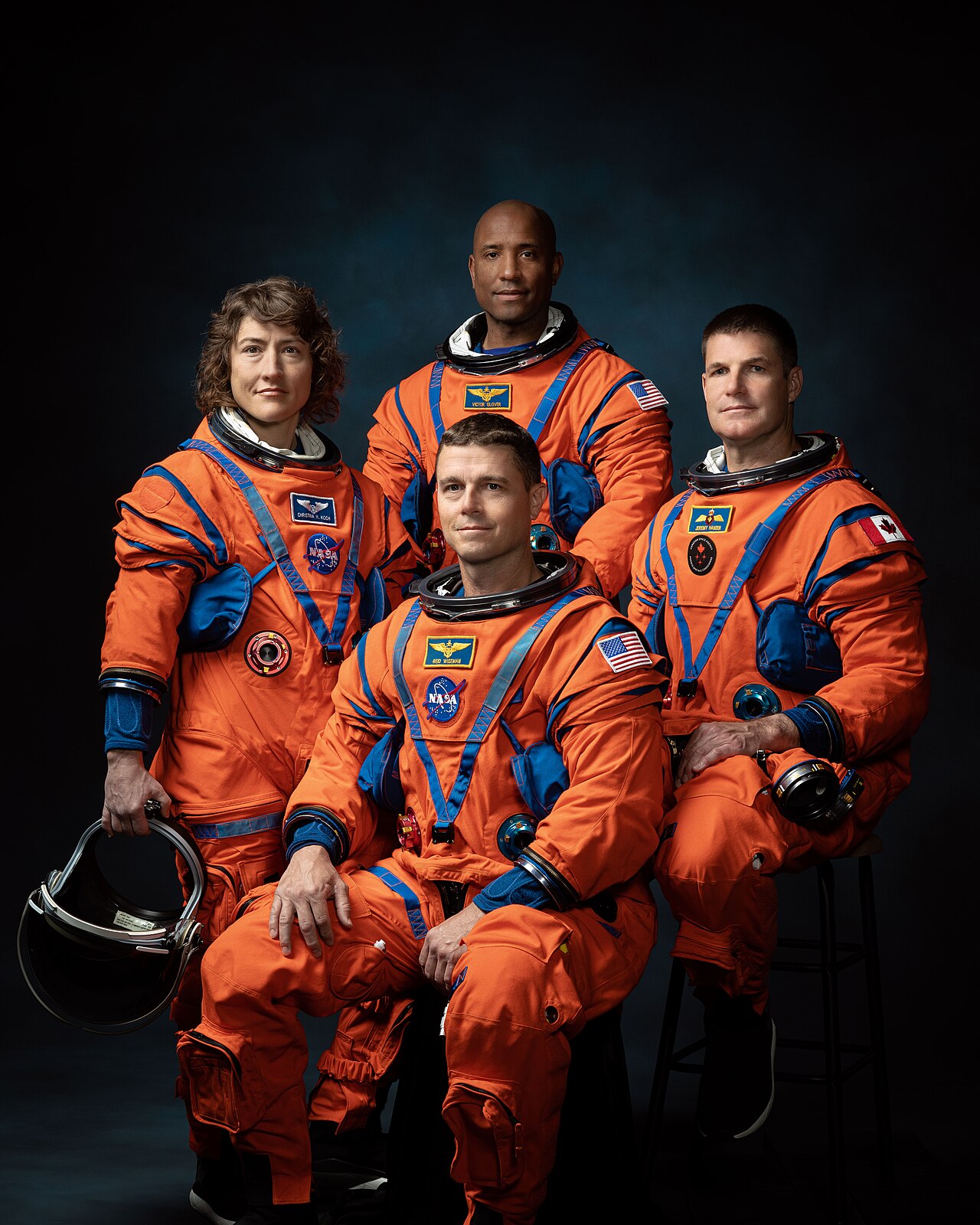
For the first time in more than half a century, astronauts are flying around the Moon on a mission designed not only to reach a destination, but to test what it takes to travel deeper into space. NASA’s Artemis II mission, which has already carried its crew farther from Earth than any humans in recorded history, is giving scientists and engineers a live rehearsal for the next era of lunar exploration. The flight is a high-stakes engineering trial, but it is also a science mission in its own right: a chance to measure radiation exposure, observe how humans function in deep space, and refine the tools that will support longer voyages beyond Earth orbit. ([science.nasa.gov](https://science.nasa.gov/solar-system/skywatching/night-sky-network/night-sky-network-celebrates-artemis-ii/))
The mission’s value comes from timing as much as from ambition. Artemis II is unfolding at a moment when NASA is broadening its science portfolio across the Moon, the Sun and the inner solar system, from heliophysics monitoring to lunar imaging and crew health research. That makes the flight a connective tissue between disciplines: space weather experts are watching the Sun for solar eruptions, while lunar scientists are using the flyby geometry to capture a new kind of close look at the Moon’s far side and polar regions. In other words, Artemis II is not just a voyage around the Moon; it is a coordinated experiment in how to send people there safely and productively. ([science.nasa.gov](https://science.nasa.gov/missions/artemis/artemis-2/to-protect-artemis-ii-astronauts-nasa-experts-keep-eyes-on-sun/))
A radiation stress test in real space
One of the most consequential scientific tasks aboard Artemis II is measuring the radiation environment crews will face on future Moon and Mars missions. Outside Earth’s magnetic shield, astronauts are exposed to energetic particles from the Sun and from galactic cosmic rays. NASA’s Artemis II team is tracking that risk in real time, using spacecraft, solar observations and onboard detectors to determine how much radiation reaches the crew and how that dose changes during the flight. NASA says the Orion capsule carries six radiation sensors in its Hybrid Electronic Radiation Assessor system, and the astronauts also wear personal dosimeters. ([science.nasa.gov](https://science.nasa.gov/missions/artemis/artemis-2/to-protect-artemis-ii-astronauts-nasa-experts-keep-eyes-on-sun/))
That data matters because the hazard is not theoretical. Space weather forecasters are watching for solar eruptions that could shower the spacecraft with energetic particles, and NASA is using a network of observatories to help assess those events before and during the mission. The agency has pointed to the Solar Dynamics Observatory, the ESA-NASA Solar and Heliospheric Observatory, NOAA’s GOES-19 and NASA’s Mars-based Perseverance rover, which can see sunspots on the side of the Sun hidden from Earth. The result is a rare cross-planet monitoring campaign tied directly to crew safety. ([science.nasa.gov](https://science.nasa.gov/missions/artemis/artemis-2/to-protect-artemis-ii-astronauts-nasa-experts-keep-eyes-on-sun/))
For scientists, the appeal is clear: models of deep-space radiation are only as useful as the measurements that validate them. Artemis II offers a chance to compare expected dose levels with what astronauts actually experience during a lunar flyby, at a scale relevant to future exploration. That information will feed back into spacecraft design, mission planning and medical countermeasures. It is basic science, but with immediate operational consequences. ([science.nasa.gov](https://science.nasa.gov/missions/artemis/artemis-2/to-protect-artemis-ii-astronauts-nasa-experts-keep-eyes-on-sun/))
What the crew can learn by looking back at the Moon
The Moon itself is another reason this flight matters. During the far-side flyby, the Artemis II crew is able to observe lunar terrain from a vantage point no human has had since the Apollo era. NASA’s lunar science plan for the mission calls for the astronauts to describe what they see during the pass, helping future crews and mission planners interpret the lunar surface in real conditions. The geometry of the flyby also lets mission teams think about how lighting, altitude and trajectory affect what can be seen from orbit. ([science.nasa.gov](https://science.nasa.gov/solar-system/nasas-artemis-ii-lunar-science-operations-to-inform-future-missions/?utm_source=openai))
That may sound modest compared with deploying a rover or sampling rocks, but human observation still has scientific value. The Apollo missions showed that trained astronauts can notice subtle patterns, terrain transitions and hazards that may not be obvious in preflight imagery alone. Artemis II extends that tradition into an era where astronaut reports can be paired with digital cameras, telemetry and modern geologic mapping. The result is a richer picture of how future crews might navigate and work around the Moon. ([science.nasa.gov](https://science.nasa.gov/solar-system/nasas-artemis-ii-lunar-science-operations-to-inform-future-missions/?utm_source=openai))
NASA has already been using Artemis II coverage to make the Moon feel immediate again. The agency published updates as the crew crossed the far side, noting the milestone when the mission traveled farther than any humans in recorded history. Those moments are newsworthy on their own, but from a science perspective they also mark the first live test of a human lunar mission architecture that NASA hopes to extend to longer stays and, eventually, to Mars-class journeys. ([science.nasa.gov](https://science.nasa.gov/solar-system/skywatching/night-sky-network/night-sky-network-celebrates-artemis-ii/))
Why this mission matters beyond one flight
Artemis II is best understood as the opening chapter of a larger research program. The mission is helping NASA calibrate the risks of traveling beyond low-Earth orbit, from radiation and communications delays to human factors such as sleep, workload and decision-making in a remote environment. That knowledge will shape the next missions, including lunar landings and future spacecraft meant to travel farther and stay longer. NASA’s broader Artemis science pages make clear that the lunar program is designed to inform future missions, not simply revisit the Moon for its own sake. ([science.nasa.gov](https://science.nasa.gov/solar-system/nasas-artemis-ii-lunar-science-operations-to-inform-future-missions/?utm_source=openai))
It is also a reminder that space science is increasingly multidisciplinary. NASA is simultaneously preparing the Roman Space Telescope for launch work, advancing heliophysics studies with the Parker Solar Probe and SPHEREx, and supporting a new wave of lunar operations research. Artemis II sits inside that ecosystem. The mission’s engineering milestones and its science output are intertwined: every new measurement helps define how humans can safely live and work beyond Earth. ([science.nasa.gov](https://science.nasa.gov/artemis-ii-science/))
In that sense, the most important result from Artemis II may not be a single dramatic discovery. It may be a set of hard numbers, crew observations and operational lessons that turn lunar travel from a heroic exception into a repeatable scientific practice. If the mission succeeds, the Moon will be less of a destination than a proving ground — one that is teaching scientists how to build the next stage of exploration while it is still in flight. ([science.nasa.gov](https://science.nasa.gov/missions/artemis/artemis-2/to-protect-artemis-ii-astronauts-nasa-experts-keep-eyes-on-sun/))