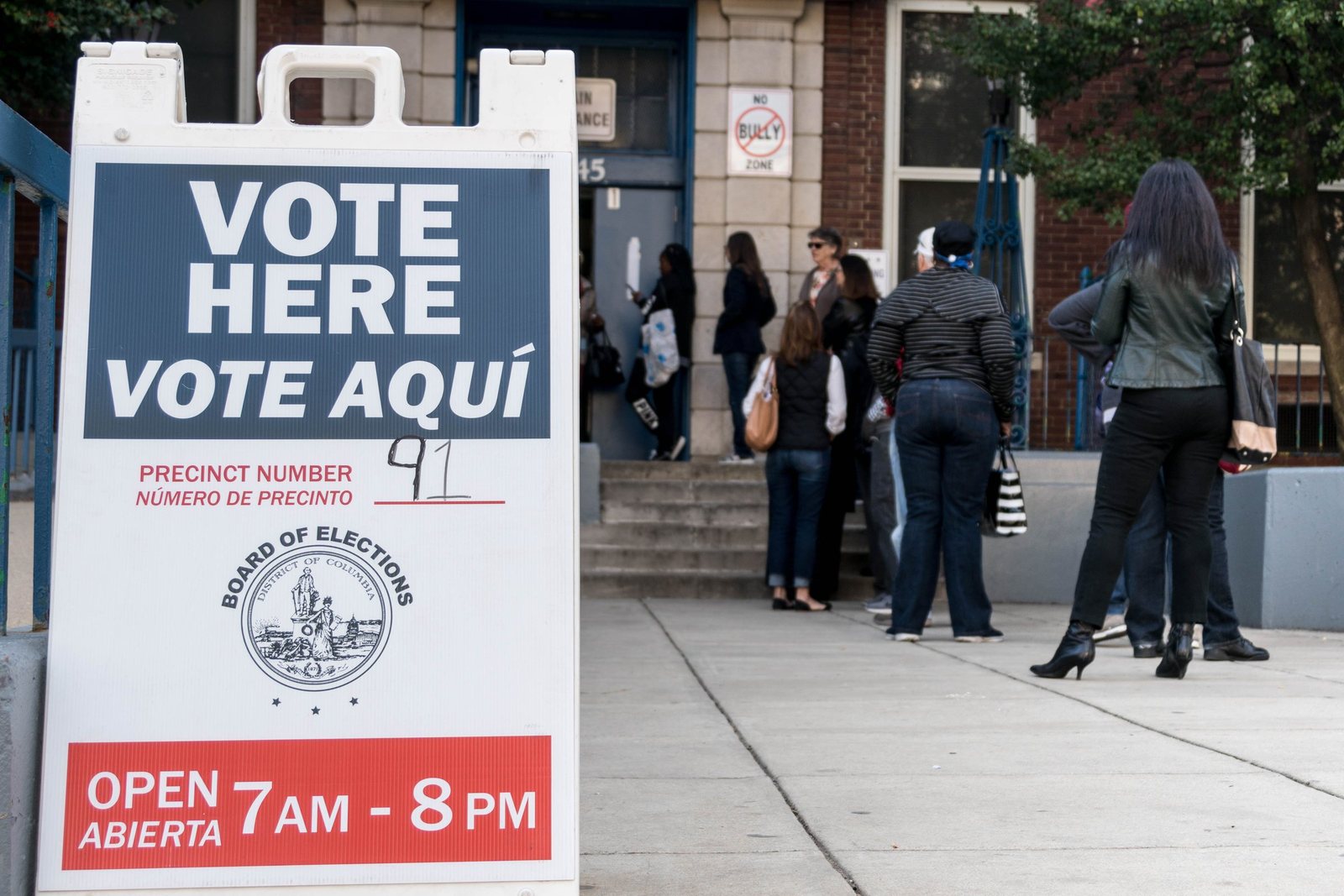
The fight is not only about fraud. It is about where the burden sits.
The loudest language around proof-of-citizenship voting rules is moral language. Supporters talk about legitimacy, confidence, and the simple proposition that only citizens may vote in federal elections. Opponents talk about disenfranchisement, friction, and the long American habit of dressing access restrictions in the clothes of administrative reason. Both sides are arguing about values, but the operational fight is sharper than that. It is about burden. Who has to do extra work so the system can claim certainty? The state, which can maintain rolls, investigate anomalies, and audit eligibility after the fact? Or the voter, who is asked to present documentary proof before the government will treat a signed registration as presumptively valid?[1][3][4]
That is why the White House order signed on March 31 matters beyond the immediate legal fight it triggered. It does not merely repeat the ordinary proposition that non-citizens cannot lawfully vote in federal elections. The order tries to reorganize how eligibility is verified. It points to Social Security Administration records and the Department of Homeland Security’s SAVE program as tools that can help verify identity and federal election eligibility, and it couples that verification agenda to new federal pressure on mail voting: barcode-marked ballot envelopes, state-specific participation lists, and the threat of federal enforcement against officials or jurisdictions the administration considers noncompliant.[1][2]
The result is a fight that sounds like a slogan and behaves like systems design. It reaches from federal databases to the postal service, from the national registration form to state election offices that would have to absorb the practical consequences. That is why the states that sued did not answer primarily with rhetoric. They answered with federalism, timelines, and operations. Their basic argument is that a president cannot rewrite election administration by directive, especially when doing so would force states to rebuild rules and workflows on the eve of a federal cycle.[3]
The hinge of the whole dispute is the federal voter-registration form
To understand why this conflict keeps returning, start with the National Mail Voter Registration Form. The U.S. Election Assistance Commission describes it plainly: it is the national form U.S. citizens may use to register to vote in federal elections, update registration information, change address, or affiliate with a party where state law requires it.[5] The form is not a blank check. It already asks the applicant, at the top, whether the person is a citizen of the United States of America and whether the person will be 18 years old on or before election day. If either answer is no, the form says not to complete it.[6]
That detail matters because the contemporary proof-of-citizenship push is not about whether citizenship is relevant. It already is. It is about whether attestation on a federal form, backed by legal penalties for lying, is enough as the baseline federal rule. The order and the congressional SAVE America proposal both argue that it is not enough. They seek documentary proof: passports, birth certificates, naturalization materials, and other records that can be verified or produced in person.[1][4]
That sounds simple until one remembers what registration systems are for. They are mass systems built to process millions of lawful entries at relatively low friction. They are not boutique admissions offices. The moment documentary proof becomes the core gate, the system changes character. Election offices have to define acceptable documents, adjudicate edge cases, reconcile name changes, and decide what happens when the person in front of them is plainly eligible but not carrying the one record the rule privileges most. Administrative certainty for some voters becomes administrative delay for others.
This fight has a legal memory, and the EAC’s archive shows it
The proof-of-citizenship argument is often described as though it arrived with this order. It did not. The EAC’s own archive records the long-running effort by states to insert additional proof-of-citizenship instructions into the federal form. In January 2014, after requests by Arizona, Georgia, and Kansas, the commission denied those requests. The agency’s record states the issue directly: the states had asked the EAC to modify the state-specific instructions on the federal form to require additional proof of U.S. citizenship beyond what the form already required, and the EAC said no.[7]
That history helps explain why the current conflict is so intense. It is not simply a new administrative tweak. It is another attempt to move the national baseline from sworn declaration toward documentary gatekeeping. In the White House view, that shift is overdue. In the view of voting-rights groups and the states now in court, it revives an old ambition through a different route: use federal power, or pressure adjacent federal systems, to make the simple act of registration more conditional than the national form has traditionally allowed.[1][3][7]
It also explains why the SAVE America bill and the executive order are best read together. The bill would require documentary proof of citizenship presented in person for federal registration. The order reaches toward the same objective through federal data sharing, administrative coordination, and pressure on mail-ballot procedures. One route is statutory and frontal. The other is executive and architectural. Both ask the same underlying question: should eligibility be presumed from a sworn form unless disproved, or withheld until documentation is furnished?[2][4]
The mail-voting provisions reveal the order’s larger ambition
The most revealing part of the White House fact sheet is not the citizenship language by itself. It is the coupling of citizenship verification with the postal system. The administration said the order would push the Postmaster General to initiate rulemaking so that mail-in and absentee ballots are sent in secure official-election envelopes bearing unique Intelligent Mail barcodes. It also said the Postal Service should transmit ballots only to people on a state-specific mail-in and absentee participation list.[2]
This is a bigger theory of election management than the phrase proof of citizenship usually suggests. It imagines federal elections as a logistics problem that can be tightened by identity lists, route controls, traceable envelopes, and more aggressive enforcement. The attraction of that theory is obvious. Barcodes promise auditability. State participation lists promise cleaner distribution. Federal investigators promise consequences for actors the administration believes are gaming the system.[1][2]
But the litigation shows the counterargument just as clearly. Reuters reported that the coalition of states challenging the order said it would unlawfully interfere with mail voting by directing the Postal Service to block or condition delivery on criteria outside state control. They also argued that letting the order stand would force states to rush major election-system changes before November, creating chaos and likely disenfranchising eligible voters.[3] In other words, what the White House describes as a cleaner federal architecture, the states describe as an election-season rewrite imposed from above.
Why supporters keep returning to documentary proof
It is a mistake to treat support for proof-of-citizenship rules as nothing more than theater. There is a real governing instinct behind it. Supporters believe the current system asks too much of public trust and not enough of formal proof. They see a national registration form that depends on self-attestation, state rolls that are not always easy for the public to understand, and a mail-voting infrastructure that expanded dramatically under stress and remains politically contested. Documentary proof looks, from that vantage, like discipline. It is a way of making the franchise legible in paperwork instead of in presumption.
That instinct is reinforced by the administration’s use of database language. If federal agencies can compile citizenship lists, if those lists can be corrected and transmitted to states, if ballots can be tied to official envelopes and tracked through postal barcodes, then election administration begins to resemble a modern records problem rather than a trust problem. It promises a more inspectable chain from eligible person to lawful ballot.[1][2]
The trouble is that records systems are never as frictionless in practice as they appear in policy sketches. The people who breeze through documentary rules are usually the people already well supplied with formal paper, stable addresses, compatible names, predictable work hours, and time to resolve mismatches. The cost of “just show the document” is not distributed evenly. A rule sold as universal can still land unevenly because the country’s administrative life is uneven.
What opponents see is not abstraction. It is queue length.
Opponents of documentary proof often talk in the language of rights, and rightly so. But administrators tend to recognize the issue in more tactile terms: queue length, rejected forms, manual review, helpline traffic, and the slow accumulation of exceptions. A system that works for 95 percent of registrants can still be politically explosive if the remaining 5 percent cluster in predictable places or predictable populations. That is one reason critics of the SAVE America Act argued, as Reuters reported, that requiring documentary proof presented in person could disenfranchise citizens who do not have ready access to passports, birth certificates, or comparable identification.[4]
The federal form, by contrast, was built to make registration portable. It can be mailed. It can be used after a move. It centralizes the citizenship question while allowing state-specific instructions to ride along in one place.[5][6] That design does not eliminate fraud risk or administrative error. No system does. But it spreads access more broadly by refusing to make one kind of documentary possession the master key.
That is why this is ultimately a philosophical dispute about election administration. One side thinks democratic legitimacy is strengthened when access is conditioned on more documentation at the front door. The other thinks legitimacy is strengthened when the front door remains wide for lawful applicants and enforcement targets misconduct without multiplying barriers for the eligible majority. Neither approach can claim to eliminate risk. They simply distribute risk differently.
The courts are being asked to decide more than a mailing rule
The states’ lawsuit frames the current clash as a constitutional one, and the reason is plain. Election administration in the United States is a layered system. Congress sets some national rules. States run the machinery. Federal agencies possess data that may be relevant, but relevance is not the same thing as command authority. When an executive order starts to specify how ballots should move through the Postal Service, how federal data should be used to identify eligible voters, and what kinds of enforcement pressure noncompliant jurisdictions might face, the question stops being merely technical. It becomes a question of who may redesign the operating system of a federal election.[1][3]
That is also why the legal outcome may matter less, in the long run, than the administrative precedent. Even if parts of the order are blocked, the underlying agenda is now out in the open: citizenship verification linked to federal datasets, mail-ballot handling linked to postal controls, and eligibility disputes framed as a national integrity project rather than a patchwork state matter. Once that architecture is described, future administrations and future legislatures can return to it, revise it, or try again through narrower statutes and rulemakings.
The country is choosing what kind of inconvenience it believes in
Every election system contains inconvenience. The only question is whom it inconveniences first. A documentary-proof regime inconveniences the individual at the threshold and promises a cleaner roll downstream. A declaration-and-verification regime inconveniences the administrative state later, by requiring maintenance, investigation, auditing, and targeted enforcement after registration has been accepted. American politics keeps oscillating between those two instincts because each one corresponds to a different picture of citizenship. In one picture, belonging should be documented before it is trusted. In the other, belonging may be declared under penalty of law and verified when circumstances require it.
The order signed on March 31, the lawsuit filed days later, and the congressional pressure around the SAVE America Act all point to the same conclusion: the proof-of-citizenship fight is not a niche procedural quarrel. It is a struggle over the design principle of the franchise. Should federal elections presume eligibility from a sworn national form and police violations with targeted enforcement? Or should they demand more evidence up front and accept the extra friction as the cost of public confidence?[2][3][4]
That question will keep returning because it is not really about paper alone. It is about how a democracy decides what counts as enough proof of belonging, and whether the burden of that proof should fall first on the citizen or on the state.
Source notes
Primary documents, agency records, and current reporting used for this story.
- 1. The White House, Ensuring Citizenship Verification and Integrity in Federal Elections.
- 2. The White House, Fact Sheet: President Donald J. Trump Ensures Citizenship Verification and Voter Eligibility in Federal Elections.
- 3. Reuters, Democratic-led states sue to block Trump's order tightening mail-in voting.
- 4. Reuters, What is in Trump's bill that requires proof of citizenship to vote?.
- 5. U.S. Election Assistance Commission, National Mail Voter Registration Form.
- 6. U.S. Election Assistance Commission, National Voter Registration Application Form for U.S. Citizens (PDF).
- 7. U.S. Election Assistance Commission, NVRA Related Documents.
Referenced documents
Corrections status
No corrections have been posted to this story as of April 7, 2026 • 8:28 a.m. EDT. Any updates will be noted here and on the Corrections page.
Related reading

Economics • Analysis
The Consumer Has Not Quit. The Economy Still Feels Cautious.
The American economy is still growing, but it is doing so with less exuberance, less labor-market churn, and more dependence on household spending than the public rhetoric admits.

Opinion • Essay
A Country That Cannot Measure Itself Cannot Govern Itself
Public statistics are not bureaucratic garnish. They are the information infrastructure that lets a democratic state know its labor markets, neighborhoods, businesses, and population well enough to act without governing by mood.

Education • Report
School Recovery Is Now an Attendance Story.
The next phase of school recovery is less about whether classes reopened and more about whether students are present, focused, and supported often enough for learning to accumulate.