The test scores matter, but they are not the whole argument anymore
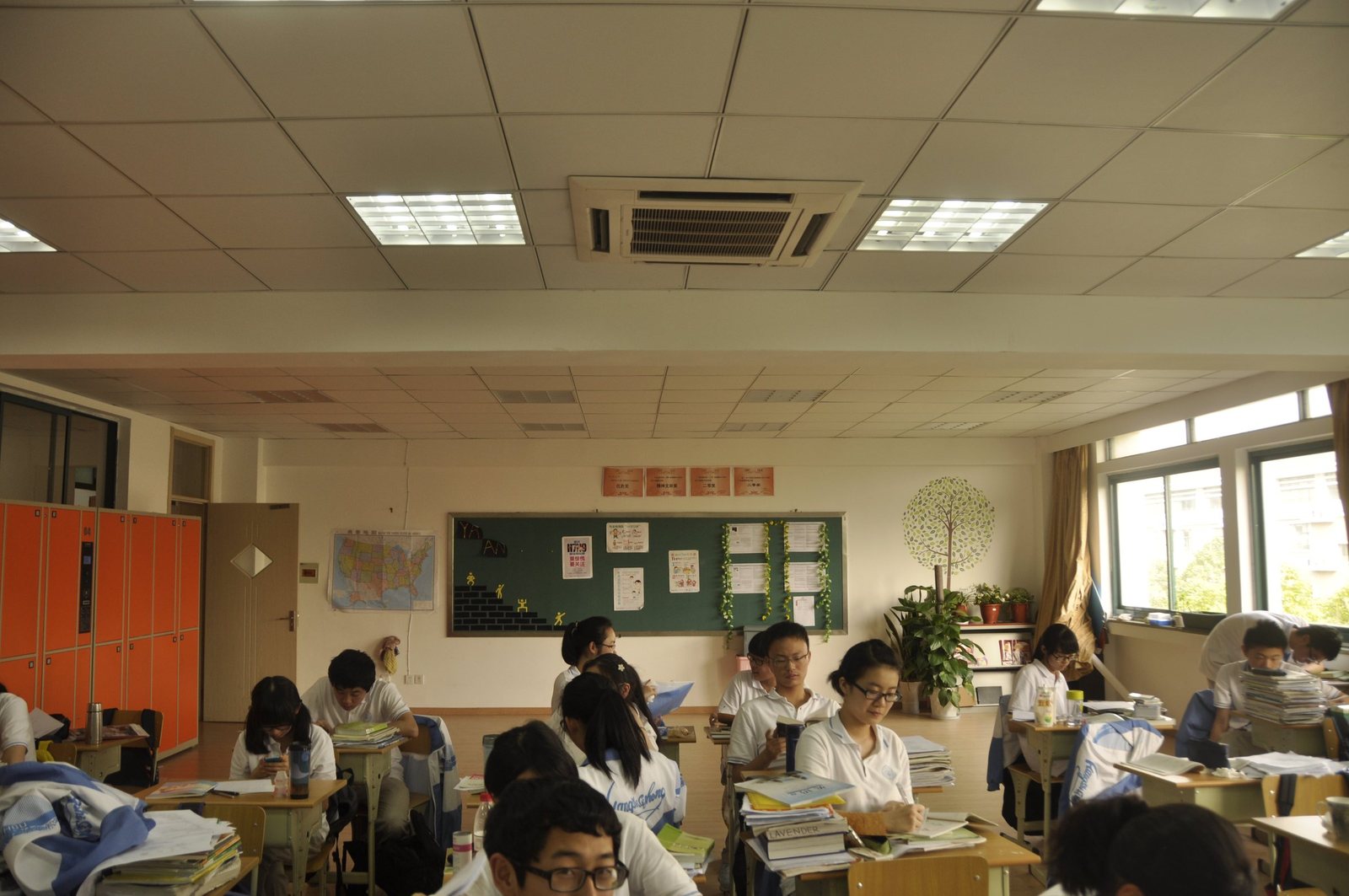
American schools are in a strange phase of recovery. The emergency is over in the formal sense; classrooms are open, schedules are running, and the country is no longer arguing every week about whether school should be physically available. Yet the system is still carrying the aftereffects of disruption in ways that show up unevenly: in reading scores that remain below pre-pandemic levels, in math that has recovered somewhat without fully regaining lost ground, and in the daily fragility of routines that once held school together almost invisibly. The newest education debate, in other words, is less about whether school exists than about whether school is happening with enough continuity, attention, and staffing to work as intended.[1][2][3][4]
The most cited evidence in that debate is the 2024 National Assessment of Educational Progress. It deserves the attention it gets. In fourth-grade reading, the national average score was 2 points lower than in 2022 and 5 points lower than in 2019, while only 31 percent of students performed at or above NAEP Proficient. Fourth-grade math offered the one cleaner sign of improvement: scores rose 2 points compared with 2022. Even there, however, the nation was still 3 points below 2019, 39 percent of students were at or above proficient, and 24 percent remained below basic. The message is not that nothing has improved. The message is that improvement has been partial, uneven, and more fragile than a single national headline can convey.[2][3]
That is why the right question is no longer simply, “Have scores bounced back?” It is, “What conditions would let scores improve in a durable way?” Once that question is asked, the conversation shifts almost immediately from assessment to attendance, from abstract recovery plans to daily school life, and from one-off interventions to whether students are in the room often enough for any intervention to accumulate. School improvement is still about curriculum and teaching quality. But at this point in the recovery, it is also about whether the institutions that make learning possible can reliably gather students, teachers, and time in the same place with enough steadiness to build momentum.[1][4][5][6]
Recovery became an attendance story before many people were ready to say so
Chronic absenteeism is the clearest reason score debates feel incomplete. The Department of Education says chronic absenteeism reached about 31 percent of students nationally in the 2021–22 school year and then declined to 28 percent in 2022–23. That decline mattered, but it still left absenteeism far above the pre-pandemic norm, and in 2022–23 twenty states remained above 30 percent. Those are not marginal disruptions. They describe a system in which missing school has moved from an individual exception to a structural condition in many communities.[4]
When absenteeism rises that high, it changes the unit of the problem. Teachers are no longer working only with differences in ability or preparation. They are teaching classes in which some students miss enough time to break the continuity that instruction depends on. Reading becomes harder to build when vocabulary, fluency, and comprehension work arrive in broken pieces. Math becomes harder to sequence when foundational lessons are intermittently absent. And the administrative side of schooling becomes harder too: intervention plans, tutoring schedules, special-education services, family outreach, and simple trust all require repeated contact. Chronic absenteeism does not merely reduce exposure to instruction. It frays the organizing logic of school itself.[2][3][4]
This is one reason the score picture has looked so contradictory. It is possible for a district to adopt a stronger curriculum, expand tutoring, and invest in teacher support, while still seeing limited gains if too many students are not present consistently enough for those investments to compound. Attendance is not the only educational variable, and it should not be used as a moral cudgel against families navigating illness, transportation issues, housing instability, or work schedules. But it has become the clearest operational fact of school recovery: any strategy that ignores whether students are actually there will keep mistaking good inputs for effective recovery.[4][5]
The classroom problem is also about attention, not only seat time
Presence alone does not settle the matter. The other force school leaders keep describing is a thinner attention economy inside the classroom. In 2023–24, the National Center for Education Statistics reported that 26 percent of public-school leaders said lack of focus or inattention among students had a severe negative impact on learning. That is an unusually stark admission from administrators who are often careful with crisis language. It suggests that even when students are physically present, many schools are still working to rebuild the habits of concentration, task persistence, and classroom stamina on which ordinary teaching rests.[5]
This matters because schools do not operate only through curriculum documents or assessment frameworks. They operate through tempo. A teacher asks a question, a class moves through an exercise, students practice, revise, and return. That chain sounds mundane because, in better years, it is mundane. But the chain is easier to disrupt than it is to rebuild. Inattention stretches transitions, complicates group work, slows feedback cycles, and pulls teachers toward behavior management when they are trying to teach content. Recovery, then, is not simply the work of delivering better material. It is the work of restoring the classroom conditions under which better material can land.[5][6]
That is also why so much education debate now feels emotionally loaded. Parents hear concern about attention and worry it is coded criticism of children. Teachers describe uneven engagement and are told they are nostalgic for a past that cannot return. Policymakers demand gains fast enough to justify large recovery investments. All three perspectives contain something real. But the schools themselves are sending a plainer message: academic recovery is being mediated by daily habits of attention and participation. If those habits remain weak, the results will too, no matter how sophisticated the rhetoric around standards becomes.[2][3][5]
Tutoring helps, but it works best when the rest of the school day holds together
There is real evidence that targeted recovery work can help. NCES reported that 46 percent of public schools offered high-dosage tutoring in 2023–24, and among those schools 90 percent said the tutoring had been moderately or very effective. Those figures are more encouraging than a lot of national education talk allows. They show that schools have not simply been wringing their hands; many have built additional instructional supports and believe those supports are doing useful work.[5]
But even that relatively hopeful statistic contains a quiet warning. High-dosage tutoring is most effective when it is regular, well-matched to classroom instruction, and reachable by the students who need it most. That means schedules have to align. Staff have to exist. Students have to attend. Families have to understand when support is happening and why. In other words, tutoring is not a magic layer laid on top of a broken system. It is an intensive intervention that depends on the ordinary machinery of school operating well enough to sustain it. When recovery tools are praised or dismissed as though they work independently of context, the analysis misses the point.[4][5][6]
The same is true for the politics of tutoring. The country often treats interventions as if the hard part were choosing the right program. In practice, the hard part is building the staffing, timing, and attendance conditions that let the program remain coherent over months rather than weeks. Schools that report tutoring as effective are telling us something broader than “we found a good add-on.” They are telling us that recovery happens when extra help becomes part of a dependable instructional rhythm rather than a temporary rescue operation floating above the school day.[4][5]
Schools are still trying to recover while feeling understaffed
That problem becomes sharper when viewed through staffing. NCES found that 53 percent of public schools felt understaffed entering the 2022–23 school year. Among those schools, 65 percent said special education teachers were among the hardest roles to fill, and 45 percent cited general elementary teachers. In October 2022, 44 percent of public schools reported at least one teaching vacancy. Those numbers help explain why school recovery so often feels slower at ground level than it sounds in national speeches. A system can have federal recovery funding, tutoring plans, and clear academic priorities and still struggle to execute when key classrooms or services are operating on thinner staffing than they were designed for.[6]
Special education is especially important here because it reveals the moral and logistical stakes of understaffing at once. Schools do not serve identical students with interchangeable needs. They serve children who require different levels of support, specialized expertise, legal accommodations, and continuity of service. When staffing gaps hit those functions, the effects radiate outward: scheduling becomes harder, caseloads swell, classroom teachers absorb more, and families experience the institution as less reliable. Recovery, in that environment, is not only an academic project. It is a capacity project.[6]
There is a tendency in public debate to use staffing shortages as a catchall explanation or, conversely, to dismiss them as bureaucratic excuse-making. The data suggest a more grounded conclusion. Staffing is one of the mechanisms through which all the other problems become either manageable or overwhelming. A school with strong attendance, decent staffing, and a focused intervention plan has a fighting chance to rebuild. A school facing high absenteeism, attention strain, and vacancies is trying to solve multiple compounding problems with fewer adults than the design requires. That is not an alibi. It is a description of working conditions.[4][5][6]
The system is also serving a slightly different student landscape than it was in 2019
Even the basic scale of American schooling has shifted. NCES reported that public-school enrollment was 49.5 million in fall 2023, down from 50.8 million in 2019. That is not a collapse, but it is a meaningful change for a system that plans staffing, transportation, facilities, and services on the basis of enrollment patterns. The same Condition of Education report noted that 5.2 percent of students were homeschooled or enrolled full time in virtual schools in 2023, up from 3.7 percent in 2019. Families did not all return to the same arrangements they had before disruption. Some changed schooling modes, and the system now has to operate in the presence of those altered choices.[1]
That matters because recovery is easier to narrate than to administer. A country can say, in the abstract, that schools should “get back on track.” But on the ground, districts are working with somewhat different enrollment patterns, more visible competition from other schooling formats, and communities whose relationship to school may have changed. The point is not to romanticize the old equilibrium. It is to recognize that the institution trying to recover is not identical to the institution that existed before 2020. Its audience has shifted. Its routines have been challenged. Its labor market is tighter. Its instructional losses are uneven. That is why generic calls for urgency so often sound true and insufficient at the same time.[1][4][6]
In that sense, enrollment and mode changes are not side notes. They are part of the context in which every other recovery tool is being deployed. If families are more mobile, if attendance is less stable, and if schools are competing not only with neighboring districts but with alternative formats, then trust and daily reliability become even more central. Schools do not recover only by asking students to improve. They recover by convincing communities, repeatedly, that showing up to school is still worth organizing life around.[1][4]
What recovery should mean now
The phrase “learning loss” was useful for getting public attention. It is less useful as a governing idea for the next phase. The schools do not need a slogan so much as a clearer definition of the problem in front of them. The evidence now points to a recovery agenda built around four things at once: stronger reading outcomes, sustained math support, lower chronic absenteeism, and the staffing capacity to make interventions routine rather than heroic. None of those pieces is glamorous. All of them are measurable. And together they describe a more realistic theory of school improvement than any promise of instant academic rebound.[1][2][3][4][5][6]
The country should take the partial good news seriously. Some math performance improved. Tutoring is widespread enough to matter. Chronic absenteeism is down from its peak. Those are not trivial developments. But partial improvement is not the same as structural repair. Reading remains weak relative to 2019. Attention strain remains a serious problem in many schools. Understaffing remains common. Recovery now depends less on identifying one silver bullet than on rebuilding enough ordinary competence for the system to work predictably again.[2][3][4][5][6]
That is why school recovery is, at bottom, an attendance story. Not because attendance is the only thing that matters, but because it is the doorway through which so many other things must pass: instruction, tutoring, peer culture, family connection, support services, and the simple accumulation of time. American schools can still improve meaningfully from here. But they will do so not by pretending the crisis vanished when buildings reopened. They will do so by treating presence, focus, staffing, and instructional continuity as the quiet architecture of learning and rebuilding that architecture day after day.[2][3][4][5][6]
Source notes
Primary documents, datasets, and institutional references used for this story.
- 1. National Center for Education Statistics, Condition of Education 2025, Part I.
- 2. The Nation’s Report Card, Explore Results for the 2024 NAEP Reading Assessment.
- 3. The Nation’s Report Card, Explore Results for the 2024 NAEP Mathematics Assessment.
- 4. U.S. Department of Education, Chronic Absenteeism.
- 5. Institute of Education Sciences, About one-quarter of public schools reported lack of focus or inattention had a severe negative impact on learning.
- 6. National Center for Education Statistics, Teacher Openings in Public Elementary and Secondary Schools.
Referenced documents
Corrections status
No corrections have been posted to this story as of April 6, 2026 • 1:10 p.m. EDT. For amendments after launch, use the corrections workflow linked in the footer.
Related reading

Education • Analysis
The College Comeback Is Real. It Is Also Uneven.
Enrollment finally looks steadier across higher education, but the recovery belongs more to community colleges and public campuses than to the sector as a whole, and the applicant pipeline is widening in ways that still demand better support after admission.
Politics • Analysis
Proof of Citizenship Is Not Just a Voting Rule. It Is a Theory of the Electorate.
The White House order, the federal form, and the lawsuits that followed reveal a deeper fight: whether federal elections should be organized around documentary gatekeeping or broad presumptive access backed by verification and enforcement.

Health • Report
Measles Is Not a Childhood Memory Anymore.
The 2026 measles surge is a reminder that public health depends less on dramatic emergency language than on whether routine vaccination systems still hold.