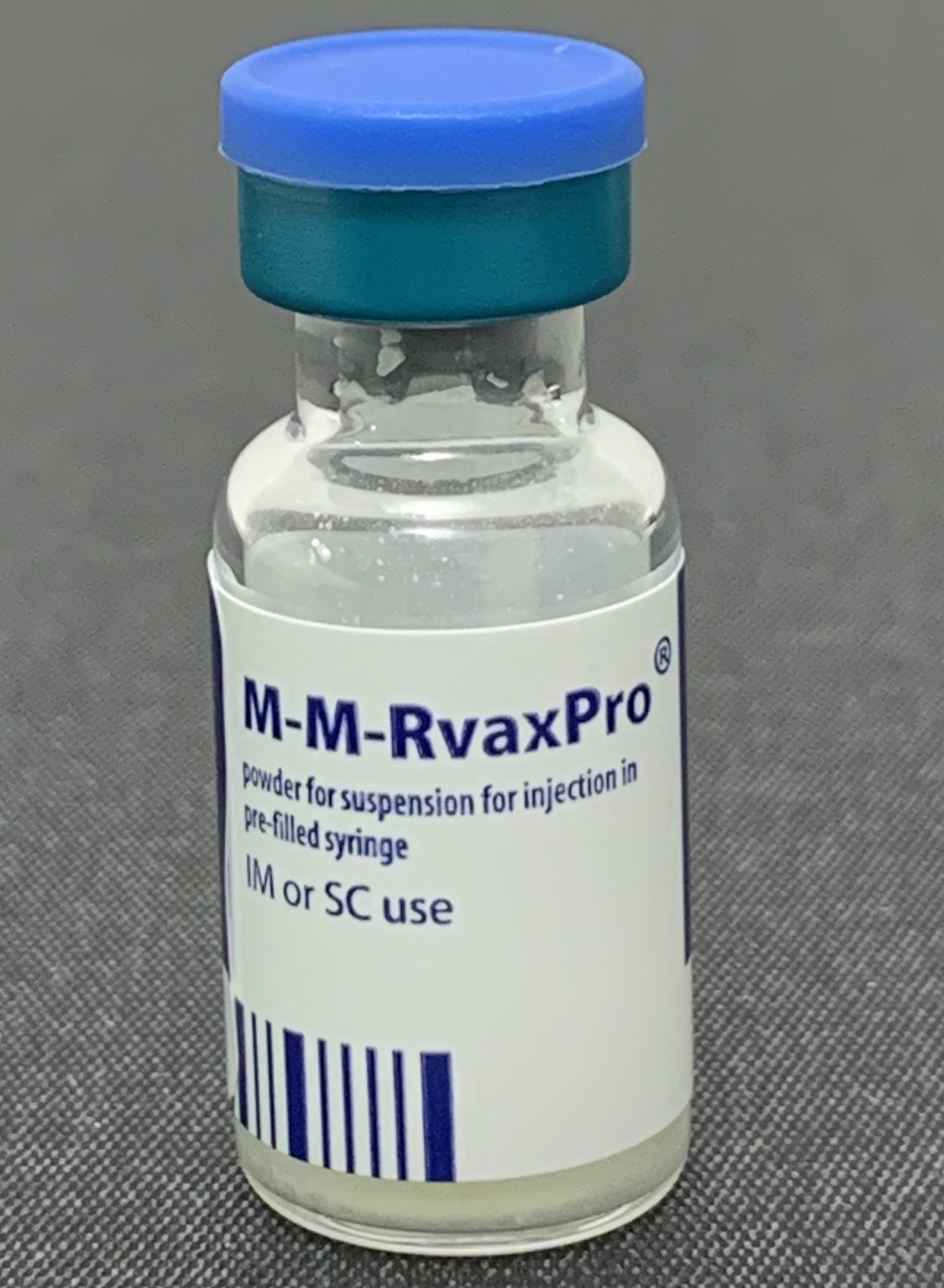
Measles now sounds like time travel because the country forgot what routine prevention was buying
For years, measles occupied a strange place in American public imagination. People knew, vaguely, that it had once been common and that vaccines had made it rare. But rarity has a political side effect: it allows a society to forget what the old danger actually looked like. By early April 2026, that forgetfulness was no longer easy to maintain. The Centers for Disease Control and Prevention reported 1,671 confirmed measles cases in 2026 as of April 2, including 1,661 cases reported by 33 U.S. jurisdictions and 10 cases among international visitors. The same update said 94 percent of cases were associated with outbreaks and that 17 outbreaks had already been recorded in 2026. Those are not nostalgic statistics from the pre-vaccine era. They are current public-health facts.[1]
The scale matters partly because it changes how measles is experienced. A sporadic case can be processed as an anomaly. Repeated outbreaks across many jurisdictions create a different public feeling: not surprise, but the return of a risk that should have remained routine to prevent. The United States declared measles eliminated in 2000, meaning the virus was no longer continuously circulating here. CDC notes that the country nearly lost that status in 2019, when cases approached 1,300. Now the 2026 counts have already moved beyond that line, while 2025 finished with 2,286 cases and 48 outbreaks after 2024 recorded 285 cases and 16 outbreaks. That sequence is why measles is again being discussed not as a memory problem but as a systems problem.[1][3][6]
It is worth being precise about what that means. The country is not relearning a Victorian disease through some mysterious biological twist. It is relearning an institutional lesson. Measles returns where immunity gaps widen, where records are patchy, where trust frays, where access is inconsistent, and where the success of vaccination programs becomes so normal that the public stops treating them as active infrastructure. That is what makes the current moment unsettling. The threat is ancient, but the failure mode is contemporary.[1][2][3]
The disease is unusually unforgiving of looseness
Measles is not just another routine respiratory virus. CDC describes it as one of the most contagious diseases known. In susceptible close contacts, up to 9 out of 10 people will become infected. The virus can remain in the air and on surfaces for up to two hours after an infected person leaves an area. Those facts explain why public-health officials talk about vaccination coverage in seemingly fussy percentages. Measles punishes thin margins. Small holes in protection do not stay small for long when a virus spreads that efficiently.[3]
The vaccine picture is equally important. CDC notes that two doses of MMR vaccine are about 97 percent effective against measles. That figure does not mean vaccinated populations are invulnerable or that public-health work can become casual. It means the country already possesses an extraordinarily effective prevention tool. The hard part is not scientific discovery. The hard part is maintaining the social systems that keep coverage high, records current, clinics reachable, and outbreaks answerable before they expand.[3][4]
Older Americans sometimes remember measles as a routine childhood illness that “everyone got.” CDC’s clinical overview is a useful antidote to that casualness. Before the vaccine, the United States saw an average of about 549,000 reported cases and 495 reported deaths each year, while likely actual infections ranged between 3 and 4 million annually. That history matters because it reminds the public what routine immunization displaced. Measles did not become less serious because people grew tired of hearing about it. It became rarer because the country built a vaccination norm strong enough to suppress it.[3]
The most important number may be 92.5
The CDC’s 2026 measles update carried another figure that should be read as a warning: MMR coverage among U.S. kindergartners fell from 95.2 percent in the 2019–20 school year to 92.5 percent in 2024–25. The agency estimated that roughly 286,000 kindergartners lacked complete MMR documentation in 2024–25. On paper, a drop of a few percentage points can look modest. For measles, it is not modest. It is the difference between sitting near the threshold that interrupts sustained spread and moving materially below it.[1][2]
The school vaccination data make the point more concrete. CDC’s SchoolVaxView update reported exemptions at 3.6 percent in 2024–25, up from 3.3 percent the year before, with 17 states reporting exemption rates above 5 percent and about 138,000 kindergarteners holding an exemption to one or more vaccines. Exemptions are not the only reason students may lack documentation, but they are one visible sign that the immunity landscape is changing in ways health officials have to track carefully. What matters for outbreak control is the total number of people left unprotected or undocumented in settings where the virus can move quickly.[2]
That helps explain why debates over measles can become so heated so fast. One family may experience vaccination as a personal choice. Public health has to experience it as a population-level pattern. Those perspectives are not emotionally interchangeable. But the virus does not adjudicate between them. It follows susceptibility. When enough local gaps open, cases cluster, outbreaks form, and the health system has to spend energy containing a disease it already knows how to prevent. The country is not being asked to invent a solution. It is being asked to sustain one.[1][2][3]
The United States is not experiencing this in isolation
Another mistake in American measles debates is to treat each domestic outbreak as though it were happening inside a sealed national box. CDC’s global measles page says an estimated 10.3 million people were infected worldwide in 2023 and that outbreaks were occurring in every region. The same page notes that the United States nearly lost its elimination status in 2019. The implication is straightforward. Even if domestic transmission is interrupted, a world with large ongoing outbreaks remains a world in which importations can reignite local spread wherever immunity gaps exist.[6]
The World Health Organization’s current fact sheet deepens that picture. WHO estimates that measles vaccination averted nearly 59 million deaths between 2000 and 2024, yet still estimated about 95,000 measles deaths globally in 2024. First-dose coverage stood at 84 percent in 2024, down from 86 percent in 2019. Those numbers should reset the emotional register of the discussion. Measles is not a quaint domestic controversy. It is a globally circulating, vaccine-preventable disease that still kills when coverage falls and access is uneven.[5]
That is why complacency is such a poor fit for the current moment. Elimination status is a remarkable public-health achievement, but it is not a permanent force field. It is maintained by coverage, surveillance, and rapid response. The global context means the United States can never treat weakened vaccination norms as a purely local experiment. In a mobile world, the costs of that experiment do not stay local for long.[5][6]
The best measles policy is ordinary competence made routine
Public-health success is often narratively unsatisfying. It looks like school-entry requirements that quietly hold, clinic visits that happen on time, immunization records that are easy to read, and officials who respond before a problem becomes dramatic enough for national television. That is exactly why the current measles resurgence feels so disorienting. It turns invisible competence back into visible emergency. The CDC’s own response posture makes the point: when outbreaks expand, the country needs specialist support, modeling, sequencing, communications campaigns, and surge vaccination work. All of that is valuable. None of it is cheaper, calmer, or kinder than prevention.[2][7]
The right lesson is not panic. Panic is a poor planning tool. The right lesson is respect for the infrastructure that had kept measles unusual enough to feel historical. Coverage among kindergarteners did not fall from 95.2 percent to 92.5 percent because one thing happened once. It fell because routine systems weakened across places and over time. Rebuilding those systems requires less theatricality than the culture often prefers: steady local outreach, trusted clinicians, low-friction access, accurate school records, and a public language that treats vaccination less as a symbolic identity marker and more as basic civic maintenance.[1][2][3]
Measles is not a childhood memory anymore because memory is not protection. Protection is coverage. Protection is follow-through. Protection is the unglamorous competence of keeping a highly contagious virus from finding enough room to move. The United States still has the tools to do that. What it lacks, in too many places, is the margin for indifference that a disease like measles never truly offered in the first place.[1][2][3][4][5][6][7]
Source notes
Primary documents, datasets, and institutional references used for this story.
- 1. Centers for Disease Control and Prevention, Measles Data and Research.
- 2. Centers for Disease Control and Prevention, SchoolVaxView Data.
- 3. Centers for Disease Control and Prevention, Clinical Overview of Measles.
- 4. Morbidity and Mortality Weekly Report, Measles Outbreak in New Mexico, 2025.
- 5. World Health Organization, Measles fact sheet.
- 6. Centers for Disease Control and Prevention, Global Measles Outbreaks.
- 7. Centers for Disease Control and Prevention, CDC reinforces national measles response through state collaboration.
Referenced documents
Corrections status
No corrections have been posted to this story as of April 6, 2026 • 2:05 p.m. EDT. For amendments after launch, use the corrections workflow linked in the footer.
Related reading
Health • Report
Bird Flu Changed Farm Policy Before It Changed Human Medicine.
H5N1 remains a low public-health risk for the general public, but it has already redrawn dairy surveillance, farm biosecurity, and the line between agricultural disease control and health preparedness.
Education • Report
School Recovery Is Now an Attendance Story.
The next phase of school recovery is less about whether classes reopened and more about whether students are present, focused, and supported often enough for learning to accumulate.
Politics • Analysis
Proof of Citizenship Is Not Just a Voting Rule. It Is a Theory of the Electorate.
The White House order, the federal form, and the lawsuits that followed reveal a deeper fight: whether federal elections should be organized around documentary gatekeeping or broad presumptive access backed by verification and enforcement.