Low public-health risk does not mean no structural change
Bird flu has produced one of the stranger public-health narratives of the past two years: an event serious enough to reorder federal farm surveillance and food-safety routines, yet still described by the Centers for Disease Control and Prevention as a low risk to the general public. That combination is not contradictory. It is a reminder that preparedness often begins long before a disease becomes a mass human emergency. CDC’s current situation summary says A(H5) bird flu is widespread in wild birds, causing outbreaks in poultry and U.S. dairy cows with sporadic human cases in exposed workers, while the current public-health risk remains low. As of the agency’s March 6 update, the United States had reported 71 human cases since February 2024.[1]
To many people, “low risk” sounds like a reason not to pay attention. In practice, it is a reason to pay attention to the right things. When a pathogen with pandemic associations shows up inside commercial agriculture, risk management shifts toward surveillance, workplace protection, testing, and food-system reassurance. The question stops being “Is this already a generalized human crisis?” and becomes “What must be built now so that it does not become one?” Bird flu in 2026 is as much a systems story as a medical one.[1][2][3][4]
That systems story matters because it changes who bears the burden of vigilance. The public hears occasional headlines about cases. Farmers, veterinarians, dairy processors, state animal-health officials, laboratory networks, and public-health agencies are living in a more continuous operational reality. The United States is learning, in real time, how much human health security depends on the quality of agricultural surveillance infrastructure that most people never think about until something goes wrong.[1][2][3]
H5N1 stopped being only a poultry story when it entered dairy herds
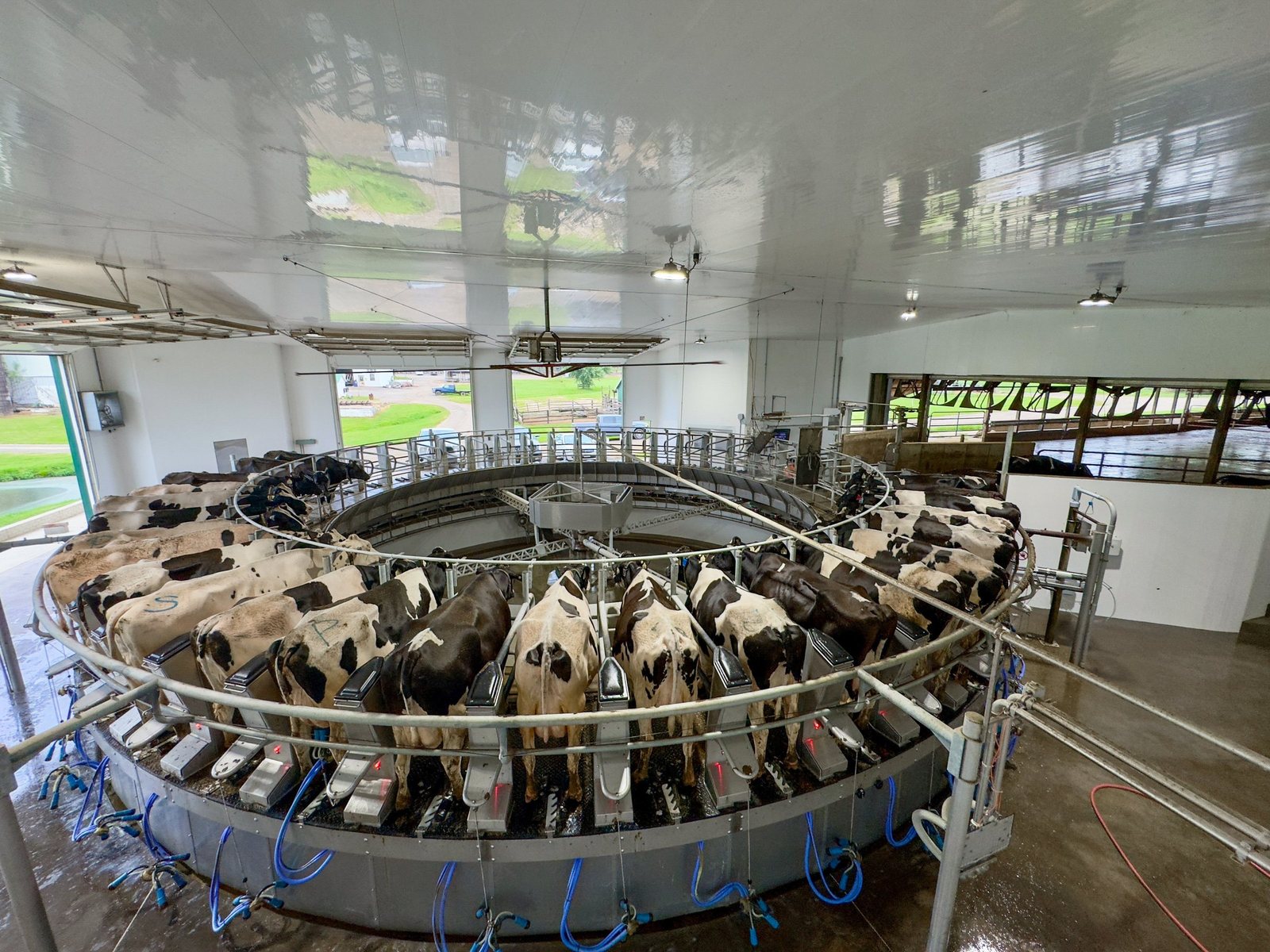
For years, avian influenza lived in most Americans’ minds as a poultry problem with frightening implications. The dairy-cattle outbreak changed the map. Once H5N1 was confirmed in dairy herds, the national response had to expand beyond culling birds and monitoring wildlife. Dairy farms involve repeated human-animal contact, interstate movement, milk handling, and regional processing networks. The disease question became less about one species and more about how an agricultural economy with multiple species, workers, and transportation channels manages a virus that does not respect neat bureaucratic categories.[1][3][5]
That is why USDA’s National Milk Testing Strategy is so significant. APHIS says the strategy facilitates comprehensive H5N1 surveillance of the nation’s milk supply and dairy herds, provides a five-stage roadmap for states, and is designed both to identify where the virus is present and to inform efforts to protect farmworkers. The strategy does not treat surveillance as a side task. It makes surveillance the organizing principle of response. Testing bulk milk, monitoring state status, and maintaining movement-related controls become the way the system learns where the virus is and how aggressively it is spreading.[3]
There is a quiet conceptual shift inside that move. Agricultural disease control is no longer something that happens only at the moment of visible outbreak. It becomes a routine information system. States are not merely reacting; they are being graded into statuses, surveillance stages, and biosecurity expectations. That is a more mature response than waiting for a headline-grabbing spillover and then improvising. It also requires sustained competence, money, and trust between regulators and producers, which is why the bird-flu story is now inseparable from farm policy and administrative design.[3][4][5]
Surveillance became the front line before medicine did
One of the most revealing lines in CDC’s April 3 surveillance update is almost understated: current influenza surveillance systems show no indicators of unusual influenza activity in people, including avian influenza A(H5). In ordinary language, that means the public-health system is looking hard and not seeing signs of broader human spread. That is reassuring. It is also evidence that the real work right now is not mass treatment or universal vaccination campaigns. It is monitoring, early detection, and targeted containment around people with the greatest exposure risk.[2]
Public conversation often imagines preparedness as something dramatic: vaccine factories, emergency declarations, airport screenings. Much of the preparedness that matters here looks mundane. It is the capacity to trace exposed workers, test samples, compare case definitions, coordinate state and federal reporting, and keep animal and human surveillance from drifting into separate bureaucratic worlds. If the United States avoids a worse human outcome, it will not be because the risk sounded frightening on television. It will be because institutions kept the low-risk situation genuinely low through disciplined surveillance and response.[1][2][3]
That is also why the 71-case figure matters differently than it would in a purely human-transmission event. The current number is not a sign of uncontrolled community spread. It is a sign that occupational exposure, monitoring, and case finding have become central to the national posture. In bird flu, counting cases is not enough. The deeper question is whether the country is becoming better at seeing the right cases quickly enough to keep the virus from teaching us new lessons the hard way.[1][2]
Food safety has required calm precision, not vague reassurance
The food-safety side of the outbreak has demanded a different style of public communication: less alarmist than a pandemic briefing, more specific than a generic statement that “the supply is safe.” FDA’s current dairy-cattle investigation page says the agency has sampled 464 pasteurized dairy products, including milk, cheese, butter, and ice cream, and found them all negative for viable H5N1. The agency also says multiple research studies confirm that pasteurization inactivates the virus. That is exactly the kind of fact pattern the public needs: concrete, updated, and tied to methods rather than mood.[4]
The agency’s caution around raw-milk cheese is equally instructive. FDA-funded work with Cornell suggested that aging alone may not eliminate viable H5N1 in raw milk cheese, even as pasteurization remains highly effective. That difference matters because it shows that food-safety communication works best when it is specific about process. “Milk” is not one thing. Pasteurized commercial dairy products and raw dairy products are not governed by the same risk logic. A useful regulator does not flatten that distinction for the sake of simplicity. It tells the truth at the level consumers can use.[4]
There is a broader democratic point here. Public trust is not built by treating every risk as catastrophic or every concern as irrational. It is built by giving people precise reasons to believe one product is safe, another requires caution, and a third depends on handling or process. Bird flu has forced agencies to practice a kind of adult communication: neither panic nor shrug, but evidence linked to the real choices people make at grocery stores and on farms.[4]
Farmworkers and biosecurity are the operational center of the response
When a pathogen moves through commercial agriculture, the workers closest to animals and milking systems become part of the public-health perimeter. That is one reason APHIS’s Secure Our Herds initiative emphasizes biosecurity and routine prevention measures rather than waiting for obvious crisis conditions. USDA’s materials frame bird flu in dairy as both an animal-health issue and a worker-protection issue. The National Milk Testing Strategy explicitly says one of its goals is to inform efforts that lower farmworker exposure risk. That formulation matters. It recognizes that “farm biosecurity” is not only about protecting production. It is about protecting people whose jobs keep them nearest to the point of spillover.[3][5]
Biosecurity can sound like a cold technocratic word, but its practical meaning is simple: control movement, reduce contamination, limit opportunities for pathogen transfer, and make sure routines are strict enough to matter when no one is yet in panic mode. Gates, equipment cleaning, clothing changes, controlled access, herd monitoring, and worker guidance are not glamorous tools. They are the tools that determine whether an outbreak remains containable. In that sense, the most important medical action may currently be happening outside clinics.[3][5]
This is also where equity enters the story. Agricultural workers are often politically invisible until a crisis requires their labor or reveals their exposure. A serious bird-flu response cannot treat them as incidental. Surveillance without worker protection is only half a system. If the national strategy depends on exposed workers reporting symptoms, participating in monitoring, and following biosecurity procedures, then their safety, income stability, and trust in the institutions asking for compliance become part of disease control itself.[1][2][3][5]
Human medicine is downstream of farm policy more than people like to admit
One lesson of the dairy outbreak is that public health and agricultural policy are less separable than the American bureaucracy sometimes assumes. A virus does not care which congressional committee oversees livestock, which agency handles milk testing, or which occupational group falls between regulatory traditions. When H5N1 moved into dairy herds, the country learned again that some of the most important defenses against human illness are built in veterinary surveillance, farm practice, food regulation, and interstate reporting. By the time human medicine becomes the main stage, several earlier systems have already succeeded or failed.[1][2][3][4]
That does not make clinical preparedness unimportant. It makes it insufficient by itself. The United States could stockpile more medical countermeasures tomorrow and still be vulnerable if surveillance in animals is patchy, reporting is delayed, or farm biosecurity is inconsistent. The most mature public-health response to bird flu is therefore not one that chooses between agriculture and medicine. It is one that admits the first line of human protection may be built in bulk milk testing, worker guidance, and food-processing controls that most citizens never see.[3][4][5]
For now, CDC’s low-risk assessment remains the essential public fact. But the deeper policy fact is that bird flu has already changed how the country thinks about preparedness. It has pushed the United States toward a more integrated view of agriculture, occupational exposure, food safety, and public health. That may turn out to be one of the most valuable outcomes of a threat that, so far, has remained mercifully contained in the general population. Preparedness is not only what you do once people are sick. It is what you build while the risk is still mostly elsewhere.[1][2][3][4][5]
Source notes
Primary documents and reporting used for this story.
- 1. Centers for Disease Control and Prevention, A(H5) Bird Flu: Current Situation.
- 2. Centers for Disease Control and Prevention, A(H5) Bird Flu Surveillance and Human Monitoring.
- 3. USDA APHIS, National Milk Testing Strategy.
- 4. Food and Drug Administration, Investigation of Avian Influenza A (H5N1) Virus in Dairy Cattle.
- 5. USDA APHIS, Secure Our Herds.
Referenced documents
Corrections status
No corrections have been posted to this story as of April 7, 2026 • 1:14 p.m. EDT. For amendments after launch, use the corrections workflow linked in the footer.
Related reading
Health • Report
Measles Is Not a Childhood Memory Anymore.
The 2026 measles surge is a reminder that public health depends less on dramatic emergency language than on whether routine vaccination systems still hold.

Economics • Report
Shelter Is Still the Inflation Story People Live Inside.
Mortgage rates are lower than their worst recent highs but still high enough to ration buying. Rents are cooling more slowly than households feel, and the nation’s housing squeeze remains the most intimate version of inflation.

Science • Report
Artemis II Proved the Moon Is an Engineering Project Again
The launch mattered, but the deeper achievement was operational: human-rated hardware, multinational systems, and a lunar mission that generated evidence rather than nostalgia.