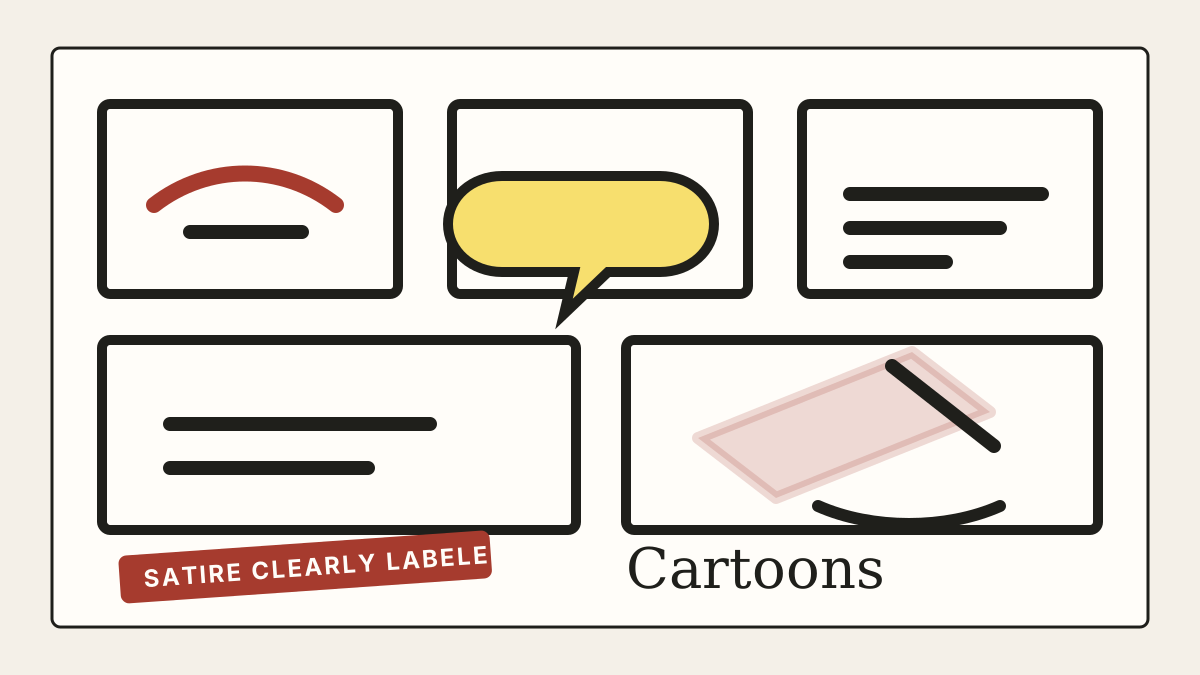
Cartoon desk: This is a launch note for a new section of The Press. Future entries may include editorial cartoons, single-panel gags, visual satire, and short drawn commentary. They will be labeled as cartoons or satire wherever they appear.
Why cartoons belong here
A newsroom needs more than one register. Straight reporting explains what happened. Analysis explains what it may mean. Opinion argues what should follow. A cartoon can do a different job: compress an argument into one visual turn, make hypocrisy visible, and give readers a sharper way to see a public absurdity.
That does not make cartoons less serious. It makes their seriousness faster. A good cartoon is not a decorative joke sitting beside the news. It is an argument with fewer sentences and more nerve.
Reader rules
The boundary has to stay visible. Satire can invent a scene, exaggerate a posture, or turn a policy fight into a visual metaphor. It cannot smuggle fiction into the site as if it were a reported fact. Readers should never need to inspect the fine print to know whether they are looking at news, opinion, or a joke with teeth.
That is why the section is called Cartoons, why the story type will travel with each card, and why factual cartoons should include enough context to make the target clear. If a cartoon depends on a claim about a budget, a vote, a quote, a court ruling, or a public record, that claim still belongs to the standards of the newsroom.
House style
The house style should feel closer to a newspaper margin than a meme feed: clean lines, readable framing, few props, and a clear point. The target can be politics, technology, sports, culture, money, public health, education, or the little civic rituals that become strange when you stare at them long enough.
The best entries will probably be modest. One panel. One contradiction. One image that says, with some bite, what a 1,200-word column would need three coffees to reach.
Cartoon standard
Label the form. Cartoons, satire, parody, and visual commentary should be identified before the reader reaches the joke.
Keep the record clean. A cartoon may exaggerate meaning, but any underlying factual claim should be checkable and correctable.
Punch with purpose. The point is not to make the page louder. The point is to make the argument clearer.
Related reading

Opinion • Essay
A Country That Cannot Measure Itself Cannot Govern Itself
Public statistics are not bureaucratic garnish. They are the information infrastructure that lets a democratic state know its labor markets, neighborhoods, businesses, and population well enough to act without governing by mood.

Philosophy • Essay
The Missing Word in the AI Debate Is Judgment.
AI governance keeps reaching for better standards, better tests, and better risk language. None of that removes the need for institutions to judge well in public.

Culture • Analysis
Streaming Grew Up and Became TV Again.
Streaming still dominates attention, but its business now looks far less like disruption and far more like television: ad tiers, sports, bundles, labor formulas, and arguments over who shares in the success of a hit.