Streaming stopped being the future and became the center of television
There was a long phase in which streaming was narrated as disruption, then another in which it was narrated as oversupply, and then a third in which every executive pretended that profitability would arrive if enough libraries were rearranged and enough apps were bundled. The more useful description in 2026 is simpler: streaming is not adjacent to television anymore. It is television’s largest single category. Nielsen reported that streaming captured 47.5 percent of TV viewing in December 2025, the highest share ever measured in The Gauge, and still held 47.0 percent in January 2026 even as overall viewing rose and cable surged on sports and news.[1][2]
That matters because categories become culturally boring right before they become economically central. Once streaming stopped feeling novel, people began talking as if it were faltering. In reality, it matured into the main arena in which audiences spend time, advertisers seek attention, and studios negotiate what the next version of a television business looks like. The question is no longer whether streaming won a platform war. The question is what kind of industry it has become now that the war is giving way to durable infrastructure, slower growth, and harder trade-offs.[1][2][3]
The answer is both modern and old-fashioned. Streaming is technologically distinct, globally distributed, and data-rich. But the basic fights around it increasingly resemble the older television business: who pays for hits, how talent participates in success, how advertising fits into the model, how much original production the system can really support, and how labor makes itself legible inside a viewership economy that once promised to hide the numbers.[1][2][4][5][6]
The audience is huge, but the old viewing cycles still rule
The December and January Nielsen reports are especially revealing because they show streaming’s dominance without pretending that everything else disappeared. December 2025 set multiple records, including more than 55 billion streaming minutes on Christmas Day, powered in part by NFL games on Netflix and Prime Video and by the return of Stranger Things. Then January arrived and cable jumped 9 percent month over month, reaching 21.2 percent of total TV as sports intensified and a heavy news cycle boosted cable news by 13 percent. Broadcast also rose. Streaming kept the biggest share, but it did not erase seasonality, sports, or political attention. It absorbed them into a larger competition for time.[1][2]
That is a very different story from the early marketing mythology of streaming as a frictionless replacement for linear TV. Viewers did not become purely on-demand creatures floating free of event programming. They still gather for football, breaking news, award shows, and prestige releases. What changed is the terrain on which those gatherings happen. A Christmas Day NFL game on Netflix is not a rejection of television tradition. It is television tradition migrating into a new distribution structure with different economics and more granular measurement.[1][2]
This is one reason the streaming industry now feels older than its branding. Mature media businesses are not defined by novelty alone. They are defined by rhythms. Holidays matter. Weekly appointment viewing matters. Big franchises matter. News shocks matter. Streaming’s adulthood is visible in the fact that it can dominate aggregate viewing while still bending to the same seasonal and event-driven patterns that shaped television before anyone coined the phrase “content stack.”[1][2][3]
Ad-supported TV and bundles turned streaming into a familiar business again
If December and January tell the audience story, Nielsen’s ad-supported data tell the revenue story. In the fourth quarter of 2025, streaming accounted for 45.6 percent of ad-supported TV viewing, compared with 29.6 percent for broadcast and 24.8 percent for cable. Nielsen also reported that ad-supported TV represented 74.2 percent of total viewing in the quarter. Those numbers are crucial because they puncture the fantasy that streaming would simply replace old television economics with a clean subscription future. Advertising did not vanish. It migrated, adapted, and reasserted itself inside streaming’s new architecture.[3]
That reassertion has broader consequences than media jargon suggests. Once ad-supported tiers, bundles, sports rights, and library depth become central again, streaming ceases to look like a pure software business and starts looking like a capital-intensive programming business with digital distribution. The interfaces are sleeker. The commercial logic is more familiar. That is part of why the sector’s language has shifted from “subscriber growth at all costs” toward margin, churn, bundled reach, and engagement. The era of endless expansion gave way to an era of managed portfolios.[1][2][3]
For viewers, this can feel like disappointment. The revolutionary promise of streaming was simplicity: everything, anytime, without the old gatekeepers. The mature version feels more like a reconstructed television bundle with better search. But from the industry’s perspective, that is not failure. It is convergence. The business discovered that scale, rights, and production budgets still need durable revenue streams, and durable revenue streams tend to resemble the media economics that came before them, even when the delivery system is different.[1][2][3][7]
Labor contracts followed the data into the streaming era
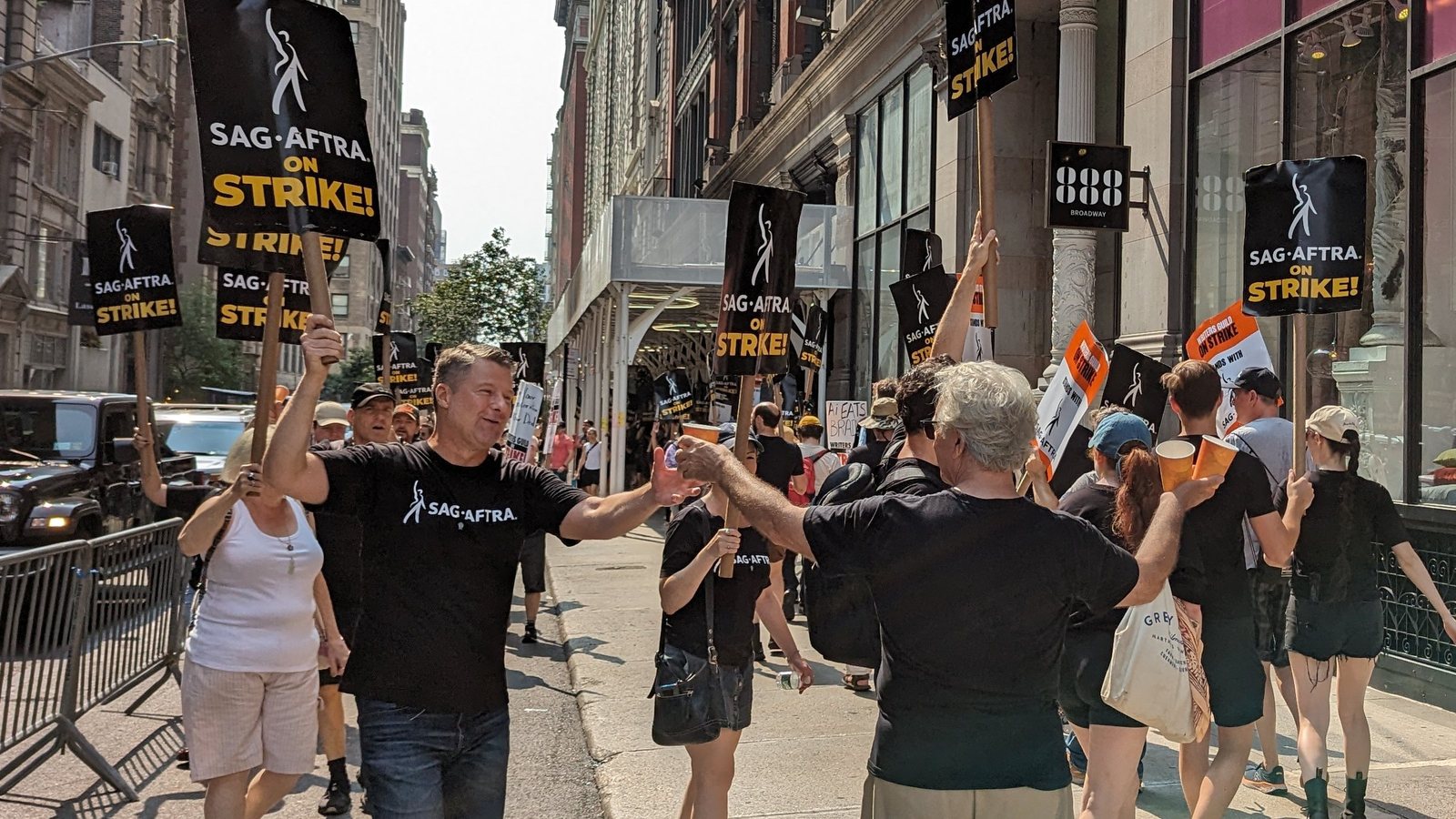
The strongest evidence that streaming has become an ordinary part of the entertainment business may be the labor language it forced into union contracts. The Writers Guild of America’s 2023 MBA created a viewership-based streaming bonus for made-for-high-budget subscription-video projects that are watched by at least 20 percent of a service’s domestic subscribers in the first 90 days, with a bonus equal to 50 percent of the applicable fixed residual. In plain language, a hit now triggers additional compensation in a way that acknowledges streaming performance as something that should matter to the people who helped create it.[4][5]
SAG-AFTRA made a parallel move. Its high-budget SVOD success bonus applies to qualifying shows released on or after January 1, 2024 when enough subscribers watch. The current 2023 TV/Theatrical contracts run through June 30, 2026, which means the next bargaining cycle will arrive with a much clearer picture of how platforms are using these formulas and how transparent they are willing to be about success. That is a profoundly television-like problem. A medium matures when labor no longer accepts “trust us” as a compensation model.[6][7][8]
These provisions do more than improve pay at the margin. They alter the cultural meaning of streaming success. For years, platforms cultivated mystique around viewership, allowing hits to feel simultaneously gigantic and unverifiable. Union bargaining pushed in the opposite direction. If programs generate extraordinary value, creators should participate more directly. The result is a more adult industrial settlement: still imperfect, still disputed, but less willing to pretend that scale can remain a one-way benefit flowing only to the platform owner.[4][5][6]
Streaming still sits on top of a very physical labor market
One reason the streaming debate often gets flattened is that the public sees apps while the underlying industry employs carpenters, drivers, costume workers, editors, actors, caterers, accountants, and set builders. The Motion Picture Association said in February 2026 that the American film and television industry supports 2.01 million jobs, pays $202 billion in total wages, and comprises more than 162,000 businesses. Those are not niche-platform numbers. They describe a national industrial ecosystem with local labor markets, supplier chains, and political leverage in every production center that can host a set or a post-production shop.[9]
This is why arguments over streaming budgets, tax incentives, strike settlements, and release strategies never stay inside Hollywood gossip. They are employment arguments. When a platform cuts orders, stretches release schedules, or leans harder on library content, the effect lands not only on executives and stars but on below-the-line workers and regional economies built around production. When streaming is described as “just software,” that reality gets lost. The industry is digital at the consumer end and heavily physical at the employment end.[8][9]
That dual character is one reason streaming’s adolescence felt so disorienting. The user interface suggested effortless abundance. The labor reality depended on cyclical production, negotiated contracts, and enormous spending commitments that were never going to grow forever. Adulthood means seeing both at once: the convenience of infinite choice on the screen and the finite workforce, time, and capital required to place anything worth watching inside the app.[4][6][8][9]
Streaming grew up by inheriting the old television fights
The cultural disappointment some viewers feel about streaming in 2026 is really disappointment with maturity. The services do not feel boundless anymore. They cancel more aggressively, bundle more openly, advertise more shamelessly, and explain success more in financial rather than visionary terms. But that is what happens when a medium stops being a frontier and becomes an institution. It begins to look less like a revolution and more like a set of durable arguments over rights, labor, pricing, and audience behavior.[1][2][3][4][6]
The good news is that adulthood can also produce better rules. Viewership-linked bonuses, more realistic revenue models, stronger ad businesses, and a clearer sense of where sports and live events fit all make the system more legible than it was during the expansionist haze of the late 2010s and early 2020s. The bad news is that maturity also means limits. Not every prestige gamble gets funded. Not every service gets to act like a growth stock forever. Not every subscriber gets an ad-free, all-inclusive entertainment universe at a price that flatters investor decks.[3][4][5][6][7]
So yes, streaming grew up and became TV again. That is not a collapse. It is a settlement. The audience is still there in enormous numbers. The platforms are still culturally dominant. But the business now behaves like one that knows hits matter, sports matter, labor matters, advertising matters, and the bills eventually have to be paid. That may be less glamorous than the old disruption story. It is also more honest, and probably more durable.[1][2][3][4][6][9]
Source notes
Primary documents and reporting used for this story.
- 1. Nielsen, Streaming shatters multiple records in December 2025 with 47.5% of TV viewing.
- 2. Nielsen, TV viewing hits 12-month high in Nielsen’s January report of The Gauge.
- 3. Nielsen, The Gauge data center.
- 4. Writers Guild of America, Summary of the 2023 WGA MBA.
- 5. Writers Guild of America, 2023 MBA contract changes FAQ.
- 6. SAG-AFTRA, High Budget SVOD Streaming Success Bonus FAQs.
- 7. SAG-AFTRA, 2023 TV/Theatrical Contracts.
- 8. SAG-AFTRA, TV/Theatrical Contracts 2023 summary agreement.
- 9. Motion Picture Association, The American Motion Picture and Television Industry: Creating Jobs, Trading Around the World.
Referenced documents
Corrections status
No corrections have been posted to this story as of April 7, 2026 • 3:00 p.m. EDT. For amendments after launch, use the corrections workflow linked in the footer.
Related reading

Culture • Feature
The Crowd Came Back. The Old Economics Did Not.
Broadway’s record grosses and rising attendance across the arts show that American cultural life is alive again — but not evenly, and not on the same business terms as before.
Opinion • Essay
A Country That Cannot Measure Itself Cannot Govern Itself
Public statistics are not bureaucratic garnish. They are the information infrastructure that lets a democratic state know its labor markets, neighborhoods, businesses, and population well enough to act without governing by mood.

Technology • Report
AI Needs Electricity, Steel, and Time
Behind the chatbot boom is a slower race over transformers, substations, fabs, and the people who know how to build them.