The return is visible now — in the data and in the room
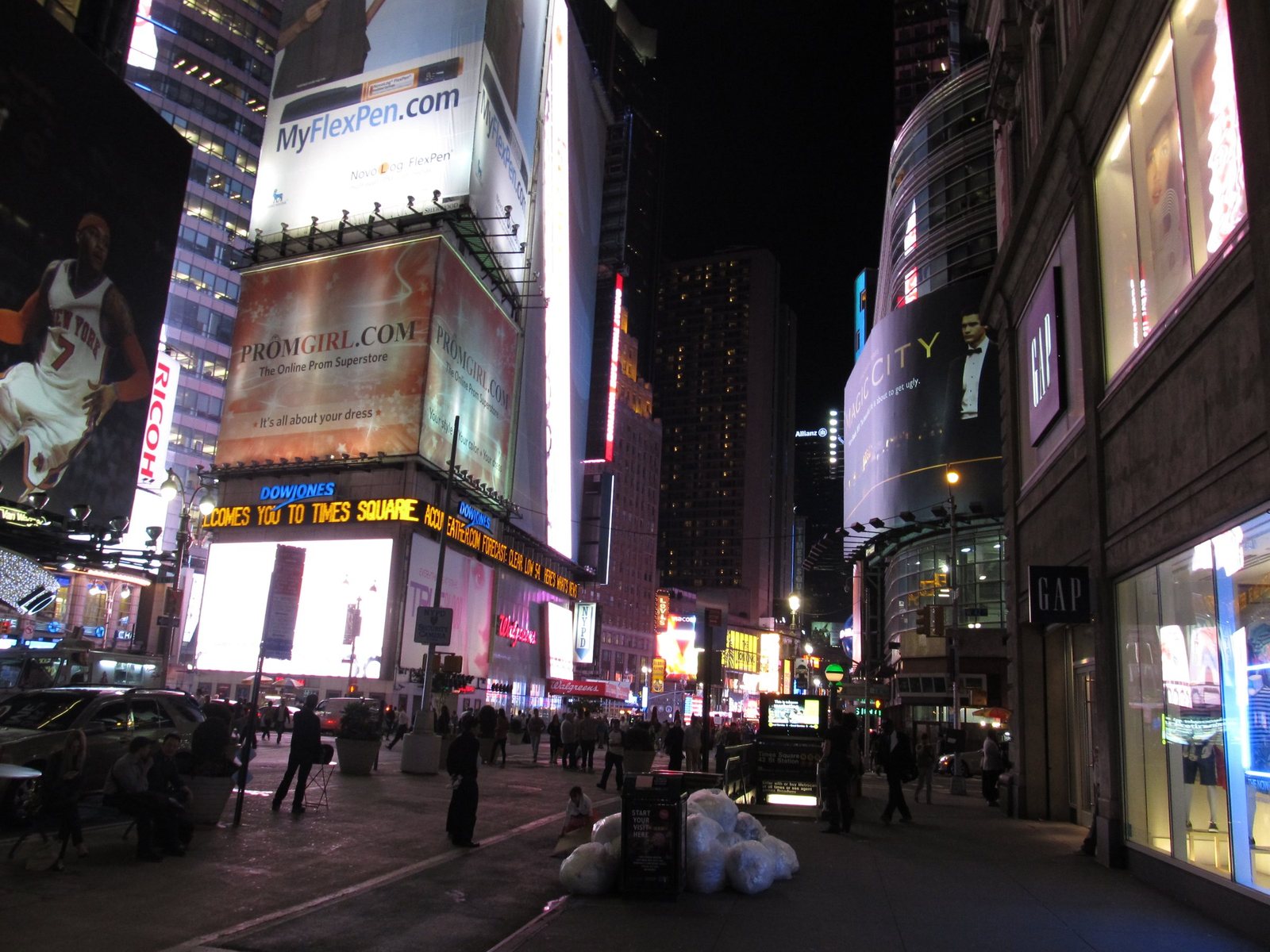
On Broadway, the easiest proof arrives at street level. Walk through Midtown Manhattan near Times Square on a big night and the crowds make the argument before the spreadsheets do. Marquees are bright, restaurants are packed, and the commercial theater district feels busy enough to tempt the old habit of saying that culture is “back.” In a basic sense, that is true. But like most useful truths in 2026, it is only partly true.[4][5]
The Bureau of Economic Analysis offers the macro view. Its 2025 release on 2023 data said arts and cultural economic activity accounted for 4.2% of U.S. GDP, or about $1.17 trillion, and grew 6.6% in real terms that year, outpacing the broader economy. Arts and cultural employment reached 5.4 million jobs, while compensation rose 3.6%. Those are not boutique numbers. They are the footprint of a major sector of national economic life.[1][2]
The category breakdown is equally revealing. BEA said performing arts grew 3.5% in real value added in 2023, museums grew 18%, and design services 6.3%. The strength varied by place too: Washington state, the District of Columbia, New York, California, and Nevada were the only jurisdictions where arts and culture exceeded 5% of GDP. That distribution matters because it shows culture is never one national story. It is a network of regional ecosystems, each with different anchors, audiences, and revenue structures.[1][2]
Attendance rebounded, but access still depends on where and who you are
The National Endowment for the Arts’ 2024 pulse brief makes the recovery feel closer to everyday life. Looking at spring and summer 2024 survey data, the NEA found that 25.2% of U.S. adults attended at least one live, in-person performance or art exhibit in the previous month. Theater, music, and dance drew 21.6%; art exhibits 10.5%; movies 17.0%. Overall, about a third of adults — 33.4% — reported some form of arts attendance in the previous month, while 16.3% said they had personally created, practiced, or performed art.[3]
Those are not the numbers of a society that has abandoned live culture. They suggest something more hopeful and more ordinary: people are going out again, and not only to one kind of venue. They are seeing plays and concerts, visiting museums, watching films, and making art themselves. The NEA’s data also found a relationship between arts participation and social connectedness, with arts attendees more likely to report getting together with friends and family. That is not proof that arts activity causes social health all by itself, but it is strong evidence that culture still operates as shared public life rather than mere private consumption.[3]
But the same brief also contains the friction point. Only 62.2% of adults agreed there were plenty of opportunities to attend arts and culture events nearby, down from 65% in 2017, and participation varied by income, education, and age. That is the part of the rebound that broad national narratives often skip. Attendance can recover overall while access remains uneven. A successful Broadway season in New York does not tell you whether a family in a smaller city has a local theater, affordable tickets, or any arts venue within easy reach.[3]
Broadway is the clearest proof of demand — and a warning about the business model
The Broadway League’s season wrap for 2024–25 reads like a triumph. The league reported 14.7 million attendances, $1.89 billion in grosses, 77 productions, and houses that were 91.2% full on average. It called the season the highest-grossing in Broadway history and the second-best attended. Those are blockbuster figures by any historical standard. They make Broadway the cleanest, easiest exhibit for the case that Americans still want live cultural experiences enough to buy tickets at scale.[4]
The weekly numbers suggest that the momentum has not vanished. The league’s public grosses page listed 36 shows for the week ending March 29, 2026, with $38.7 million in gross receipts and attendance of 294,349. Season-to-date, the figures stood at about $1.588 billion in grosses and 11.94 million in attendance. Broadway remains one of the few cultural sectors where the scoreboard is public, current, and legible enough to shape the national narrative in almost real time.[5]
And yet even the celebratory Broadway release carried a caution from Broadway League president Jason Laks, who pointed to rising costs and shorter windows for productions to establish themselves. That note matters because it punctures a common lazy assumption: if the audience comes back, the economics come back automatically with it. Hits can return faster than margins. Busy houses can coexist with a more volatile business model, especially when productions face compressed runways and weaker tolerance for slow growth.[4]
Beyond Manhattan, the national picture is broader and more fragile
Broadway is a barometer, but it is not the country. The same Broadway League press materials note that Touring Broadway reached approximately 14.9 million attendances in the 2024–25 season, which is a reminder that commercial theater’s footprint extends far beyond Midtown. Major cities across North America still fill houses when a touring musical arrives. That matters economically for local venues, downtown districts, restaurants, and nearby workers. It also matters psychologically because touring productions are often the bridge between a national cultural brand and a local audience.[6]
Still, touring success does not erase the deeper local question exposed by the NEA data: are there enough nearby opportunities for people to participate in cultural life regularly, not just when a marquee event passes through? A region can benefit from one or two large annual draws and still lack the dense middle layer that makes culture feel normal — neighborhood music series, local theater, small museums, community classes, school arts programs, library events, and affordable spaces for people to practice art themselves.[3][6]
That is one reason the recovery feels uneven. Aggregate growth says the sector is bigger again. The attendance data says people are returning. But a healthy cultural system depends on repetition and proximity, not only on spectacular peaks. The challenge is not merely to reopen doors. It is to make culture easy to encounter close to where people actually live.[1][3]
The old economics did not return at the same speed as the audience
The most revealing line in the BEA release may be the one that did not look especially dramatic at first glance: employment rose only 0.3% nationwide in 2023 even as real arts and cultural value added increased 6.6%. Compensation rose 3.6%, which is welcome, but that combination still hints at an uncomfortable reality. Revenue and output can recover faster than institutional stability. Sectors can feel more alive in public while remaining cautious, understaffed, or structurally expensive behind the scenes.[1][2]
This is part of what makes the present moment so difficult to summarize with a single adjective. “Recovered” is too simple. So is “in crisis.” Museums, performing arts organizations, design businesses, filmgoing, commercial theater, and community-based arts groups all live inside different funding models and different patterns of demand. BEA’s industry-by-industry tables make that plain: museums rebounded sharply in 2023, while performing arts rose more modestly, and the geographic distribution of arts activity remained highly uneven.[1][2]
What the public often sees, especially through national media, are the sectors with the clearest signals: Broadway, blockbuster museum exhibitions, major concerts, and prestige cultural events in big cities. What the public sees less easily is the middle: the organizations too large to be purely volunteer-driven but too small to absorb cost volatility with ease; the local institutions that need repeat attendance rather than tourist surges; the programs that depend on affordable space, stable staffing, and modest philanthropy rather than one explosive weekend. The headline rebound can be real while the operating model underneath it remains unsettled.[1][3][4]
The case for culture is social before it is symbolic
It is tempting to defend culture only with economic scale — $1.17 trillion, 5.4 million jobs, record grosses. Those numbers matter, especially when arts funding debates treat culture as ornamental. But the NEA brief suggests the deeper case may be social. Adults who attended arts events or believed arts opportunities existed nearby were more likely to report spending time with friends and family. In an era saturated by solitary screens, live culture still creates rooms where attention is shared, time is synchronized, and strangers react together.[3]
That is why a rebound in arts attendance should not be dismissed as a luxury story for affluent neighborhoods. It is also a civic story. The difference between a place with visible cultural life and a place without it is not only aesthetic. It changes whether public space feels animated, whether local business districts stay active after work hours, whether young people see creative life as something available to them, and whether communities retain institutions that gather different kinds of people in the same room.[1][3]
The next stage is not reopening. It is durability.
The crowd came back. The broad economic footprint is undeniably large again. Broadway’s public scoreboard has been booming. Museums and live performance have real momentum. Yet the old assumption that audience return alone would restore the whole cultural ecosystem looks much less convincing now. The BEA data shows an expanding sector. The NEA data shows uneven access. Broadway shows both extraordinary demand and continued pressure from rising costs and shorter commercial windows.[1][3][4][5]
So the honest reading of American culture in 2026 is neither elegy nor victory lap. It is a system in active recovery, but one whose strongest visible successes can mask structural fragility in the middle and scarcity at the local edge. The future will depend less on whether Americans still want culture — the evidence says they do — than on whether institutions can make that desire durable, nearby, and financially survivable. Rebound was the first act. The harder one is building a cultural economy that can stay open, stay local, and stay human after the applause fades.[1][3][4][6]
Source notes
Primary documents and reporting used for this story.
- 1. U.S. Bureau of Economic Analysis, Arts and Cultural Production Satellite Account, U.S. and States, 2023.
- 2. U.S. Bureau of Economic Analysis, Arts and Cultural Production Satellite Account tables (PDF).
- 3. National Endowment for the Arts, Arts Attendance, Art-Making, and Social Connectedness (Pulse brief).
- 4. The Broadway League, Broadway’s 2024–2025 Season Wraps with 14.7 Million Attendances and Grosses of $1.89 Billion.
- 5. The Broadway League, Broadway Grosses for Week Ending 03/29/2026.
- 6. The Broadway League, Touring Broadway note in 2025 League Awards release.
- 7. The Broadway League, Statistics — Broadway in NYC.
Referenced documents
Corrections status
No corrections have been posted to this story as of April 6, 2026 • 10:28 a.m. EDT. For amendments after launch, use the corrections workflow linked in the footer.
Related reading
Culture • Analysis
Streaming Grew Up and Became TV Again.
Streaming still dominates attention, but its business now looks far less like disruption and far more like television: ad tiers, sports, bundles, labor formulas, and arguments over who shares in the success of a hit.
Economics • Analysis
The Consumer Has Not Quit. The Economy Still Feels Cautious.
The American economy is still growing, but it is doing so with less exuberance, less labor-market churn, and more dependence on household spending than the public rhetoric admits.
Education • Report
School Recovery Is Now an Attendance Story.
The next phase of school recovery is less about whether classes reopened and more about whether students are present, focused, and supported often enough for learning to accumulate.