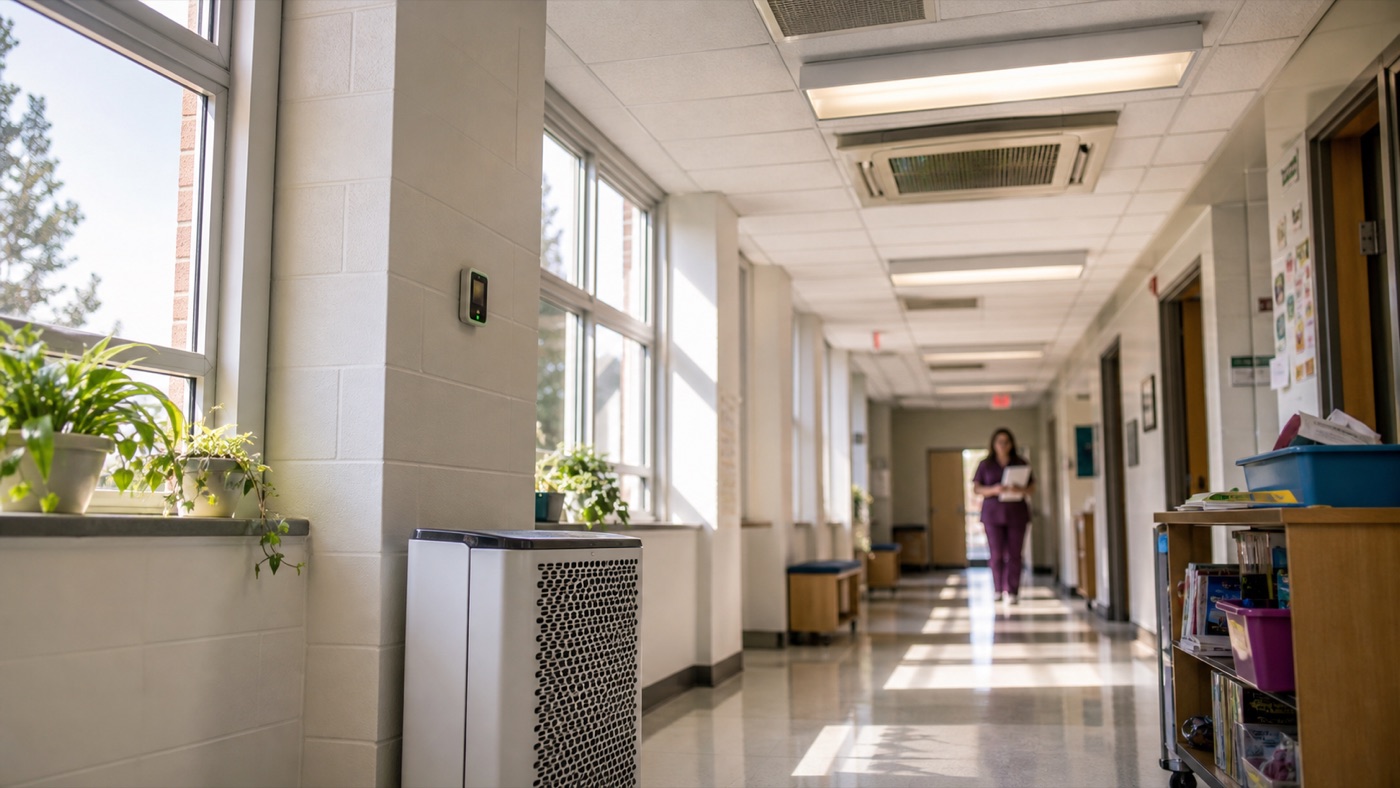
The room is a system
Public health often arrives in the public mind as a person: a doctor, a nurse, a patient, a mask, a vaccine line. But much of it is a room.
CDC ventilation guidance, respiratory-virus air-quality advice, ASHRAE 241, and EPA's clean-air challenge all treat indoor air as a modifiable health environment rather than a neutral background. [1][2]
That shift is simple and enormous. It says disease risk is not only carried by bodies; it is shaped by the space those bodies share.
Put plainly, this is where the large system becomes readable. The policy language, engineering vocabulary, scientific measurement, and market signals all matter, but the test is more ordinary: whether people can see the risk early enough to make a better decision before the failure becomes personal.
The problem is that air infrastructure is invisible when it works and expensive when it fails. Nobody applauds a filter that prevented an outbreak no one can see. [3][5]
A classroom, clinic, office, bus, or apartment is not just a container. It is a respiratory commons, and everyone in it participates whether they know it or not.
The everyday stakes are the reason the receipts matter. A source note can look small at the bottom of a page, but each one is a handhold for the reader: a way to separate what the story knows from what it argues, what has been measured from what still has to be judged.
The next public-health system will have ducts, sensors, filters, maintenance logs, and budgets.
Ventilation is not vibes
Opening a window feels intuitive, but ventilation is not a mood. It is a measurable exchange between stale indoor air and cleaner air from outside or through treatment.
WHO, CDC, ASHRAE, and EPA sources all describe ventilation and filtration as practical controls that require design, operation, and maintenance. [6][1]
The reader-friendly translation is this: air should not simply sit in a crowded room collecting what people exhale. It should be diluted, filtered, exhausted, or cleaned.
Put plainly, this is where the large system becomes readable. The policy language, engineering vocabulary, scientific measurement, and market signals all matter, but the test is more ordinary: whether people can see the risk early enough to make a better decision before the failure becomes personal.
The difficulty is that one building's solution may not fit another. Outdoor pollution, wildfire smoke, weather, old HVAC systems, and energy costs can all change the right answer. [3][4]
Room test: what would you check first?
Start with whether outdoor air is being supplied, whether filters are appropriate and maintained, whether portable filtration is needed, and whether a simple CO2 reading suggests the room is not clearing exhaled air well during occupancy.
A teacher should not have to become a mechanical engineer to know whether the room is safe enough. The system should make the answer visible.
The everyday stakes are the reason the receipts matter. A source note can look small at the bottom of a page, but each one is a handhold for the reader: a way to separate what the story knows from what it argues, what has been measured from what still has to be judged.
Public buildings need clean-air standards that survive the end of an emergency and become ordinary operations.
CO2 is a clue, not a verdict
Carbon dioxide monitors became a small obsession for people who started wondering what exactly they were breathing in crowded rooms. The device is not magic, but it is useful.
Building-health guidance uses CO2 as an indicator of how much exhaled air is accumulating indoors, while emphasizing that CO2 is not itself a direct measure of infection risk. [5][8]
That distinction matters because a simple number can empower or mislead. A high reading says the room may not be clearing air well. It does not identify who is contagious or what pathogen is present.
Put plainly, this is where the large system becomes readable. The policy language, engineering vocabulary, scientific measurement, and market signals all matter, but the test is more ordinary: whether people can see the risk early enough to make a better decision before the failure becomes personal.
The best public use of CO2 is humble: treat it as a smoke alarm for ventilation attention, not as a perfect health score. [6][2]
A monitor on a classroom shelf can make the invisible a little less invisible. It gives students, teachers, and parents a way to ask better questions.
The everyday stakes are the reason the receipts matter. A source note can look small at the bottom of a page, but each one is a handhold for the reader: a way to separate what the story knows from what it argues, what has been measured from what still has to be judged.
The future of indoor health may include cheap sensors, but sensors matter only when someone is responsible for responding to them.
Filtration is work
A filter is a promise that must be replaced. That sounds dull because it is dull, and that is exactly why it belongs in public health.
EPA school guidance, CDC ventilation material, EPA's clean-air challenge, and ARPA-H research all point toward filtration as a practical way to reduce exposure when installed and maintained correctly. [4][5]
The technology is only part of the story. The bigger part is procurement, sizing, noise, placement, maintenance, and the annual budget line that keeps the filter from becoming decorative plastic.
Put plainly, this is where the large system becomes readable. The policy language, engineering vocabulary, scientific measurement, and market signals all matter, but the test is more ordinary: whether people can see the risk early enough to make a better decision before the failure becomes personal.
Many institutions love capital projects and neglect maintenance. Clean air punishes that habit because dirty filters, blocked vents, and ignored devices quietly erase the benefit. [1][10]
The person who changes the filter is part of the public-health workforce, whether or not the job title says so.
The everyday stakes are the reason the receipts matter. A source note can look small at the bottom of a page, but each one is a handhold for the reader: a way to separate what the story knows from what it argues, what has been measured from what still has to be judged.
If clean air becomes a serious promise, facilities staff will need the respect and resources that serious promises require.
Wildfire smoke moves indoors
The indoor-air story is not only about viruses. Wildfire smoke has taught many Americans that outside air can become dangerous and that buildings vary wildly in how well they protect the people inside.
EPA, CDC, WHO, and workplace-health sources frame indoor air as a defense against multiple hazards, including particles from smoke and heat stress that can move through buildings and workplaces. [5][1]
That broadens the argument. A building that can filter air during a respiratory surge may also help during smoke days. A building that handles heat well may protect workers and students before illness starts.
Put plainly, this is where the large system becomes readable. The policy language, engineering vocabulary, scientific measurement, and market signals all matter, but the test is more ordinary: whether people can see the risk early enough to make a better decision before the failure becomes personal.
Ventilation and filtration can pull in opposite directions during smoke events. Bringing in more outdoor air is not always the right move if the outdoor air is hazardous. [6][9]
Room test: what would you check first?
Start with whether outdoor air is being supplied, whether filters are appropriate and maintained, whether portable filtration is needed, and whether a simple CO2 reading suggests the room is not clearing exhaled air well during occupancy.
A parent does not care whether the hazard is viral aerosol or smoke particle. They want the child in the room to breathe air that has been taken seriously.
The everyday stakes are the reason the receipts matter. A source note can look small at the bottom of a page, but each one is a handhold for the reader: a way to separate what the story knows from what it argues, what has been measured from what still has to be judged.
Climate adaptation and infectious-disease prevention are going to meet in the same mechanical room.
Schools are the test of whether we mean it
Schools are where clean-air rhetoric becomes hard. They are crowded, underfunded, politically exposed, aging, emotionally important, and occupied by children who did not choose the building.
EPA school IAQ tools, Healthy Buildings school work, CDC guidance, and ASHRAE standards all make the case that classrooms deserve serious air management. [4][8]
The school lens strips away abstraction. If a society says children matter, it cannot treat the air in their classrooms as an afterthought.
Put plainly, this is where the large system becomes readable. The policy language, engineering vocabulary, scientific measurement, and market signals all matter, but the test is more ordinary: whether people can see the risk early enough to make a better decision before the failure becomes personal.
The difficulty is not knowing that better air helps. It is deciding who pays, who inspects, who maintains, and who explains the difference between a real upgrade and a press release. [2][3]
A student trying to learn in a stuffy room is not experiencing a policy debate. They are experiencing the building directly, breath by breath.
The everyday stakes are the reason the receipts matter. A source note can look small at the bottom of a page, but each one is a handhold for the reader: a way to separate what the story knows from what it argues, what has been measured from what still has to be judged.
The clean-air school day should be as basic as safe water, working lights, and doors that lock.
Hospitals know this already
Hospitals have always understood that air can be clinical. Isolation rooms, pressure differentials, filtration, and ventilation are part of the architecture of care.
CDC, ASHRAE, National Academies, and ARPA-H sources show how infectious-aerosol science and building technology are converging on a broader public-health agenda. [1][3]
The question now is how much of that seriousness can move beyond specialized health-care spaces into schools, offices, shelters, transportation, and homes.
Put plainly, this is where the large system becomes readable. The policy language, engineering vocabulary, scientific measurement, and market signals all matter, but the test is more ordinary: whether people can see the risk early enough to make a better decision before the failure becomes personal.
Not every room can become a hospital room, and it should not. But ordinary rooms can still be better than they are. [7][10]
The leap from hospital engineering to daily life is not about panic. It is about learning from places that already know air can carry risk.
The everyday stakes are the reason the receipts matter. A source note can look small at the bottom of a page, but each one is a handhold for the reader: a way to separate what the story knows from what it argues, what has been measured from what still has to be judged.
A mature society will not wait for the next outbreak to discover its vents.
The maintenance democracy
Clean indoor air is a democratic idea disguised as facility management. It protects people who may never know each other and may never agree on anything else.
EPA, WHO, OSHA, and building-health sources all suggest that better indoor environments require routine practices, not just emergency purchases. [5][6]
That is why the room is the public-health frontier. It turns prevention from a personal virtue into a shared condition.
Put plainly, this is where the large system becomes readable. The policy language, engineering vocabulary, scientific measurement, and market signals all matter, but the test is more ordinary: whether people can see the risk early enough to make a better decision before the failure becomes personal.
The hardest part is accountability. If a building's air is poor, who is responsible: the owner, the school board, the landlord, the employer, the regulator, the engineer, or everyone a little? [9][8]
People should not have to buy private air cleaners for every room of public life. Public life should be built to breathe.
The everyday stakes are the reason the receipts matter. A source note can look small at the bottom of a page, but each one is a handhold for the reader: a way to separate what the story knows from what it argues, what has been measured from what still has to be judged.
The next public-health victory may not look like a miracle drug. It may look like a maintenance schedule that nobody lets slide.
Source notes
Public-health, building-standard, school-air-quality, and ventilation sources used to check the claims in this story.
- CDC, Improving Ventilation in Buildings. Used for ventilation as a respiratory-risk reduction tool.
- CDC, Preventing Respiratory Viruses: Air Quality. Used for infectious-disease prevention context.
- ASHRAE, Standard 241: Control of Infectious Aerosols. Used for the building-standard turn in infectious aerosol control.
- EPA, Indoor Air Quality Tools for Schools. Used for school indoor-air quality context.
- EPA, Clean Air in Buildings Challenge. Used for building-level mitigation steps.
- World Health Organization, Roadmap to improve and ensure good indoor ventilation. Used for global public-health guidance.
- National Academies, Airborne Transmission of SARS-CoV-2. Used for the science of airborne transmission.
- Harvard Healthy Buildings, Schools for Health. Used for school-building health context.
- OSHA, Heat Injury and Illness Prevention Rulemaking. Used to connect indoor environments to heat exposure.
- ARPA-H, BREATHE Program. Used for innovation and public-health technology context.
Related reading
Health • Report
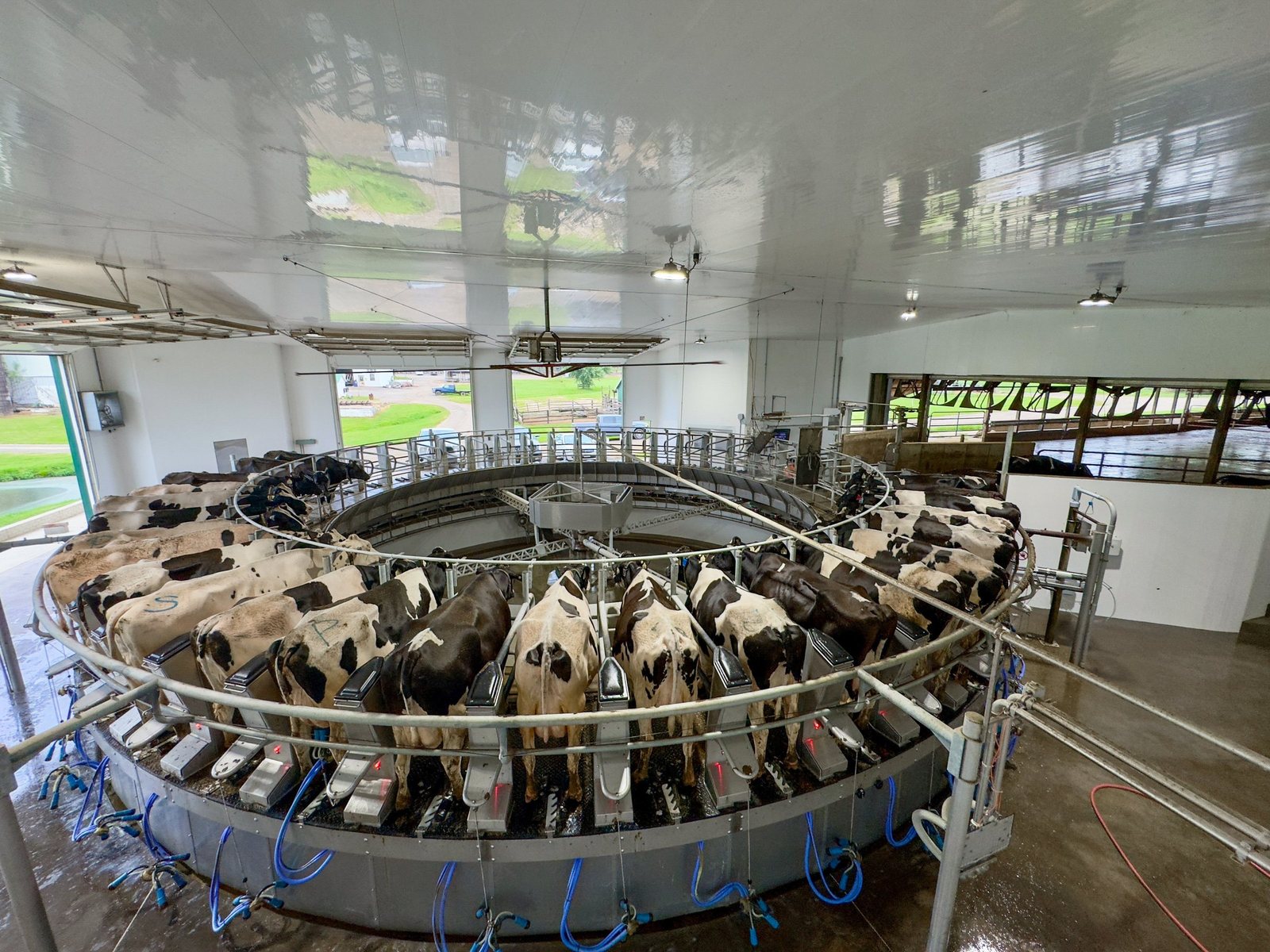
Bird Flu Changed Farm Policy Before It Changed Human Medicine.
H5N1 remains a low public-health risk for the general public, but it has already redrawn dairy surveillance, farm biosecurity, and the line between agricultural disease control and health preparedness.
By Ruth Alvarez • April 7, 2026 • 12:35 p.m. EDT
Health • Report
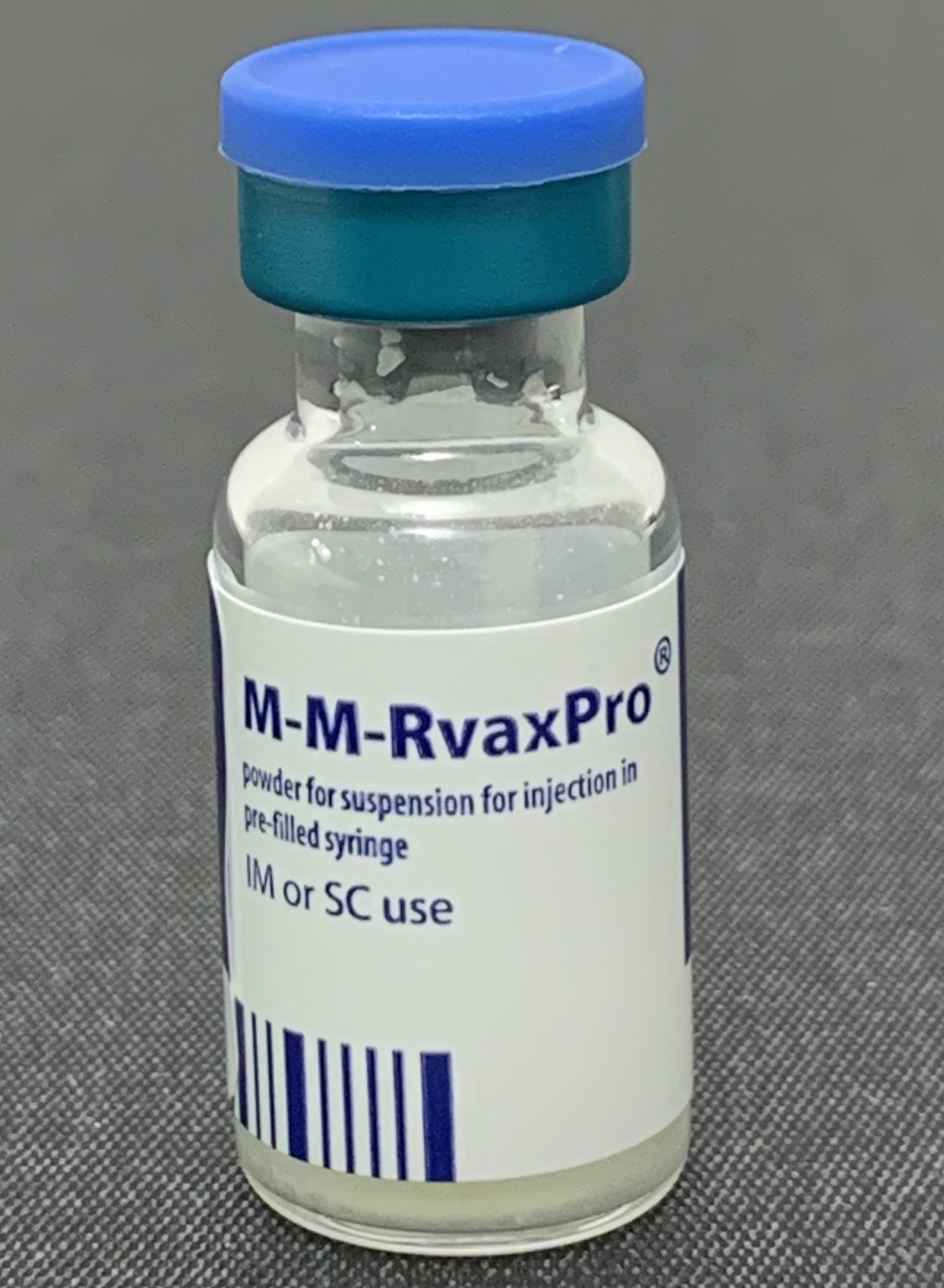
Measles Is Not a Childhood Memory Anymore.
The 2026 measles surge is a reminder that public health depends less on dramatic emergency language than on whether routine vaccination systems still hold.
By Ruth Alvarez • April 6, 2026 • 1:20 p.m. EDT

Memory • Visual Dossier
Mob Ties
Thirty-one illustrated plates move from Prohibition Chicago to the Ravenite raid—a working visual sequence of faces, raids, tools, crime scenes and underworld mythology.
By The Press • July 18, 2026 • Local draft