World • Analysis

America's Military Year Is a Map of Force

From the Maduro raid to the Iran war, Hormuz, cartel boat strikes, classified AI and the defense factory floor, 2026 shows how U.S. power now moves through operations, logistics and production.

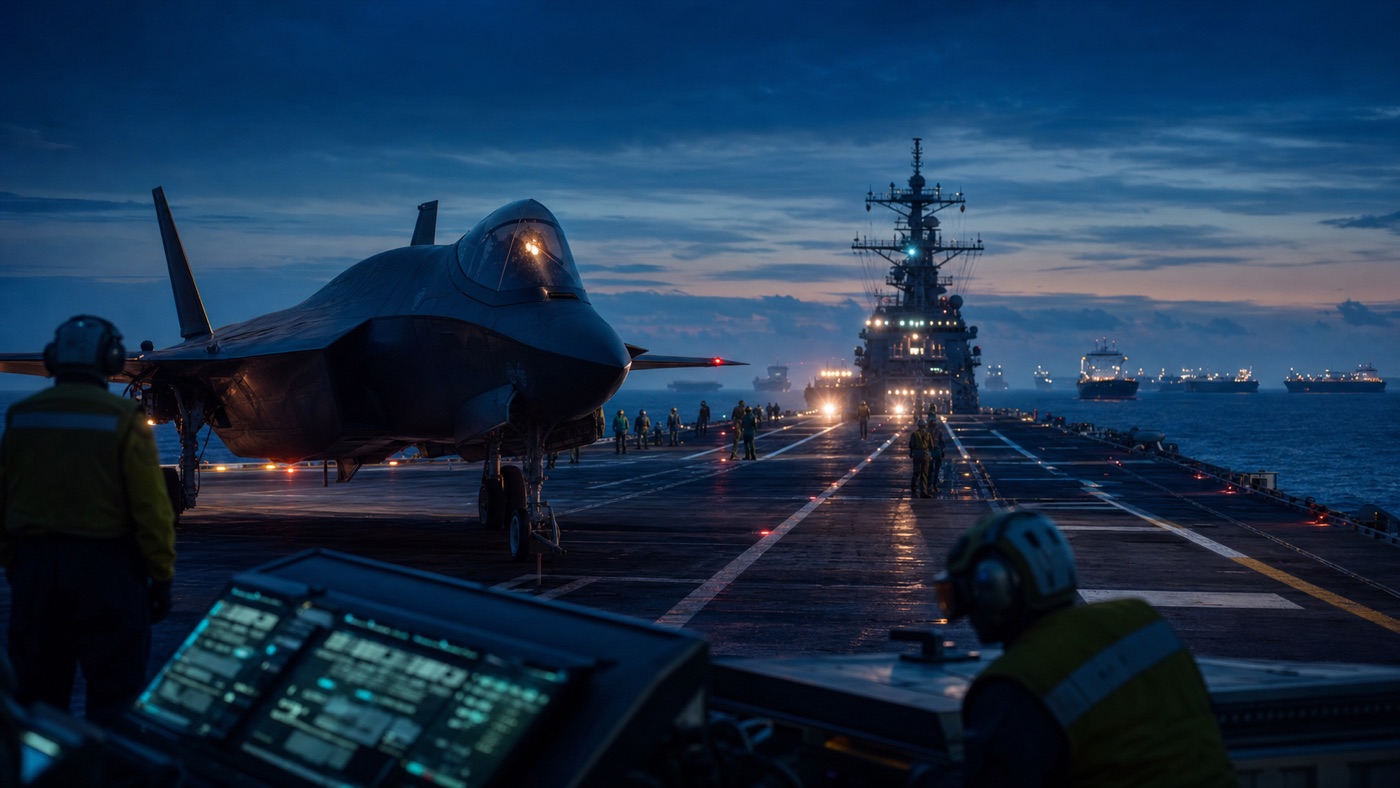
U.S. carrier deck at blue hour with a stealth aircraft, deck crew, command screens and distant ship lights.
A carrier-deck visual for The Press, illustrating U.S. military logistics, carrier power, command systems and maritime pressure in 2026.
Reader note: The rail cards in this feature link to real source material: official releases, news reports, legal criticism, policy documents, and defense-industry reporting. The local rail images are matched to each card's topic and are not fake social screenshots, eyewitness photos, or source screenshots.

The year force stepped forward

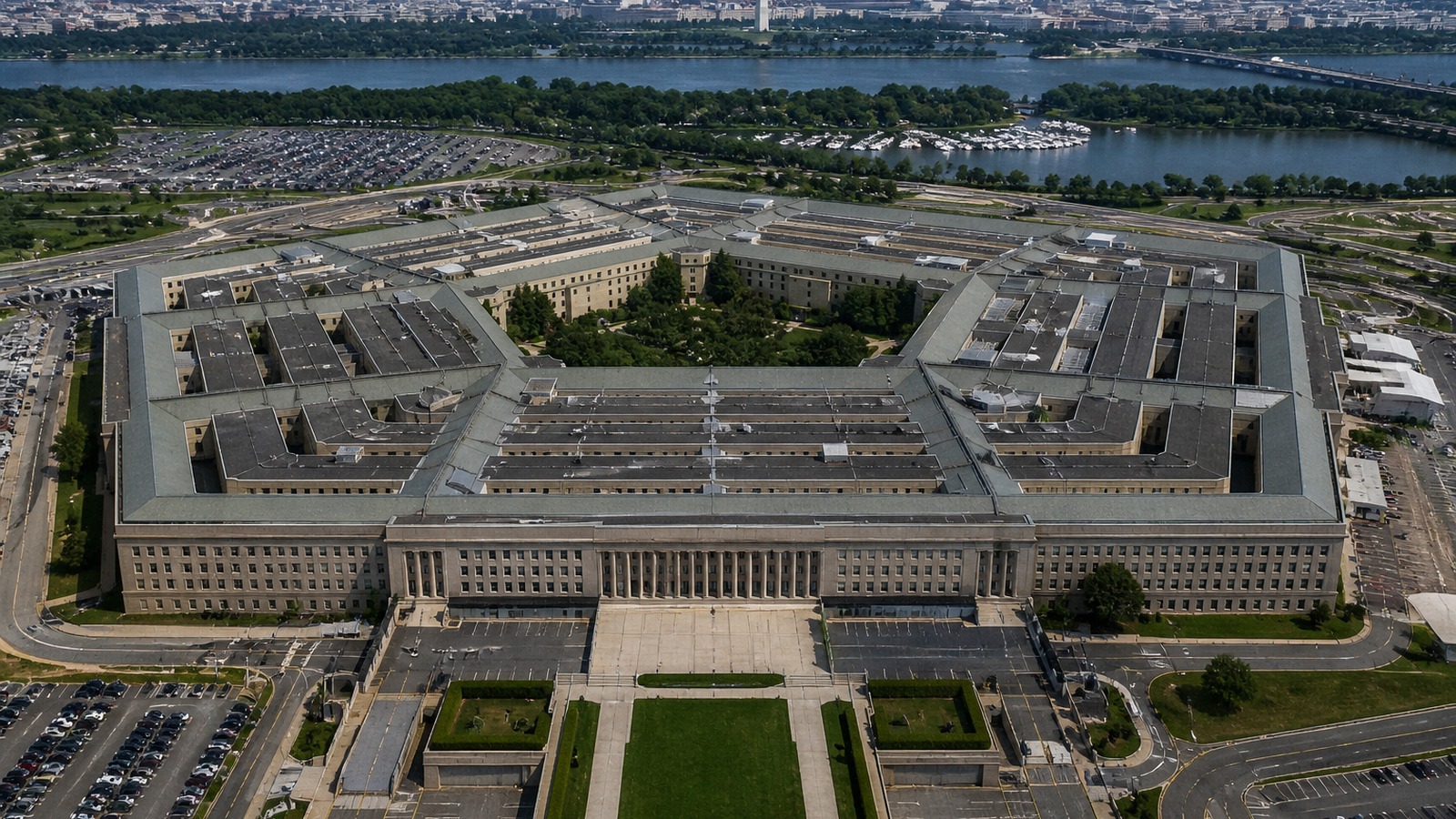
For years, American military power often appeared in the background of public life: bases overseas, aircraft carriers on distant water, special operations briefings, budget fights, procurement scandals, congressional hearings, and the familiar language of deterrence. In 2026, it moved into the foreground. The United States did not merely threaten, train, sail, arm, or signal. It struck Venezuela, captured Nicolas Maduro, kept killing alleged drug traffickers at sea, launched a major war against Iran, imposed a blockade, tried to force open the Strait of Hormuz, and invited frontier AI firms deeper into classified military networks. The machinery was no longer hidden by the word "posture." It became the story.

The result is a year that feels less like a single doctrine than a map of pressure. In the Western Hemisphere, the Trump administration treated cartels and Maduro's state as one security theater. In the Middle East, it used air, naval, missile, cyber, logistics, and economic power against Iran, then found itself wrestling over one narrow waterway that the whole world needs. In Washington, the budget machine translated the moment into drones, ships, munitions, missile defense, AI, and industrial-base expansion. The line between war planning and factory planning grew thin enough to read through.

This article is not an advertisement for power, and it is not a cartoon denunciation of it. The only honest way to look at the American military in 2026 is to see both sides of the machine at once. It is extraordinarily capable. It can move aircraft, ships, soldiers, intelligence, fuel, missiles, data, and money at a speed few states can match. It can also outrun law, oversight, alliances, facts, and civilian consequences when political leaders treat every problem as a target set. The first lesson of 2026 is blunt: the United States still has the world's most formidable military system. The second lesson is worse: formidable systems do not automatically know when to stop.

Maduro and the return of the raid

The first major shock came before most Americans had settled into the year. On January 3, U.S. forces struck Venezuela and captured Nicolas Maduro and his wife, Cilia Flores, in an operation that the Trump administration presented as both law enforcement and hemispheric security. PBS, carrying AP reporting, described a large-scale American operation that removed a sitting leader from power and flew him out of the country. Trump then said the United States would "run" Venezuela for a period of time and use its oil reserves while a transition was arranged. [24][25]

The operation was spectacular because it was tactical. It was also spectacular because it was political. It collapsed the distance between an indictment and an intervention. Maduro had long faced U.S. criminal charges, sanctions, diplomatic isolation, and rejection from Washington after disputed elections and human-rights abuses. But an indictment is a document. A raid is a fact on the ground. Once American forces grabbed a sitting foreign leader, every legal argument became secondary to the visible premise: Washington had decided that its military could serve a warrant by changing another country's government.

That is why comparisons to Panama in 1989 appeared immediately. The raid did not only remove a target; it reopened a file many countries in Latin America thought Washington had learned to keep shut. WOLA condemned the unilateral intervention even while acknowledging Maduro's authoritarian record. Le Monde framed Congress as one of the operation's casualties, because the strike made war powers and legislative authorization look like furniture the executive branch could walk around. [29][30]

The machinery behind the raid mattered as much as the man captured. Axios reported that the United States used more than 150 aircraft, including bombers, helicopters, and drones. AP accounts described months of buildup around South America, attacks on alleged drug boats, and an operation that blended military force with criminal prosecution. That is the signature of the Trump-era approach in the hemisphere: treat trafficking, authoritarian rule, hostile foreign influence, migration, oil, and domestic political messaging as one theater. The law may keep those categories separate. The operation did not.

Iran made the map global

If Venezuela made the year feel hemispheric, Iran made it global. Operation Epic Fury began on February 28 at 1:15 a.m., according to CENTCOM's fact sheets. The first accounts described a vast U.S.-Israeli campaign against Iran's military, air defenses, missile infrastructure, command networks, naval assets, and senior leadership. AP later reconstructed the hours before the order, reporting that Trump had moved from frustration over nuclear talks to authorizing the strike from Air Force One. [2][5]

Epic Fury was not sold as a short punitive shot across the bow. At a Pentagon briefing, senior officials warned that the mission would take time. Axios reported Gen. Dan Caine saying the objectives would require difficult, gritty work. Military.com reported that Hegseth defended expanding combat while insisting that a major campaign did not equal "endless war." Those phrases mattered because the administration was trying to occupy two positions at once: overwhelming force and controlled duration, maximum pressure and no quagmire. [6][7]

The tools were the familiar American premium kit: long-range bombers, fighters, naval missiles, electronic warfare, drones, precision artillery, ISR networks, tankers, satellites, cyber support, and the constant unseen labor of maintenance and replenishment. Axios reported early battlefield use of LUCAS attack drones and Precision Strike Missiles from HIMARS, while CENTCOM fact sheets emphasized scale and tempo. None of that makes the campaign simple. The more complicated the system, the more it depends on invisible choreography: spare parts, mission data files, air refueling tracks, flight-line crews, targeting lawyers, translators, satellite bandwidth, regional basing rights, and the willingness of allies to absorb risk.

That list can sound like a hardware catalog, but in a real campaign it becomes a chain of dependencies. A B-2 or B-52 needs tanker support, mission planning, crews, weapons loading, and secure bases. A Tomahawk needs a launcher, a ship or submarine, maintenance, targeting, and replacement production. A drone needs operators or autonomy, sensors, datalinks, batteries or fuel, and a command structure that knows when not to fire. The expensive weapon is only the visible tip of a system that extends backward into training ranges, port capacity, software updates, and congressional appropriations.

Then came the water. Iran's restrictions around the Strait of Hormuz, and the U.S. blockade of Iranian ports and Iran-linked shipping, turned the campaign into an energy, shipping, insurance, and inflation crisis. The strait is not merely a narrow blue line on a map. The EIA says oil flows through Hormuz averaged about 20 million barrels per day in 2024, roughly a fifth of global petroleum liquids consumption. The IEA describes the route as carrying about a quarter of world seaborne oil trade and a large share of LNG from Qatar and the UAE. Once traffic slows there, the war leaves the military page and walks into the grocery bill. [17][18]

Southern Spear never really stopped

The most unsettling military operation of 2026 may be the one that has become easiest to miss. Operation Southern Spear, the campaign of strikes on alleged drug boats in Caribbean and Pacific waters, kept going while the Iran war dominated attention. AP reported fresh strikes in May: two people killed in a Caribbean attack on May 4, three killed in the eastern Pacific on May 5, with U.S. officials repeating that the vessels were suspected of trafficking drugs along known routes. Axios wrote that the United States had killed more than 180 people in eight months with little public scrutiny. [33][34][36]

The administration's claim is not subtle. Trump has said the United States is in an armed conflict with cartels. The new counterterrorism strategy makes the Western Hemisphere cartel fight a central priority. SOUTHCOM's public language talks about choking off illicit financing and disrupting maritime networks. If you accept that frame, small boats become military targets. If you reject it, they remain criminal suspects who should be interdicted, arrested, charged, and tried. That is not a small difference. It is the difference between law enforcement and killing from the sky.

Legal scholars at Just Security argue that the crews, drugs, and boats are not lawful military targets because there is no armed conflict that makes them targetable under the law of war. AP reported that legal experts said killing survivors of a boat strike would be criminal if it happened as described. ACLU-linked filings challenged the government's theory. USNI Proceedings warned that the campaign risks lawlessness. The administration's defenders argue that traditional policing failed and that cartels behave like hybrid threats. The conflict is therefore not only in the water; it is in the definition of war itself. [40][38][39]

This is where the 2026 pattern becomes clearest. Maduro was treated as a criminal defendant whose capture required a military raid. Cartels are treated as armed enemies whose boats can be destroyed before trial. Iran is treated as a state adversary whose ports can be blockaded and whose military infrastructure can be struck at scale. Different theaters, same instinct: turn the problem into a target, then treat military success as political proof.

The machine behind the machinery

All of this force has to be bought before it can be used. That is where the military-industrial complex enters the story not as a slogan, but as a production schedule. Reuters reported that Trump's fiscal 2027 defense request would reach $1.5 trillion, with a new category of presidential priorities covering Golden Dome missile defense, drone dominance, artificial intelligence and data infrastructure, and the defense industrial base. The request included $53.6 billion for autonomous drone platforms and warzone logistics, and $21 billion for munitions, counter-drone technologies, and advanced systems. [57]

That is the real grammar of 2026 military power: not just "bombers," but bomber production, spare engines, hardened shelters, tanker availability, stealth coatings, data links, stockpiles, depot maintenance, and surge lines. Not just "ships," but shipyards, dry docks, welders, propulsion systems, missile cells, crewing, repair capacity, and the bottleneck of time. Not just "AI," but classified cloud, cleared personnel, model routing, access controls, logs, red teams, and whether a vendor can say no after the system is inside a secret network.

SIPRI said global military expenditure reached $2.887 trillion in 2025, the eleventh consecutive annual rise. Its reporting on arms-company revenue shows the demand signal moving through firms that make aircraft, missiles, ships, sensors, and services. The Trump budget tries to add an American acceleration layer on top: Golden Dome, shipbuilding, the F-47, CCA drones, counter-drone systems, hypersonics, munitions, critical minerals, and data infrastructure. [55][56]

The phrase "military-industrial complex" can sound old because Eisenhower made it famous. The 2026 version is not old. It is software companies, satellite providers, AI labs, cloud vendors, venture-backed weapons startups, old primes, semiconductor firms, shipyards, battery supply chains, rare-earth politics, and congressional districts that want jobs. It is the union hall and the cap table. It is the classified cloud and the blast furnace. It is Palmer Luckey's factory and Lockheed's missile line, SpaceX's launch capacity and General Dynamics' shipyards, Nvidia's AI stack and the old truth that a shell still has to be manufactured somewhere.

Shipbuilding shows the trap. A budget can name a destroyer, submarine, amphibious ship, or unmanned vessel in one line. The actual ship arrives through a country of steel, cables, pumps, valves, skilled labor, subcontractors, test failures, and late components. The Navy can want more hulls, the Pacific can require more hulls, and Congress can fund more hulls, yet the yard still has to build them. The same is true for munitions. A magazine can be emptied by policy much faster than a factory can refill it. In 2026, American power is learning again that speed on the battlefield is limited by slowness in the industrial base.

Best tools, best problems

If the question is what America's best military tools are this year, the answer is not one machine. The best tool is the network. The U.S. military's advantage is its ability to connect aircraft, ships, satellites, special operations, cyber units, logistics, sensors, allied bases, intelligence agencies, contractors, and commanders into a single operating rhythm. The aircraft carrier is powerful because it is a floating runway, command post, weapons magazine, repair shop, diplomatic symbol, and logistics problem all at once. The F-35 is powerful because it senses, shares, and fuses. The B-2 and B-21 matter because they reach defended targets. The F-47 matters because it is being built for a future where crewed aircraft quarterback uncrewed combat systems. [63]

The most revealing new machines are the ones that blur categories. Collaborative Combat Aircraft like the YFQ-42A and YFQ-44A are not just drones; they are arguments about mass, risk, autonomy, and whether the Air Force can afford enough aircraft to survive a fight with a peer competitor. The Air Force says it is validating open architecture and mission autonomy across CCA prototypes. DefenseScoop and Defense News have followed testing that pushes semiautonomous flight from PowerPoint into aircraft behavior. [64][65]

The best weapons are also the least glamorous. Munitions depth is a weapon. Fuel is a weapon. Sealift is a weapon. A functioning dry dock is a weapon. The ability to reload vertical launch cells, repair battle damage, keep pilots trained, route cargo through contested hubs, and produce replacement drones faster than an enemy can adapt may matter more than any single exquisite platform. The war in Ukraine already taught Washington that precision without production is a brittle luxury. Iran and Southern Spear are teaching the same lesson in different accents.

That is why the best American machine may still be the pallet. Pallets move ammunition, food, medical kits, spare parts, drone batteries, satellite terminals, and repair tools. Pallets go into C-17s, onto ships, through ports, across bases, and into warehouses where bar codes and forklifts become part of the order of battle. The country that can keep moving pallets while under political pressure, cyber pressure, weather pressure, and enemy pressure can keep fighting after the first beautiful strike video has aged into history. Logistics is not the support act. It is the endurance of strategy.

Then there is AI. On May 1, the War Department announced agreements with frontier AI companies to deploy advanced capabilities on classified networks for lawful operational use. AP, Reuters, Federal News Network, Breaking Defense, DefenseScoop, and company statements all describe a military effort to move AI into Impact Level 6 and 7 environments, where classified data and sensitive decisions live. The roster included SpaceX, OpenAI, Google, Nvidia, Reflection, Microsoft, Amazon Web Services, and Oracle in the official release. [41][42]

AI will not make war clean. It will make war faster, denser, and easier to rationalize. A model that summarizes intelligence, ranks options, drafts plans, or highlights targets can shape the human decision before the human knows he has been shaped. OpenAI says its agreement includes guardrails against mass domestic surveillance, directing autonomous weapons, and high-stakes automated decisions. That matters. It also leaves the hard question: in a classified room, who verifies the guardrails when the tempo rises and the politics demand results? [47][51]

Strategy is a supply chain

Trump's military strategy in 2026 is often described as "peace through strength." The more accurate description may be strength through simultaneity. The administration is trying to do many things at once: dominate the Western Hemisphere, punish Iran, deter China, pressure allies to spend more, militarize border and counter-drug policy, accelerate missile defense, push AI into classified work, rebuild munitions stocks, expand drones, and make the industrial base a visible part of national identity. It is a strategy of pressure everywhere, with logistics asked to make the contradictions look manageable.

That strategy has real strengths. It restores fear in adversaries who had come to doubt American willingness to act. It tells allies that Washington can still generate mass and tempo. It forces industry to stop treating capacity as somebody else's problem. It acknowledges that wars are decided by production, repair, computing power, energy, transport, and replenishment as much as by speeches. It also recognizes a truth many democracies avoided for too long: if the factory cannot scale, the doctrine is poetry.

But the weaknesses are just as real. Pressure everywhere can become prioritization nowhere. A carrier off Venezuela is not in the Persian Gulf. A missile fired at Iran is not in a Pacific magazine. A drone line building cheap attritable systems still needs chips, motors, explosives, software, and test ranges. A budget request can promise ships faster than shipyards can train welders. An AI deal can promise decision superiority without solving accountability. A raid can remove a dictator and create a governing problem. A blockade can pressure Iran and trap seafarers, fuel inflation, and spook allies who need the strait open more than they need a Washington talking point.

The deepest strategic question is not whether the United States can hit hard. It can. The question is whether it can convert shock into durable order. In Venezuela, that means whether Maduro's capture leads to legitimate transition or a U.S.-managed resource and legitimacy crisis. In Iran, it means whether destruction of military capacity produces a settlement or a wider cycle of retaliation. In the cartel campaign, it means whether strikes reduce drug harm or merely normalize lethal force outside courtrooms. In the industrial base, it means whether money becomes capacity or simply becomes margin.

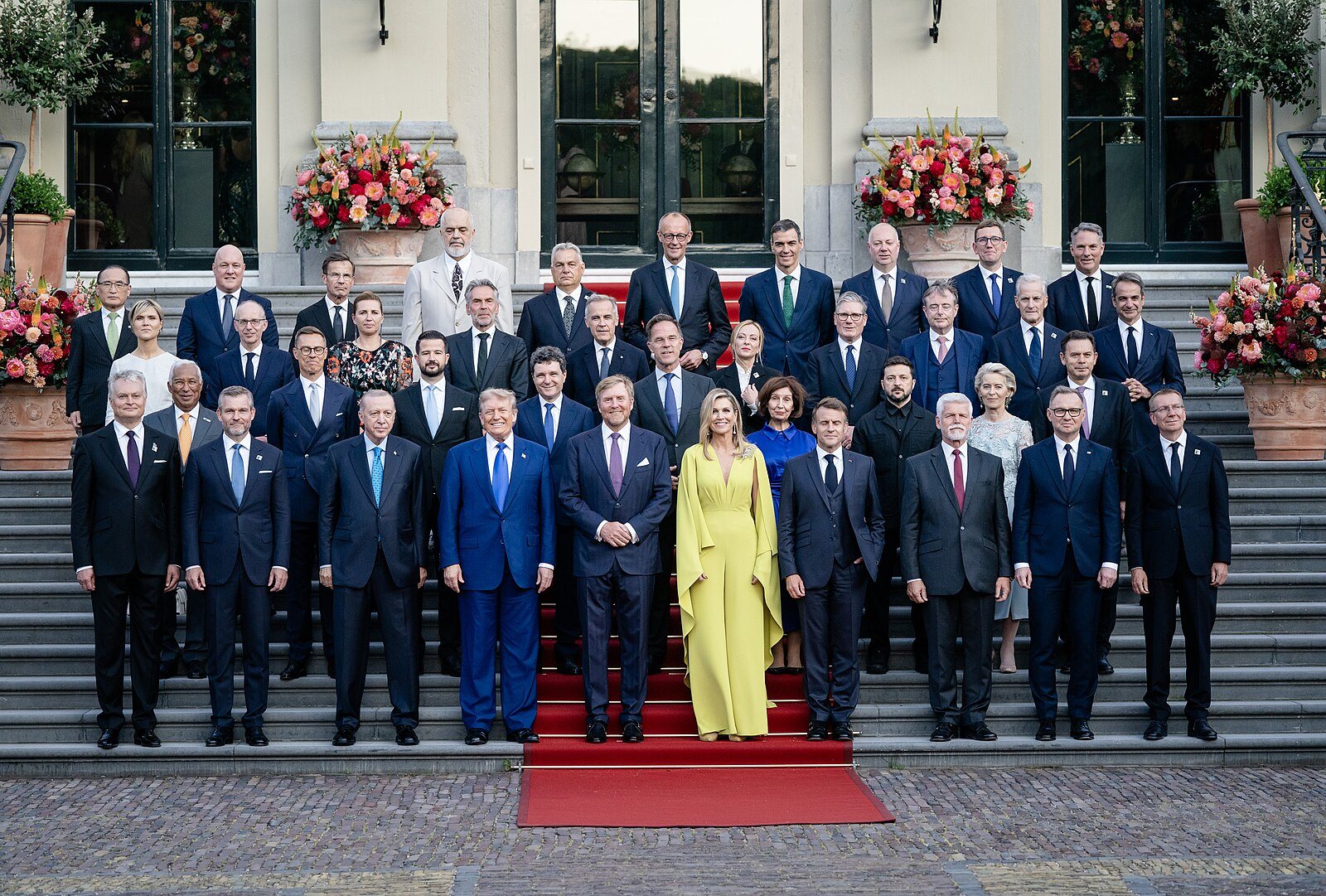
There is also an alliance problem hiding under the word strength. Allies want American protection, but they also want predictability. Gulf states need the United States to keep shipping lanes open, but they do not want every escalation with Iran to become an oil-price emergency. European governments want U.S. power behind NATO, but they also see Washington using force in ways that can make domestic politics harder for them. Latin American governments may want pressure on trafficking networks, but many remember what happens when Washington treats sovereignty as an inconvenience. Power reassures only when it is legible. When it becomes improvisational, even friends start counting distance.

What this year is doing to the world

The effects of America's military year are not confined to the people being targeted. In the Gulf, roughly 20,000 seafarers and nearly 2,000 vessels were described by the International Maritime Organization as trapped in the Persian Gulf during the Hormuz crisis. AP reported on stranded crews watching danger gather around them. Reuters and AP accounts traced how oil prices, tanker traffic, insurance, and diplomacy all moved together. A strategic waterway became a workplace crisis for sailors and a price signal for households far from the war. [19][20]

In Latin America, the Maduro raid and Southern Spear strikes have sharpened old fears about U.S. intervention and new fears about a militarized drug war. Some governments and analysts see the campaign as a necessary answer to transnational criminal power. Others see it as a dangerous return to unilateral dominance, made more volatile by the language of counterterrorism. CFR's explainer on the campaign framed the Maduro capture as intensifying scrutiny over the operation's real purpose. WOLA and legal critics warned that removing an authoritarian leader by unilateral force can damage the democratic principles Washington says it wants to defend. [31][29]

Inside the United States, the effects are constitutional and economic. Congress is being asked to fund the expansion while often learning the operational logic after the fact. The courts are being asked to judge killings at sea, detentions, and executive claims of armed conflict. Industry is being asked to scale faster, and workers are being asked to build the arsenal behind the doctrine. Tech employees are being asked whether their models belong inside classified war systems. Voters are being asked to accept that national security now includes a much wider list of enemies and a much shorter path to force.

The most seductive story the administration tells is that all of this proves competence: the raid worked, the missiles flew, the factories are humming, AI is joining the stack, the ships are moving, the enemies are afraid. The least comfortable story is that competence in operations can mask confusion in policy. It is possible to win the raid and lose the legitimacy argument. It is possible to destroy targets and still fail to build peace. It is possible to buy astonishing machines and still discover that the limiting factor is trust.

That tension is why journalism has to stay close to the machinery without becoming dazzled by it. A clean video of a strike tells you that a munition found a point on the earth. It does not tell you whether the target was lawful, whether the intelligence was right, whether civilians were nearby, whether the strike changed behavior, whether the enemy adapted, whether allies were warned, or whether Congress should have had a vote. The machine supplies spectacle. The record supplies judgment.

The question after shock and awe

The old phrase was shock and awe. The 2026 phrase might be shock and administration. The United States can still produce the shock. The harder test is whether it can administer the aftermath: a Venezuela after Maduro, an Iran after bombardment and blockade, a shipping lane after military escort, a drug campaign after dozens of deaths, an AI stack after classified adoption, a defense budget after the first wave of applause, and a public that deserves more than victory language.

America's best tools this year are impressive. The carrier deck at night is impressive. The long-range bomber is impressive. The drone wingman is impressive. The classified AI agreement is impressive. The factory floor is impressive. The global logistics web is impressive. But the best tool in a republic is supposed to be judgment. Judgment asks what force can do, what it cannot do, who pays when it fails, and who gets to decide before the shooting starts.

That is the article's core argument: the United States is not merely using military power in 2026. It is reorganizing politics around military power. It is making the warship, the raid, the drone strike, the classified model, and the munitions line into answers for problems that are also legal, diplomatic, economic, humanitarian, and democratic. Sometimes those answers may be necessary. Sometimes they may be reckless. Usually they are both powerful and incomplete.

The carrier deck is beautiful in the way dangerous things can be beautiful: steel, light, discipline, speed, and the sense that a nation has concentrated itself into motion. But a carrier deck cannot tell a country what it wants to become. Neither can a missile, a drone, a model, a budget, a raid, or a blockade. Those are instruments. The question of 2026 is whether America still knows the difference between an instrument and a strategy.

Source notes

  1. U.S. Department of War: Operation Epic Fury spotlight - official hub for the Iran campaign and related updates.
  2. CENTCOM: Operation Epic Fury first 24 hours fact sheet - anchors start time, command framing, and initial operation scale.
  3. CENTCOM: Operation Epic Fury first 48 hours fact sheet - additional official update on the early campaign.
  4. CENTCOM / Department of War: first 10 days fact sheet - official campaign scale and target context.
  5. AP: What led up to Trump's order to strike Iran - timeline of the decision to launch Epic Fury.
  6. Axios: Top U.S. general says Iran goals will take time - public administration framing of the campaign duration.
  7. Military.com: Pentagon officials update on Iran mission - defense reporting on the opening briefings.
  8. AP: One month into Iran war, objectives remain unresolved - supports the analysis of gaps between aims and results.
  9. Congressional Research Service: U.S. Military Operations Against Iran - congressional context on war powers and operations.
  10. Axios: New weapons and war-power worries in Iran conflict - supports references to LUCAS drones, PrSM, and escalation concerns.
  11. AP: Trump says U.S. will guide ships from Hormuz - source for Project Freedom announcement and stranded ship context.
  12. AP: U.S. says it intercepted Iranian attacks on Navy ships - latest conflict update for May 7, 2026.
  13. AP: Numbers show global impact of Iran's grip on Hormuz - supports the global energy and shipping stakes.
  14. Reuters via Investing.com: Trump pauses Project Freedom - source for the pause and diplomacy language.
  15. Axios: White House gave Iran private message before Hormuz operation - supports escalation-management details.
  16. Al Jazeera: Trump pauses U.S. operation to unblock Hormuz - non-U.S. perspective on the pause.
  17. U.S. Energy Information Administration: Hormuz remains critical oil chokepoint - source for oil-flow volumes and global share.
  18. International Energy Agency: Strait of Hormuz overview - oil, LNG, pipeline alternatives, and Asia exposure.
  19. International Maritime Organization: U.N. Security Council debate - source for trapped seafarers and vessels.
  20. AP: Ship crews face strain as Hormuz remains shut - human impact on stranded maritime workers.
  21. Reuters: Oil prices rise as Iran war standoff continues - market effects and price context.
  22. Reuters: Shipping traffic through Hormuz remains muted - tanker traffic and blockade details.
  23. Reuters: Iran war hands swing-producer role to America - energy-market implications for U.S. exports.
  24. PBS NewsHour / AP: U.S. strikes Venezuela and says Maduro captured - central source for the January operation.
  25. AP archive: What to know about the U.S. strike that captured Maduro - AP context on the raid and reaction.
  26. Axios: U.S. had 150 aircraft in the sky during Maduro raid - source for operational scale.
  27. AP: After ousting Maduro, Trump commits to another foreign policy project - transition and political context.
  28. AP: Venezuela buries soldiers killed in U.S. operation - source for Venezuelan military casualties and local impact.
  29. WOLA: Statement on unilateral U.S. intervention in Venezuela - human-rights and regional-law critique.
  30. Le Monde: U.S. intervention leaves Congress as collateral victim - outside perspective on U.S. war powers.
  31. Council on Foreign Relations: U.S. campaign targeting Venezuela and Maduro - broader policy explainer.
  32. TIME: U.S.-Venezuela explainer - public-facing background on the raid and oil/drug framing.
  33. U.S. Justice Department: Maduro narco-terrorism charges - preexisting indictment context.
  34. AP: U.S. strike on alleged drug boat kills three in eastern Pacific - May 2026 update on Southern Spear strike pattern.
  35. AP: U.S. strike on alleged drug boat kills two in Caribbean - additional May 2026 strike update.
  36. AP: Trump counterterrorism strategy prioritizes Western Hemisphere cartels - source for administration strategy.
  37. Axios: U.S. keeps bombing boats with little public scrutiny - source for cumulative death toll and oversight concerns.
  38. AP: Strikes on three alleged drug boats kill 11 - February escalation context.
  39. ACLU-linked complaint: boat strike litigation - legal challenge to the cartel-war theory.
  40. Just Security: Why crews, drugs, and boats are not targetable - international-law critique.
  41. USNI Proceedings: Operation Southern Spear and lawlessness - naval/legal professional critique.
  42. U.S. Southern Command: JTF Southern Spear interdictions - official campaign framing.
  43. U.S. Department of War: Classified Networks AI Agreements - official AI vendor and IL6/IL7 release.
  44. AP: U.S. military reaches deals to use AI on classified systems - independent news account of the AI deals.
  45. Reuters via KSL: Pentagon reaches agreements with top AI companies, but not Anthropic - source for Anthropic omission and roster context.
  46. Federal News Network: DoD AI deals on classified networks - IL6/IL7 and GenAI.mil context.
  47. Breaking Defense: Pentagon clears eight tech firms - update on Oracle and vendor-lock context.
  48. DefenseScoop: DOD expands classified AI work with eight companies - defense-tech reporting and Anthropic dispute context.
  49. OpenAI: Our agreement with the Department of War - company statement on guardrails and deployment terms.
  50. Department of War: AI Acceleration Strategy - official strategy context for warfighting, intelligence, and enterprise AI.
  51. Department of War: GenAI.mil expansion with OpenAI partnership - source for scale and platform expansion.
  52. DefenseScoop: Agent Designer custom AI assistants - example of workflow AI inside the military.
  53. NIST: AI Risk Management Framework - risk language for AI governance.
  54. DOD Directive 3000.09 update - policy context for autonomy and human judgment in weapons systems.
  55. CNBC: Google removes pledge not to use AI for weapons or surveillance - context for Silicon Valley's defense turn.
  56. SIPRI: Global military spending rise continues - global spending context for 2025 and beyond.
  57. SIPRI fact sheet: Trends in World Military Expenditure 2025 - detailed spending data.
  58. AP: World's biggest arms producers increased revenue - defense-industry revenue context.
  59. Reuters: Trump's $1.5 trillion defense budget - central source for FY2027 budget details.
  60. Military Times: Pentagon seeks funds for Golden Dome, drones, AI - defense-budget coverage.
  61. White House: Rebuilding Our Military fact sheet - official Trump administration budget narrative.
  62. White House: FY2027 Budget of the U.S. Government - topline budget and defense request context.
  63. DOD: Background briefing on FY2026 defense budget - shipbuilding, missile defense, munitions, and F-47 budget context.
  64. Axios: What's inside Trump's $1.5 trillion Pentagon blueprint - outside analysis of procurement and capacity.
  65. AP: Trump selects concept for Golden Dome missile defense - background on Golden Dome's architecture and cost ambition.
  66. U.S. Air Force: F-47 / NGAD contract award - source for sixth-generation fighter development.
  67. CRS: U.S. Air Force Next-Generation Air Dominance fighter - congressional background on F-47.
  68. U.S. Air Force: CCA mission design series designations - source for YFQ-42A and YFQ-44A.
  69. U.S. Air Force: CCA open architecture and autonomy - source for autonomy architecture and testing.
  70. Defense News: CCA program advances with auto-flying software - industry reporting on CCA testing.
  71. DOD: Collaborative Combat Aircraft flight testing - official milestone source.