Technology • Report

The Pentagon Just Let Big AI Into the Classified Room

The Pentagon's classified-network AI agreements are not a chatbot story. They are the moment frontier models, cloud infrastructure, and defense power began moving into the same secured room — with Anthropic's empty chair revealing the fight over who controls the guardrails.

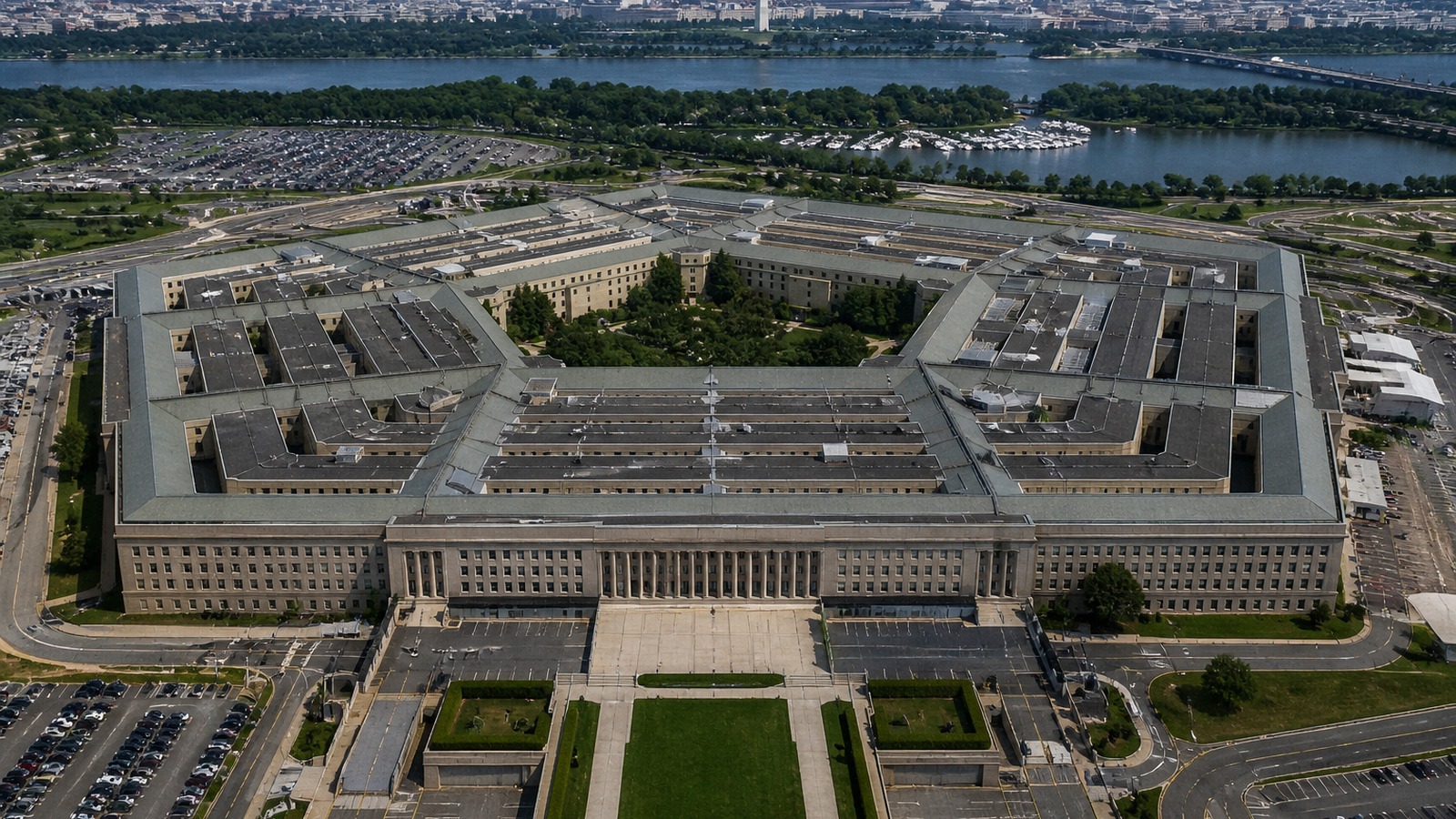
AI-generated photorealistic aerial image of the Pentagon complex in daylight, with Washington, D.C. visible in the background.
AI-generated photorealistic editorial image for The Press showing a clean aerial view of the Pentagon. This is not a documentary Pentagon photograph.
Reader note: The side rail follows the public record around the Pentagon's classified AI agreements: official releases, company statements, news reports, worker objections, legal filings coverage, and real public social posts. Each rail card links to the original source. No fake screenshots, fake handles, or invented public reaction are used; the illustrated panels are editorial summaries, not social-media screenshots.

The classified room opens

The most important AI story of the week did not arrive with a product demo, a benchmark chart, or a founder on a stage promising that tomorrow's model will think more like us. It arrived as a government release, plain and bureaucratic, with the sort of headline that looks small until you understand the room it describes: Classified Networks AI Agreements. The United States military is not merely buying chatbots. It is opening classified networks to the companies that built the new cognitive infrastructure of American technology.

The War Department says it has entered agreements with eight frontier AI companies — SpaceX, OpenAI, Google, NVIDIA, Reflection, Microsoft, Amazon Web Services, and Oracle — to deploy advanced AI capabilities on classified networks for lawful operational use. 1 The release says those systems will operate in Impact Level 6 and Impact Level 7 environments, where secure frontier AI is meant to streamline data synthesis, lift situational awareness, and augment decision-making in complex operational settings. 1

Strip away the procurement language and the meaning is blunt. The Pentagon wants the models close to the secrets. It wants the models close to intelligence, planning, logistics, battlefield support, enterprise work, and the administrative machinery that makes the military move. It wants access to several providers at once, not because variety is fashionable, but because dependence on one vendor is a strategic weakness. The model race has entered the classified room.

This is the moment when AI stops being a tool used near power and becomes a layer inside power. The same technology that has been asked to draft emails, write code, make images, summarize meetings, and tutor students is being asked to sit beside people who work with classified information and time-sensitive decisions. The central question is no longer whether the technology is impressive. The question is whether the institutions using it can remain more disciplined than the systems are fast.

The seven-to-eight correction is the first tell

The record has a small but telling wrinkle. Several early stories and public posts described seven companies: SpaceX, OpenAI, Google, NVIDIA, Reflection, Microsoft, and Amazon Web Services. 9 The current official release says eight, adding Oracle. 1 Oracle published its own announcement the same day, saying the Department had entered an agreement with the company to deploy AI capabilities on classified cloud networks. 2

That is not a fatal inconsistency. It is a glimpse into the scramble. This is not a tidy software rollout where one vendor pushes a polished update to a consumer app. It is a wartime-flavored procurement race with model builders, chip companies, cloud providers, defense officials, employees, lawyers, contractors, and public-relations teams all moving at once. The rail of the story is almost as revealing as the story itself: first seven, then Oracle, then the official record settling into eight.

Oracle's presence also makes the architecture clearer. The military is not only inviting model companies. It is inviting the stack. NVIDIA is not a chatbot company; it is the chip and accelerated-computing backbone. Microsoft, AWS, Google, and Oracle are cloud and infrastructure giants. SpaceX brings a different kind of operational network imagination. Reflection is a newer open-model contender. OpenAI is the consumer and enterprise model brand with unmatched public visibility. The roster is less a club than a supply chain.

That roster matters because classified AI will not be one model answering one prompt. It will be storage, identity, access controls, cloud regions, chips, model routing, prompt logging, red-team testing, human review, and integration with tools that already exist inside government. The future of military AI will not look like a single glowing text box. It will look like infrastructure.

What classified AI actually does

The public imagination jumps too quickly to the machine choosing a target. That danger is real enough to deserve policy, training, and law, but it is not the whole machine. The more immediate work is often quieter: sorting documents, compressing intelligence, translating technical jargon, finding patterns in maintenance data, drafting after-action reports, moving supplies, summarizing imagery, building search tools, and helping an exhausted human see what matters in a flood of information.

The War Department's January AI Acceleration Strategy makes that breadth explicit. It describes a push across warfighting, intelligence, and enterprise operations, including an “Agent Network” for AI-enabled battle management and decision support, “Open Arsenal” for turning technical intelligence into capability, GenAI.mil for broad model access, and Enterprise Agents for workflow transformation. 4 The language is aggressive, but the range is practical. Military AI is as much about paperwork, logistics, planning, and internal speed as it is about weapons.

That is precisely why the story is so consequential. The most durable technologies are not the ones that remain exotic. They are the ones that become boring enough to be used every day. The War Department says GenAI.mil has already been used by more than 1.3 million personnel, generating tens of millions of prompts and deploying hundreds of thousands of agents in five months. 1 Earlier, the Department said the platform surpassed one million unique users in two months and would integrate ChatGPT for all three million Department personnel. 6

The classified-network agreements extend that daily-use logic into more sensitive rooms. If GenAI.mil is the military's AI front door, IL6 and IL7 are the secured corridors behind it. The Pentagon is not just asking vendors for raw intelligence. It is asking them to become part of the workplace of classified labor. That is where the risk changes character. A model does not need to fire a missile to shape a war. It only has to decide what a human sees first.

Anthropic and the empty chair

The most powerful name in the story may be the one missing from the list. Anthropic, maker of Claude, was not included in the War Department's May 1 roster. The omission is not an accident. It is the residue of a public dispute over who gets to define the boundaries of military AI: the company that builds the model, or the government that buys it.

Reports describe the core disagreement this way: Anthropic resisted terms that would allow its systems to be used for all lawful military purposes, insisting on hard lines against mass surveillance of Americans and fully autonomous weapons with no human making targeting or firing decisions. 20 The Pentagon responded by labeling Anthropic a supply-chain risk, a designation that Reuters reported barred government contractors from using Anthropic technology in work for the U.S. military. 23 Anthropic sued, arguing the designation was unlawful and retaliatory. 21

This fight is not a side drama. It is the main ethical machinery of the story made visible. A lab can say: our model should not be used for certain things, even if those things may be argued as lawful by the government. A defense official can say: a private company cannot reserve the right to interrupt or constrain military operations once its tool is inside the mission. Both positions can sound reasonable until they collide inside a classified network.

The Pentagon's worry, according to TechCrunch's report on a government filing, was that Anthropic's red lines could create an unacceptable national-security risk if the company altered or disabled its technology before or during warfighting operations because it believed its lines were being crossed. 22 Anthropic's worry was the mirror image: that without hard restrictions, powerful systems could drift into mass surveillance or autonomous lethal use. One side fears vendor veto. The other fears government overreach. Both are describing control.

Guardrails are the new contract war

The word “guardrails” sounds soft, like something added after the real engineering is done. In this story, guardrails are the contract. They are where corporate ethics, military authority, constitutional rights, and wartime urgency negotiate with each other. OpenAI's public statement says its agreement includes three red lines: no use of OpenAI technology for mass domestic surveillance, no use to direct autonomous weapons systems, and no use for high-stakes automated decisions such as social-credit systems. 3

OpenAI also says its deployment is cloud-only, that it will not provide “guardrails off” models or non-safety-trained models, and that cleared OpenAI personnel remain in the loop. 3 After further discussion, it said the agreement added explicit language barring intentional domestic surveillance of U.S. persons and nationals, including through commercial personal or identifiable information. 3 That specificity matters. The fight is not simply about whether AI is good or bad for the military. It is about whether restrictions are enforceable after the model crosses into classified use.

The government already has an autonomy policy. DoD Directive 3000.09 says autonomous and semi-autonomous weapon systems must be designed so commanders and operators can exercise appropriate levels of human judgment over the use of force, and that people authorizing or operating such systems must act with care under the law of war and applicable rules of engagement. 30 But large language models create a messier category than classic autonomous weapons. A model might not pull a trigger; it might rank targets, summarize sensor feeds, compress intelligence, or recommend next steps. The human is still “in the loop,” but the loop may have been quietly rewritten.

That is why the language of oversight can be both essential and slippery. Human oversight is not a magic spell. It can mean a trained operator challenging a system, or it can mean a tired person clicking through a recommendation because the machine sounded certain and the clock was loud. AP quoted concern about automation bias: the human tendency to assume machines work better than they actually do. 10 The great risk is not that a machine becomes evil. The great risk is that a machine becomes ordinary, trusted, and hard to second-guess.

Google and the memory of Maven

Google's place on the list carries an older ghost. In 2018, employee backlash helped push the company away from Project Maven, a Pentagon AI program connected to drone-video analysis. Google then adopted AI principles that included language against using its technology for weapons or surveillance. In February 2025, CNBC reported that Google had removed that pledge from its AI Principles page, replacing the harder prohibition with broader language about benefits, risks, international law, and human rights. 27

That shift did not pass quietly. In late April 2026, more than 600 Google employees, including workers from DeepMind and Cloud, reportedly urged CEO Sundar Pichai to reject classified military AI work. 26 Euronews reported that the letter warned against AI being used in “inhumane or extremely harmful ways,” including mass surveillance and lethal autonomous weapons. 28 Google nevertheless appears in the Pentagon's official roster.

The Google arc matters because it captures a broader Silicon Valley transition. The first phase of modern AI ideology sold itself as universal: tools for everyone, help for humanity, software that would raise productivity and creativity across the planet. The second phase is more geopolitical. The argument now says that if democracies do not build and deploy the most capable AI systems, rival powers will. That does not erase the old ethical objections. It changes the setting in which they are heard.

For workers, the classified setting is especially troubling because it limits visibility. A public product can be tested, mocked, audited, benchmarked, screen-recorded, and criticized. A classified deployment cannot be inspected in the same way. That does not make it automatically abusive. It does make ordinary public accountability harder. Inside a secrecy system, trust shifts from open inspection to institutional process. The question becomes whether that process is strong enough for systems that can move faster than the humans assigned to supervise them.

The new defense stack

The companies on the list are not interchangeable. That is the point. A military AI system requires models, but models are only the visible surface. It requires chips that can run them, secure clouds that can host them, classified regions that can isolate data, identity systems that can restrict access, policy layers that can enforce use limits, and staff who can keep the whole thing alive when the stakes are not theoretical.

Oracle's release makes this explicit by talking less like a chatbot company and more like an infrastructure provider. It says Oracle's approach is built around openness, interoperability, and choice, allowing the Department to build, deploy, and scale models without vendor lock-in while maintaining control over data and architecture. 2 The War Department's release uses similar language, saying it wants an architecture that prevents AI vendor lock and gives the Joint Force long-term flexibility. 1

Vendor lock-in sounds like dull procurement talk until you imagine it during a crisis. If the military becomes dependent on one model provider, one cloud, one policy layer, or one supply chain, then a corporate dispute, safety disagreement, cyber incident, foreign dependency, outage, or legal order can become an operational problem. Diversity of vendors is not only a market preference. It is a form of resilience.

That is why NVIDIA and Reflection sit beside Microsoft and AWS in the same story. NVIDIA is the acceleration layer under much of modern AI. Reflection represents the political and technical appeal of American open models at a time when Chinese systems are treated as strategic competitors. Microsoft, AWS, Google, and Oracle bring classified cloud muscle. OpenAI brings frontier model visibility. SpaceX brings national-security infrastructure experience and a broader defense-tech aura. The list is a map of the AI stack becoming defense industrial policy.

What to watch next

The first thing to watch is not a launch date. It is logging. Who records prompts, outputs, tool calls, refusals, overrides, and human approvals inside classified systems? Who can inspect those logs? How long are they kept? Are mistakes discoverable, or do they vanish into classification? A military AI system without audit trails is not a tool. It is a rumor machine with clearance.

The second thing to watch is model routing. The official line is vendor diversity, but diversity only matters if users can choose the right model for the right task and if the system records why one model was used instead of another. The Pentagon wants to avoid vendor lock-in. The harder question is whether it can avoid invisible model dependence: the subtle habit of defaulting to whichever model is fastest, most familiar, most permissive, or most flattering to the user's assumption.

The third thing to watch is Anthropic. If the company returns, the terms of return will tell us whether the government has accepted corporate red lines, whether Anthropic has softened them, or whether both sides have found a legal fiction elegant enough to let capability back into the room. If Anthropic stays out, the market will learn that refusing military terms can carry heavy consequences. Either outcome will shape every future AI company that tries to negotiate safety boundaries with the state.

The fourth thing to watch is the ordinary mission. Not the spectacular hypothetical, but the memo, the map, the translation, the supply chain, the surveillance feed, the maintenance prediction, the briefing slide, the after-action report. AI usually wins institutions through convenience before it wins them through doctrine. Once people use a tool every day, removing it feels like losing time. And in military life, time is never neutral.

The final thing to watch is language. “Lawful operational use” sounds reassuring because law is supposed to be a boundary. But in national security, the hard fights often happen inside the lawful zone. A thing can be legal and still reckless, legal and still poorly audited, legal and still hidden from democratic inspection, legal and still bad strategy. The classified AI agreements are not the end of the debate over military AI. They are the point at which the debate becomes operational.

The Pentagon has opened the door. The companies have stepped in. The public can see the names on the threshold, but not yet the rooms behind them. That is why this story matters. It is not simply about whether AI will help the military move faster. It is about whether speed can be governed after it becomes secret.

Source notes

The article uses official releases first, then news coverage, policy documents, and real public social posts. Social links are presented as source cards, not screenshots.

  1. War Department, “Classified Networks AI Agreements.” Official May 1, 2026 release listing eight companies and describing IL6/IL7 deployment. Source
  2. Oracle, “The Department of War Announces Agreement with Oracle to Deploy AI Capabilities on Classified Cloud Networks.” Company release on the Oracle agreement. Source
  3. OpenAI, “Our agreement with the Department of War.” Company statement describing red lines and updated domestic-surveillance language. Source
  4. War Department, “War Department Launches AI Acceleration Strategy to Secure American Military AI Dominance.” Official January 2026 strategy release. Source
  5. OpenAI, “Bringing ChatGPT to GenAI.mil.” OpenAI announcement about its GenAI.mil work. Source
  6. War Department, “GenAI.mil's Rapid Expansion Continues With OpenAI Partnership.” Official update on one million users and ChatGPT integration. Source
  7. War Department, “The War Department to Expand AI Arsenal on GenAI.mil With xAI.” Official December 2025 release. Source
  8. DefenseScoop, “Pentagon says employees can create their own ‘custom AI assistants’ with new tech.” Report on Agent Designer and Gemini. Source
  9. Nextgov/FCW, “Pentagon makes agreements with 7 companies to add AI to classified networks.” Federal technology coverage of IL6/IL7 agreements. Source
  10. Associated Press, “US military reaches deals with 7 tech companies to use their AI on classified systems.” AP report on the agreements and risk questions. Source
  11. Reuters, “Pentagon reaches agreements with top AI companies, but not Anthropic.” Reuters coverage of vendor roster and Anthropic exclusion. Source
  12. The Guardian, “Pentagon inks deals with seven AI companies for classified military work.” Report on the agreements, Anthropic dispute, and budget context. Source
  13. TechCrunch, “Pentagon inks deals with Nvidia, Microsoft, and AWS to deploy AI on classified networks.” Report on the later group of agreements. Source
  14. Washington Post, “Top AI companies agree to work with Pentagon on secret data.” Coverage of safeguards, Anthropic, and worker objections. Source
  15. Bloomberg Law / Techmeme roundup. News trail on DoD agreements with AWS, Microsoft, NVIDIA, Oracle, and Reflection. Source
  16. Techmeme, May 1, 2026 AI defense roundup. Aggregated news and social posts around the agreements. Source
  17. @dowcto on X, initial seven-company announcement. Public post from the War Department CTO office. Source
  18. @dowcto on X, Oracle update. Public post saying Oracle had officially joined the list. Source
  19. @reflection_ai on X. Company post about joining the government-AI coalition. Source
  20. @patrickmoorhead on X. Analyst post raising infrastructure and supply-chain questions. Source
  21. TechCrunch, “Anthropic sues Defense Department over supply-chain risk designation.” Lawsuit coverage. Source
  22. TechCrunch, “DOD says Anthropic’s ‘red lines’ make it an ‘unacceptable risk to national security.’” Coverage of the government's rebuttal. Source
  23. Reuters, “Pentagon designates Anthropic a supply chain risk.” Reuters coverage of designation and scope. Source
  24. Tom’s Hardware, Anthropic lawsuit coverage. Report on the supply-chain-risk designation and lawsuits. Source
  25. Axios, “Trump officials negotiating access to Anthropic's Mythos despite blacklist.” Report on ongoing interest in Anthropic’s national-security tools. Source
  26. Washington Post, “Google workers petition CEO to refuse classified AI work with Pentagon.” Report on the employee letter. Source
  27. CNBC, “Google removes pledge to not use AI for weapons, surveillance.” Report on Google's changed AI Principles. Source
  28. Euronews, “Google employees urge CEO to reject 'inhumane' classified military AI use.” Report on worker objections. Source
  29. Reuters, “Google signs classified AI deal with Pentagon, The Information reports.” Report on Google's deal and safeguards. Source
  30. DoD Directive 3000.09 update release. Policy on autonomy in weapon systems. Source
  31. DoD Responsible AI Toolkit release. CDAO release on RAI Toolkit and 64 lines of effort. Source
  32. NIST, “Artificial Intelligence Risk Management Framework (AI RMF 1.0).” Federal AI risk-management framework. Source
  33. Brennan Center for Justice, military AI background. Civil-liberties and battlefield-risk context. Source
  34. Business Insider, “How Google made peace with war.” Context on Google's shift from Project Maven-era protest to defense work. Source
  35. Business Insider, Google employee letter coverage. Additional report on employee objections. Source
  36. TechRadar, Google employee letter coverage. Additional report on worker concerns and OpenAI contract revision. Source
  37. @axios on X, Anthropic dispute post. Public post quoting the Pentagon/Anthropic pressure. Source
  38. @Kent_Walker on X, Responsible AI progress post. Google executive public post on innovation and responsibility. Source
  39. Tom’s Hardware, Pentagon AI deal roundup. Additional tech-industry coverage and risk framing. Source