Europe’s defense turn is no longer a speech problem.
For years, European arguments about defense could be conducted in the future tense. Leaders promised seriousness. White papers named priorities. Summits produced communiqués dense with resolve. The question was whether Europe would rearm, spend more, and organize itself for a harder strategic environment. That question has now changed. The continent is not mainly deciding whether to take defense more seriously. It is deciding how fast it can turn seriousness into factories, contracts, stockpiles, transport corridors, and interoperable systems.
The documents now on the table are striking for their bluntness. The European Commission’s Readiness 2030 white paper frames a radically changed strategic context and ties Europe’s defense future to capability gaps, industrial scale, military mobility, stockpiles, drones, air and missile defense, and financing mechanisms large enough to matter.[1] NATO’s latest spending update says the allies agreed at The Hague last year to raise defense investment to 5 percent of GDP and reports a 20 percent increase in defense spending compared with 2024 among European allies and Canada.[2] SIPRI, meanwhile, reports that Europe has become the world’s largest arms-importing region, with imports up 210 percent between 2016–20 and 2021–25.[3]
Taken together, these are not the signs of a debate that is still waiting for its political mood. They are the signs of a continent moving from strategic language to procurement arithmetic. The real question now is not whether Europe understands the danger. It is whether Europe can build at the speed its own documents now imply.
Readiness 2030 reads like industrial policy because that is what defense has become
The White Paper for European Defence and the wider ReArm Europe/Readiness 2030 package are illuminating precisely because they stop pretending defense can be separated from industry. The Commission describes the project in terms of financial levers, investment surges, simplified rules, faster production, joint procurement, and long-term readiness. It names specific priority areas: air and missile defense, military mobility, artillery systems, cyber and AI, missile and ammunition stockpiles, drones and counter-drone systems, maritime capabilities, and the infrastructure needed to move troops and equipment across the Union.[1]
That list is more important than any single headline number. It tells us what Europe’s strategic anxiety has become in practice. Defense is no longer discussed as a vague demand for resilience. It is a catalog of shortfalls. What is missing? Air-defense layers. Ammunition depth. Transport infrastructure. Supply security. Drone defenses. Rapid movement corridors. Skilled labor. Regulatory simplification. Aggregated demand. These are the categories of a continent that has learned, often painfully, that deterrence depends on throughput as much as on doctrine.
The White Paper is especially candid about fragmentation. It says the European defense industry lacks scale, remains split across national markets, and cannot fully leverage the single market.[1] That is one of the most important admissions in the whole document. Europe’s problem is not only underinvestment. It is under-coordination. Money can rise faster than coherence. If twenty-plus states spend more but buy separately, certify separately, and sustain separate industrial preferences, then the continent can end up paying more for slower delivery.
The numbers are bigger now, but bigger numbers are the beginning of the problem
There is no denying that the spending trajectory has changed. NATO’s March update said European allies and Canada made a major step forward and linked the new data to a 20 percent increase in defense spending relative to 2024.[2] The same NATO release said allies had agreed at The Hague to raise defense investment to 5 percent of GDP. The political signal could hardly be clearer: the old argument about who is carrying enough of the burden has been answered, at least rhetorically, with a more expansive and more urgent target.
But defense spending targets are a little like housing targets or energy targets. They matter, yet they can also flatter if mistaken for execution. A commitment to spend is not the same as the capacity to absorb, produce, maintain, and field. The EU White Paper effectively concedes this by pairing fiscal space with industrial measures. It proposes new room within the Stability and Growth Pact, outlines a SAFE financing mechanism for loans, and speaks openly about the need to raise production speed and volume.[1] The message is unmistakable: Europe does not only need more money; it needs a machine capable of turning money into usable capability on time.
That distinction is where the next political friction will sit. Spending increases are often the easy announcement. The harder work starts after the cameras leave: contract design, long-lead components, defense-tech regulation, testing bottlenecks, training pipelines, munitions replenishment, transport permissions, and the incompatibilities that surface once multinational ambition meets national procurement culture.
SIPRI’s arms data show both urgency and dependence
SIPRI’s latest arms-transfer release tells a story that should sober triumphal readings of Europe’s defense turn. The institute said the volume of major arms transfers rose 9.2 percent globally between 2016–20 and 2021–25, but Europe stands out: states in the region more than tripled their imports, accounting for 33 percent of world arms imports, with 48 percent of those imports coming from the United States.[3] Put differently, Europe’s rearmament has already been happening, but much of it has been happening through buying from abroad.
That is not, in itself, a scandal. Urgency changes procurement logic. Countries under pressure buy what exists. Yet the White Paper’s entire industrial argument suggests that Europe does not want permanent strategic urgency to be answered by permanent external dependence. It wants a bigger internal market, more pooled demand, greater productive capacity, and fewer chokepoints in components and raw materials.[1] The logic is easy to understand. If the next decade is defined by prolonged security competition, then dependency is not only a budget issue. It is a timing issue. The actor that controls production tempo controls more than price.
This is where the continent’s defense turn becomes deeply economic. Rearmament is no longer separable from manufacturing capacity, credit conditions, labor supply, and infrastructure. A missile battery is not just a weapons system. It is metallurgy, electronics, software, subcontracting, logistics, and maintenance. A drone defense initiative is not just a doctrine. It is sensors, procurement rules, testing ranges, and update cycles. A European air shield is not just a geopolitical aspiration. It is a coordination challenge with calendars attached.
Ukraine made the problem visible, but time is what made it structural
The White Paper says the most pressing priority is continued support for Ukraine and describes deeper cooperation with Kyiv, including artillery, air defense, drones, industrial integration, and military-mobility corridors.[1] That is both true and incomplete. Ukraine has functioned as the immediate demand signal, the war that forced European governments to confront consumption rates, inventory depth, and the difference between peacetime assumptions and wartime reality. But the structural shift is broader than one front.
Time has changed the argument. Once a shock lasts long enough, emergency procurement stops looking temporary. Shortfalls stop looking accidental. Maintenance cycles, replacement schedules, and industrial lead times become part of strategic thinking. Europe is no longer preparing for a sudden aberration. It is preparing for a security environment in which readiness itself has to be maintained year after year. That is why the White Paper talks about strategic stockpiles, readiness pools, and the defense of tomorrow in the same breath.[1] The continent is being asked to behave not like a bloc reacting to an episode, but like one reorganizing for duration.
The least glamorous problem may be the most revealing: movement
One of the best passages in the EU material concerns military mobility. The Commission says bureaucratic challenges and inconsistent procedures still disrupt the efficient transport of troops and equipment and calls for critical corridors, dual-use assets, and regulatory simplification.[1] This is the kind of sentence that should be read slowly. It tells us that European defense is not merely under-armed. It is administratively sticky.
That matters because deterrence is partly choreography. Equipment that cannot move quickly enough is not strategically equivalent to equipment that can. Ammunition held in the wrong place is not the same as ammunition available at speed. Infrastructure, customs procedures, bridge standards, rail compatibility, and cross-border permissions are therefore not ancillary matters. They are the connective tissue of readiness.
In that sense Europe’s defense turn is also a transport story and a governance story. It requires ministries, agencies, and national systems that were built for normal times to cooperate under abnormal demands. That is difficult work, and it rarely produces triumphant headlines. But it may determine whether the spending surge becomes capability or merely the appearance of capability.
The decisive test is whether Europe can shorten the distance between decision and delivery
The strategic environment has already delivered its verdict. Europe is spending more, importing more, and planning more. The documents now exist. The targets now exist. The budgets are moving. The remaining question is operational: can Europe shorten the distance between political decision and usable output?
The answer will depend on whether the continent can do several hard things at once. It must preserve national political legitimacy while buying more collaboratively. It must encourage new defense-tech entrants without losing control of standards and safety. It must support Ukraine while rebuilding its own inventories. It must spend more without allowing money alone to disguise fragmentation. And it must do all this fast enough that readiness does not remain a 2030 slogan pasted over 2026 constraints.
That is why the most honest way to describe Europe’s defense turn is not to call it a renaissance or a wake-up call. It is a conversion problem. The continent has converted strategic alarm into budget movement. It is trying to convert budget movement into industrial scale, industrial scale into deployable systems, and deployable systems into credible deterrence. That is a much more difficult sequence than any summit declaration makes it sound.
Europe is entering an era in which defense policy is also factory policy
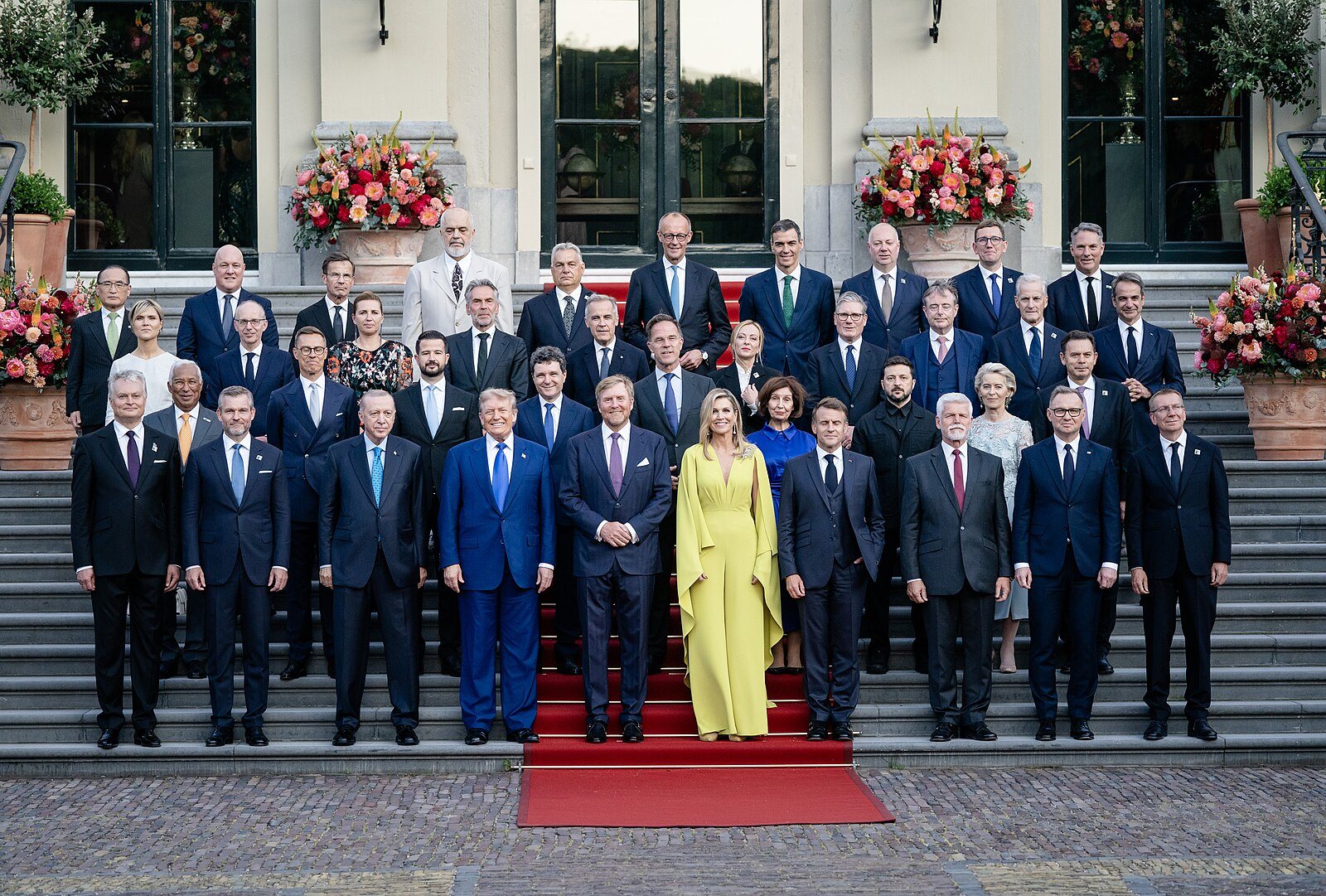
There is something clarifying about this moment. It strips away the luxury of pretending that security can be guaranteed by language alone. Europe’s new defense posture is being written not only in speeches from Brussels or NATO communiqués from The Hague, but in production rates, procurement rules, stockpile plans, shipping schedules, and the ability to move equipment from west to east without being defeated by paperwork.[1][2]
That is what makes the current turn so consequential. It does not only ask whether Europe will spend. It asks whether Europe can build a continental habit of readiness. The answer will be decided less by rhetoric than by lead times, labor, and logistics. In the new European defense debate, the decisive verbs are no longer only deter and defend. They are also finance, manufacture, certify, replenish, and move.
Source notes
Official EU, NATO, and research materials used for this story.
- 1. European Commission / Defence Industry and Space, White Paper for European Defence — Readiness 2030.
- 2. NATO, NATO Secretary General’s Annual Report shows significant increase in defence investment from Europe and Canada.
- 3. SIPRI, Global arms flows jump nearly 10 per cent as European demand soars.
Referenced documents
Corrections status
No corrections have been posted to this story as of April 7, 2026 • 11:45 a.m. EDT. Any updates will be noted here and on the Corrections page.
Related reading

Economics • Report
Shelter Is Still the Inflation Story People Live Inside.
Mortgage rates are lower than their worst recent highs but still high enough to ration buying. Rents are cooling more slowly than households feel, and the nation’s housing squeeze remains the most intimate version of inflation.
Technology • Report
AI Needs Electricity, Steel, and Time
Behind the chatbot boom is a slower race over transformers, substations, fabs, and the people who know how to build them.

Science • Report
Artemis II Proved the Moon Is an Engineering Project Again
The launch mattered, but the deeper achievement was operational: human-rated hardware, multinational systems, and a lunar mission that generated evidence rather than nostalgia.