This is not a gadget story anymore
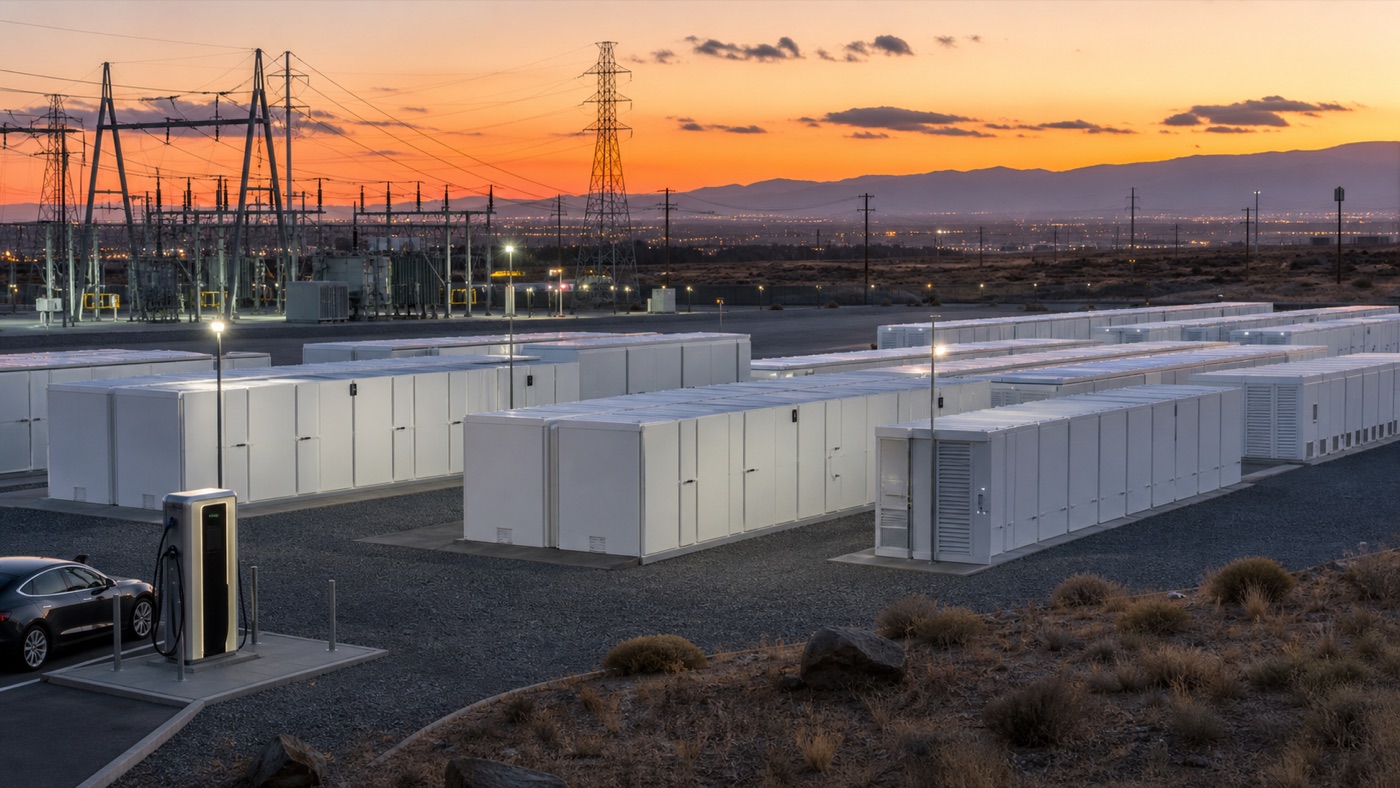
For years, batteries were marketed as personal technology: the thing that made a phone last, an electric car move, or a laptop survive a flight. The bigger story now sits behind fences.
IEA, EIA, NREL, and CAISO sources show storage moving into the power system as infrastructure, not accessory. Grid-scale batteries are being planned, queued, dispatched, and studied like power plants with a different personality. [1][2]
A battery does not mine fuel or spin like a turbine. Its value is timing. It absorbs power when the grid has enough and returns it when the grid is tense.
Put plainly, this is where the large system becomes readable. The policy language, engineering vocabulary, scientific measurement, and market signals all matter, but the test is more ordinary: whether people can see the risk early enough to make a better decision before the failure becomes personal.
That makes storage look magical until the limits appear: duration, location, interconnection, degradation, cost, fire safety, and market rules. [3][4]
The customer experiences the result as fewer outages, lower peak stress, cleaner evening power, or a rate plan that suddenly cares when the dishwasher runs.
The everyday stakes are the reason the receipts matter. A source note can look small at the bottom of a page, but each one is a handhold for the reader: a way to separate what the story knows from what it argues, what has been measured from what still has to be judged.
The battery is becoming the grid's shock absorber, and shock absorbers matter most when the road gets rough.
The evening is the test
Solar power changed the middle of the day. Batteries are changing the hour after it. The system's hardest question is often what happens when sunlight fades and people come home.
California's grid and energy data, EIA storage reporting, and NREL planning work all show why batteries are valuable in systems with large solar output and sharp evening demand. [4][9]
Storage turns some daytime abundance into evening reliability. It does not eliminate the need for transmission, generation, demand flexibility, or careful planning, but it changes the shape of the problem.
Put plainly, this is where the large system becomes readable. The policy language, engineering vocabulary, scientific measurement, and market signals all matter, but the test is more ordinary: whether people can see the risk early enough to make a better decision before the failure becomes personal.
The public likes clean power in theory and expects the lights to work in practice. Batteries are one way those expectations meet, but they are not an excuse to ignore the rest of the grid. [3][2]
Try the duck curve test
If solar floods the grid at midday but demand peaks after sunset, storage becomes a timing machine. It does not create sunlight at night; it moves some of the value of daylight into the hour when people cook dinner and turn lights on.
The evening peak is ordinary life: dinner, homework, laundry, television, heat, cooling, and the small rituals that turn electrical demand into a household pulse.
The everyday stakes are the reason the receipts matter. A source note can look small at the bottom of a page, but each one is a handhold for the reader: a way to separate what the story knows from what it argues, what has been measured from what still has to be judged.
If the battery revolution works, the most dramatic proof may be a boring evening when nothing fails.
The queue is where ambition waits
Announcing a storage project is not the same as connecting it. The grid has gates, studies, upgrades, permits, and timelines that can turn ambition into a waiting room.
Berkeley Lab's interconnection queue work, DOE storage research, NREL planning studies, and IEA analysis all point to the same constraint: batteries need wires, rules, and places to plug in. [7][5]
This is where clean-energy optimism becomes infrastructure administration. The project that looks elegant in a chart still has to get through the physics and paperwork of a local grid.
Put plainly, this is where the large system becomes readable. The policy language, engineering vocabulary, scientific measurement, and market signals all matter, but the test is more ordinary: whether people can see the risk early enough to make a better decision before the failure becomes personal.
Fast battery cost declines can collide with slow grid connection. Capital wants speed; substations and transmission upgrades often move at the pace of steel, hearings, and engineering studies. [3][1]
A community may see a field, a fence, and container boxes. Behind that image sits a queue position, a utility study, a fire plan, and a contract that decides whether the project is real.
The everyday stakes are the reason the receipts matter. A source note can look small at the bottom of a page, but each one is a handhold for the reader: a way to separate what the story knows from what it argues, what has been measured from what still has to be judged.
The country will not build the storage future by celebrating batteries alone. It has to fix the queue where good projects go to age.
The car in the driveway is part of the argument
Electric cars are usually discussed as transportation. But every EV is also a battery with wheels, a charger, a schedule, and a potential relationship with the grid.
EPA's EV material, RMI's virtual power plant work, DOE's battery blueprint, and IEA's battery report all show why the vehicle fleet matters beyond tailpipe emissions. [10][8]
The most important question may be when cars charge, not simply how many exist. A million vehicles charging at the wrong hour can stress a system; managed charging can help one.
Put plainly, this is where the large system becomes readable. The policy language, engineering vocabulary, scientific measurement, and market signals all matter, but the test is more ordinary: whether people can see the risk early enough to make a better decision before the failure becomes personal.
Vehicle-to-grid dreams run into warranties, customer trust, charger standards, software, compensation, and the basic fact that people bought a car to use it, not to become unpaid grid infrastructure. [6][1]
A driver does not want an energy seminar at the end of a workday. They want a charged car. The grid value has to fit inside that expectation.
The everyday stakes are the reason the receipts matter. A source note can look small at the bottom of a page, but each one is a handhold for the reader: a way to separate what the story knows from what it argues, what has been measured from what still has to be judged.
The EV will become a serious grid resource only when the deal is simple enough for ordinary people to accept without becoming power-market specialists.
A million small batteries can behave like one big plant
The old grid imagined big plants pushing electricity outward. The newer grid also imagines homes, cars, thermostats, water heaters, and batteries responding together.
RMI's virtual power plant work and public grid-planning sources explain how aggregation can turn distributed devices into a resource that reduces peak demand or provides grid services. [8][3]
This is not just a technical trick. It is a new social contract. Customers give the grid a little flexibility, and the system gives them money, resilience, or lower costs in return.
Put plainly, this is where the large system becomes readable. The policy language, engineering vocabulary, scientific measurement, and market signals all matter, but the test is more ordinary: whether people can see the risk early enough to make a better decision before the failure becomes personal.
Aggregation fails if people feel tricked. It succeeds when the rule is clear, the override works, the payment is visible, and the device still does its main job. [4][5]
Try the duck curve test
If solar floods the grid at midday but demand peaks after sunset, storage becomes a timing machine. It does not create sunlight at night; it moves some of the value of daylight into the hour when people cook dinner and turn lights on.
A thermostat setback or battery dispatch can sound small. Multiply it by thousands of homes during a peak hour and the small thing becomes a power plant made of permission.
The everyday stakes are the reason the receipts matter. A source note can look small at the bottom of a page, but each one is a handhold for the reader: a way to separate what the story knows from what it argues, what has been measured from what still has to be judged.
The next grid may be built as much from consent and software as from concrete and steel.
The battery has a supply chain shadow
No battery is weightless. Lithium, nickel, cobalt, graphite, copper, manufacturing energy, transport, recycling, and labor all sit behind the clean rectangle installed at a site or sealed inside a car.
DOE's lithium battery blueprint, Argonne's ReCell work, IEA's battery report, and EV public materials show why the battery boom is also a mining, manufacturing, and recycling story. [6][11]
The supply chain matters because a clean-energy technology can still create dirty politics if materials are extracted badly or wasted after use.
Put plainly, this is where the large system becomes readable. The policy language, engineering vocabulary, scientific measurement, and market signals all matter, but the test is more ordinary: whether people can see the risk early enough to make a better decision before the failure becomes personal.
The answer is not to reject batteries because they require materials. The answer is to build better sourcing, chemistry, recycling, and reuse so the material intensity falls over time. [1][10]
A consumer may never see the mine or recycling line. But those places decide whether the battery economy becomes more circular or simply repeats the oldest habits of extraction.
The everyday stakes are the reason the receipts matter. A source note can look small at the bottom of a page, but each one is a handhold for the reader: a way to separate what the story knows from what it argues, what has been measured from what still has to be judged.
The grid battery's afterlife may become as important as its first dispatch.
Fire safety is not a footnote
A battery project can lose public trust quickly if safety is treated as a communications problem instead of an engineering and emergency-response problem.
Storage planning sources, DOE research infrastructure, California data, and grid-operator material show how storage is moving into real communities, which means siting and safety have to be legible. [3][5]
Battery fires are not the whole story, but they are part of the story. A technology that serves the public has to explain failure modes before opponents define them alone.
Put plainly, this is where the large system becomes readable. The policy language, engineering vocabulary, scientific measurement, and market signals all matter, but the test is more ordinary: whether people can see the risk early enough to make a better decision before the failure becomes personal.
Communities can be both reasonable and afraid. Developers can be both technically correct and politically clumsy. The solution is not to wave away concern; it is to earn trust with design, spacing, monitoring, and response plans. [9][4]
A fire chief should not learn the technology from a sales deck after the project is approved. Local responders need knowledge before the sirens.
The everyday stakes are the reason the receipts matter. A source note can look small at the bottom of a page, but each one is a handhold for the reader: a way to separate what the story knows from what it argues, what has been measured from what still has to be judged.
Storage will scale faster if safety is designed into the public conversation from the first neighborhood meeting.
The grid after batteries is still a grid
Batteries are powerful, but they are not a substitute for every part of the electricity system. A good battery story should make the grid more visible, not less.
The source record across IEA, Berkeley Lab, RMI, and CAISO shows storage as one piece of a larger system involving transmission, generation, demand response, markets, customers, and operations. [1][7]
That is the mature view. Storage can smooth, shift, stabilize, and substitute in some moments. It cannot erase geography, politics, or the need to build other infrastructure.
Put plainly, this is where the large system becomes readable. The policy language, engineering vocabulary, scientific measurement, and market signals all matter, but the test is more ordinary: whether people can see the risk early enough to make a better decision before the failure becomes personal.
The danger is a new hype cycle in which every hard problem is promised a battery-shaped answer. The better story is more interesting: batteries give planners a new verb, but not a new universe. [8][4]
A reliable grid is rarely loved when it works. It is noticed when it fails. Batteries are joining the group of technologies whose highest public achievement may be anonymity.
The everyday stakes are the reason the receipts matter. A source note can look small at the bottom of a page, but each one is a handhold for the reader: a way to separate what the story knows from what it argues, what has been measured from what still has to be judged.
The battery is becoming the grid, but only if the grid becomes smart enough to use it well.
Source notes
Energy-agency, lab, grid-operator, and policy sources used to check the battery and grid-storage claims in this story.
- International Energy Agency, Batteries and Secure Energy Transitions. Used for global battery deployment, cost, and supply-chain context.
- U.S. Energy Information Administration, U.S. battery storage capacity has been growing since 2021. Used for U.S. grid-storage growth context.
- NREL / OSTI, Storage Futures Study: Key Learnings for the Coming Decades. Used for storage roles across power systems.
- California ISO, Battery storage and grid transformation. Used for grid-operator context on storage and reliability.
- U.S. Department of Energy, Grid Storage Launchpad. Used for grid-storage research infrastructure.
- U.S. Department of Energy, National Blueprint for Lithium Batteries. Used for lithium battery supply-chain strategy.
- Lawrence Berkeley National Laboratory, Queued Up: 2024 Edition. Used for interconnection bottleneck context.
- RMI, Virtual Power Plants, Real Benefits. Used for virtual power plant discussion.
- California Energy Commission, California Energy Almanac. Used for state-scale storage context.
- U.S. EPA, Electric Vehicle Myths. Used for accessible EV context.
- Argonne National Laboratory, DOE launches its first lithium-ion battery recycling R&D center: ReCell. Used for battery recycling and circular supply-chain context.
Related reading
Technology • Investigation
The Data Center Is the New Utility Bill
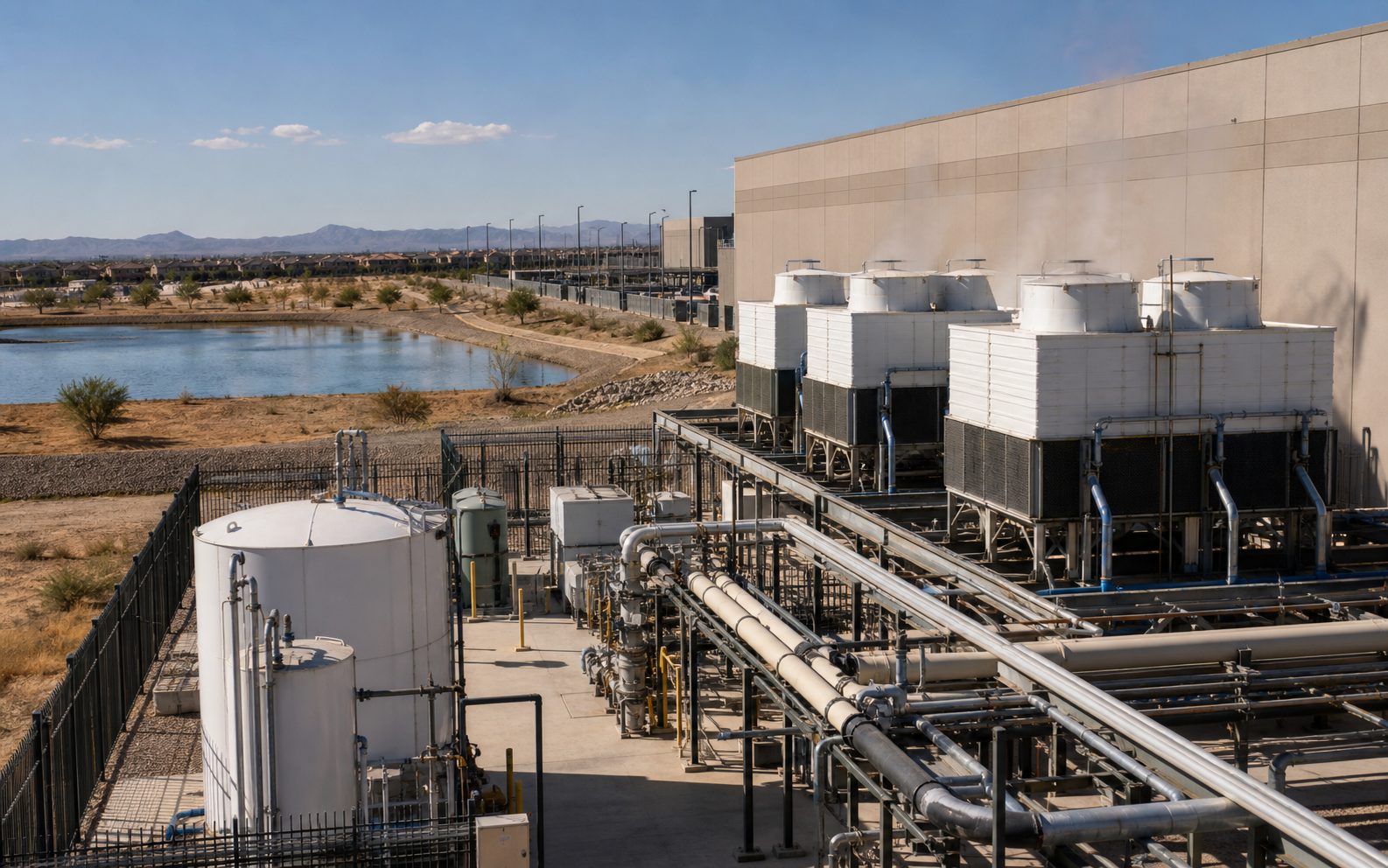
AI data centers have moved from cloud strategy into utility-bill math. A new Press analysis of EIA electricity data tracks the fight over megawatts, water, local consent, and who pays when private compute demand lands on public grids.
By The Press • June 3, 2026 • 9:30 a.m. EDT

Technology • Investigation
Drones Have Left the Gadget Era
The hard part is no longer whether small aircraft can fly useful missions. It is whether law, air traffic systems, police oversight, war planning and supply chains can see and govern the low-altitude sky now filling up.
By The Press • May 16, 2026 • 2:30 p.m. EDT

Technology • Report
The Pentagon Just Let Big AI Into the Classified Room
The Pentagon's classified-network AI agreements are not a chatbot story. They are the moment frontier models, cloud infrastructure, and defense power began moving into the same secured room — with Anthropic's empty chair revealing the fight over who controls the guardrails.
By Julian Mercado • May 3, 2026 • 4:30 p.m. EDT